
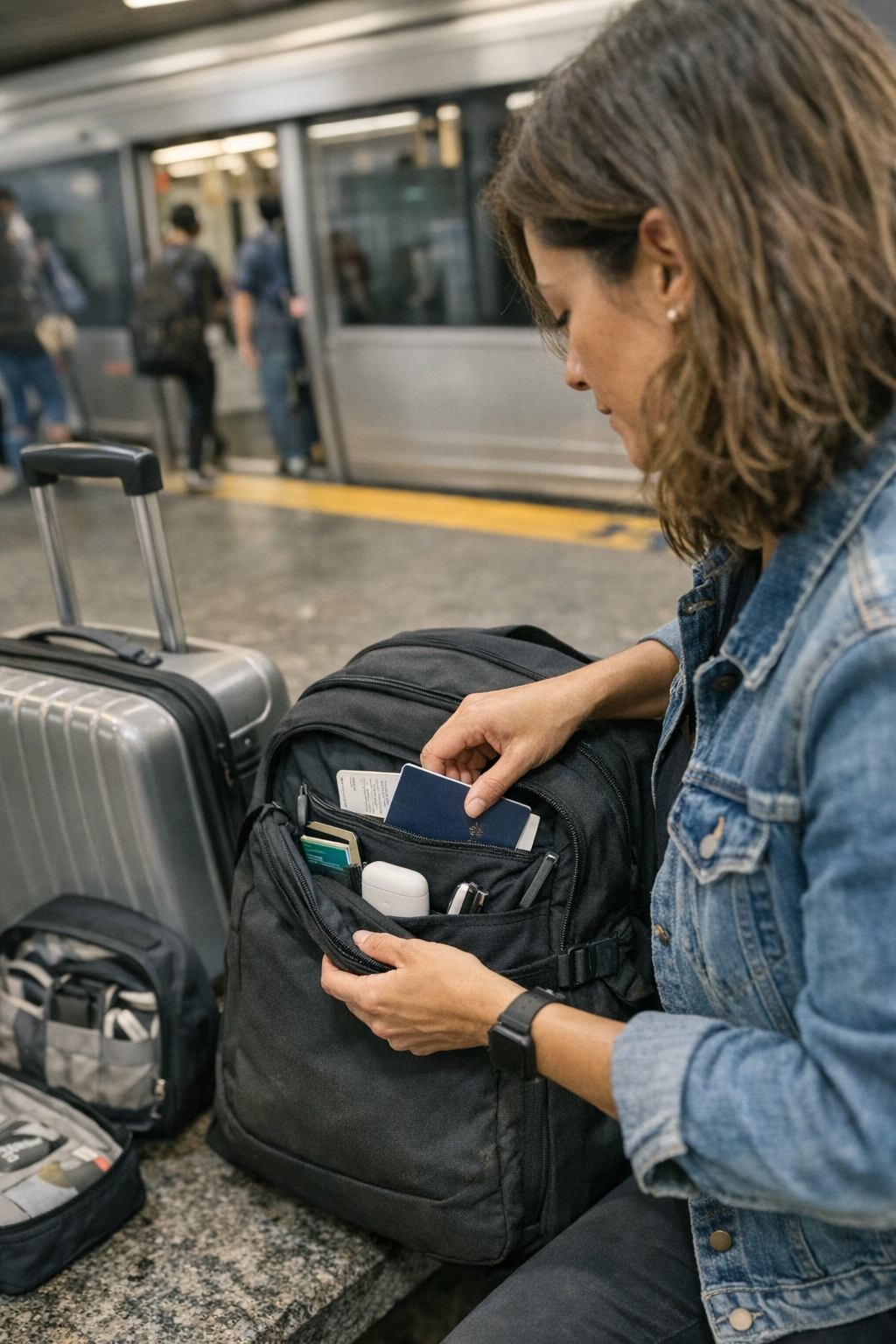
The real test of your carry-on setup isn’t at home—it’s the first time you hit an airport checkpoint and realize your essentials aren’t where you need them. The comfort of a perfectly packed, color-coded bag collapses the moment you’re edging down the jet bridge, one hand holding your suitcase, the other fumbling for a passport now buried under layers. A bag that looks “organized” in your hotel room can suddenly create delays, blocked access, or awkward repacking in line, especially during repeated quick-reach moments across immigration, security, and shuttle transfers. What felt like neatness on your bedroom floor quickly reveals itself as friction when every second counts, and your charger, wallet, or ID is one zipper path too deep at the wrong time. This is where the real difference appears: the divide between tidy arrangement and ready access, the difference CarryOnSupply travelers notice on every leg of a real trip.
Why Packed Neatness Can Turn Into In-Transit Hassle
Airports reward quick retrieval, not tidy rows. When the flow shifts from packing pride to moving with a crowd, you aren’t admiring a system—you’re hunting for a transit card or phone cable blocked by organizers that were supposed to help. Each extra pouch, divider, or deep compartment turns into a snag point during security checks or boarding queues. Consider standing in an immigration line, one arm around your bag, feeling the frustration rise as a boarding pass hides under your toiletry kit, or realizing during a bag scan that your ID is sandwiched between “less important” items at the bottom of a pocket. The illusion of order dissolves every time you have to kneel at the curb or re-stack pouches at the tray table. Inconvenience isn’t a rare glitch—it’s a loop that repeats with every airport transition, multiplying the strain and slowing movement just when you need to keep pace.
The Over-Organized Trap: Tidy at First, Slow on Repeat
It’s easy to fall for setups that promise visual control: lay-flat organizers, triple-zipped pouches, separate slots for every cable or battery. They look sharp when you zip your bag before departure. But in transit, where device chargers, passports, and headphones move in and out of reach, friction multiplies. Travel exposes this mismatch—bags arranged for visual order quickly become slow to use in kinetic environments. The same multi-pocket logic that prevents “mess” creates extra motions under pressure: a passport behind two unrelated organizers, or a quick pen search that triggers another round of pouch stacking. Every pause to dig or shuffle, standing elbows-out in a moving queue, turns organization into an obstacle. The more layers between you and what you need, the more visible—sometimes embarrassingly so—the gap between order and actual flow.
Where the Repetition Really Wears You Down
The damage isn’t just inconvenience; it’s cumulative. Each repeated hunt for a transit card, every time you return a charger only to retrieve it again an hour later, adds both mental drag and small lost fragments of time. Multiplied across a trip—between gates, lounges, hotel lobbies—the same structured setup starts amplifying stress. The energy lost isn’t from one big mistake, but from realizing that your own system is tripping you up five, ten, twenty times before you make it past arrivals.
What Actually Helps: Re-Thinking Access Moments
Practical control means knowing, before you land, which items you’ll need instantly and which can stay packed away. The difference between “packed well” and “moves well” is rooted in whether you can grab your essentials without pause, every time. Routine travel movement—stepping off the plane, passing through security, catching a train—punishes buried items. A setup that makes you stop, unzip, and reshuffle during pressure moments is built to fail in real conditions. Before descent, shift must-haves—passport, wallet, earbuds, transit pass—into a single, shallow pocket or front section, even if it means sacrificing neat interior stacks. This small adjustment can sidestep half a dozen friction points that would otherwise ruin your flow through customs, boarding, or shuttle entry.
Real-World Adjustments That Make a Difference
You’ve just landed. Jet bridge is full, crowd is moving, someone’s elbow nudges your bag. The ultimate question: Can you get your documents or device out with one hand, first try, without sitting your carry-on flat or unzipping inner compartments under pressure? If not, your “organizer” may be sabotaging every urgent moment. Rearranging for arrival isn’t “ruining” organization—it’s reframing it for actual movement. Pull those repeated-use items out from layered pouches, into outer or easily accessible slots before you hit the ground. That way, you handle the airport on your terms: quick flick, smooth grab, no need to stall the flow or draw stares as you kneel by your open bag at the exit. What looks messier by a few inches makes all the difference when you’re shouldering your bag through a crowded hallway or rushing to find a boarding pass in a queue.
Small Frictions, Big Gains
“Perfect” packing hides dozens of minor slowdowns: pens deep in tech pouches, flight tickets mashed with receipts, chargers locking out your ID. Every tiny access problem chips away at your ability to move cleanly. If a setup only reduces visual mess, but forces you to slow down at each checkpoint, the frustration stacks up quickly. Rapid, repeatable retrieval—at gates, in line, stepping into a taxi—is what actually transforms travel strain into manageable movement.
Balance Structure With Real Access
There’s a distinct edge to a bag that keeps order without interrupting your routine. A clearly defined, shallow “high-access” pocket pays off far more than buried neatness. This isn’t just a theoretical win: real tests happen with each scan, gate transfer, seat re-entry, and hotel check-in. As your trip wears on, systems built only for packing quickly show their limits; systems built for motion reward you every time the routine repeats. The line between helpful structure and counterproductive order becomes obvious after enough transitions. A carry-on that lets you avoid the dreaded “pouch shuffle” keeps you in the slipstream, not stalled in the aisle.
Keeping It Simple, Not Just Tidy
The real prize in modern travel isn’t a show-off bag setup—it’s frictionless motion. A carry-on that is slightly less photogenic but dramatically more accessible will outperform a divided, pouch-heavy bag every time your day demands repeated reach and fast repacks. Airport reality exposes over-organized systems within minutes, not hours. Every awkward tray transfer, blocked boarding pass, or delayed gate reach demonstrates whether your bag was engineered for visual calm—or for practical speed. When you keep essentials at the top, visible and touch-ready, you’re not just more organized; you’re built for real travel momentum.
Explore practical gear for repeated movement and real access at CarryOnSupply.