
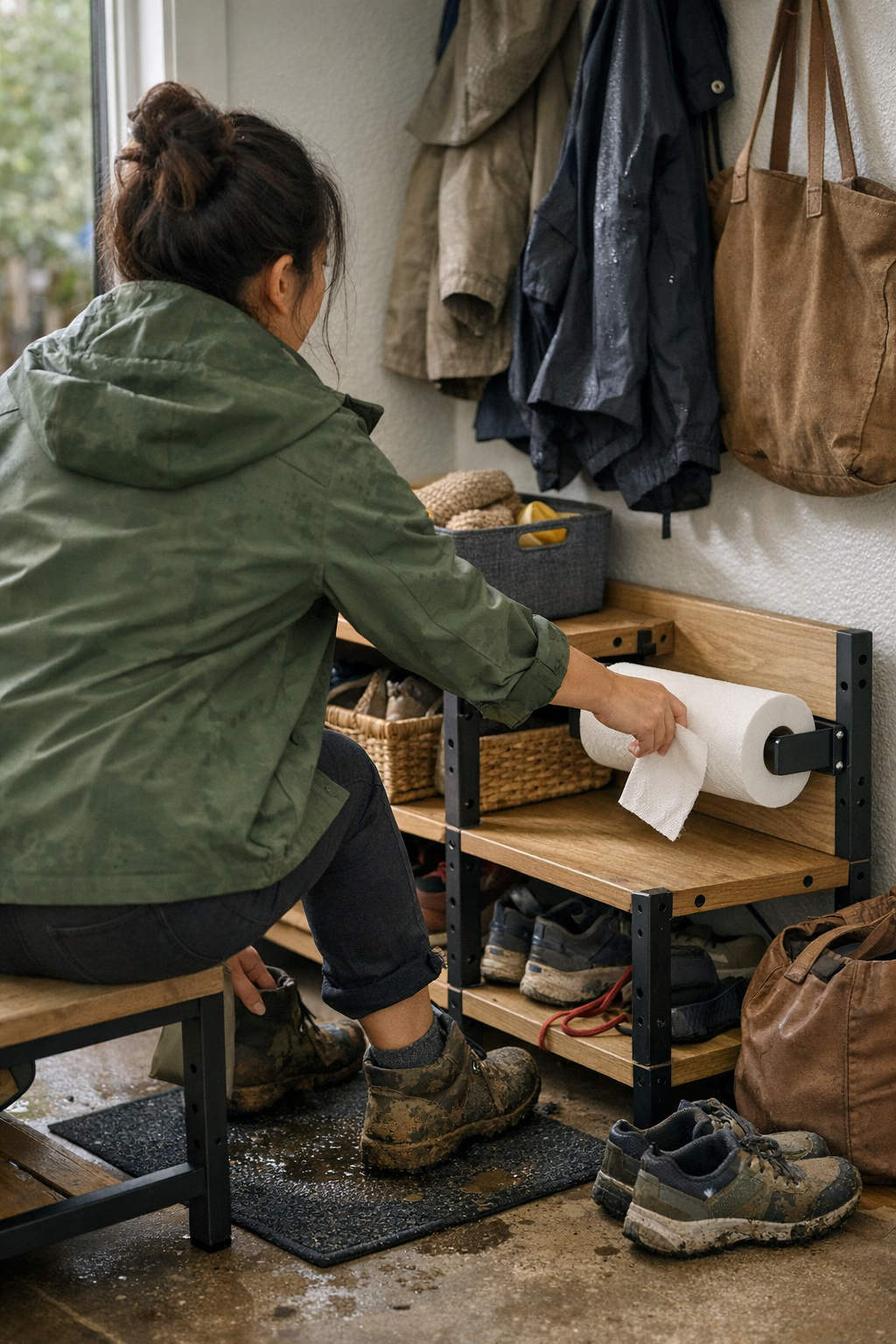
How many times has a muddy shoe, dripping boot, or paw print made it straight past your entryway cleanup point before you even reach for a towel? Threshold zones are where the mess hits first—and too often, cleanup supplies get stranded just out of reach or buried behind overflow. Every extra step to fetch paper towels lets mud and water drift further, pressing the same pain point every week: the distance between real-world entry routines and where your cleanup tools actually land. If your entryway looks set up but falls apart by Wednesday, it’s not just clutter—it’s reset friction built in by placement that doesn’t match your real movement.
Reset Friction: The Tug-of-War at Your Entry Door
After a wet commute or a muddy walk, what actually happens by the door? Shoes get kicked off near the bench. Bags drop wherever there’s an inch to spare. Coats swing onto hooks or get draped across benches. Just one misplaced mop or hidden towel sets the stage for streaks that slide past the “drop zone.” You detour, dig behind bins, unearth a roll from inside a shoe pile—and by then, water has already crept under the rug. Every clumsy workaround—swapping hands between bags and boots, stretching over crowded benches—adds seconds and leaves the threshold losing the race against routine mess.
More Than Visual Mess—It’s a Workflow Breakdown
A towel holder mounted too high, squeezed behind bags, or left floating on a shelf doesn’t just look off—it interrupts cleanup where it counts. In practice, a towel drifted behind overflow or lost under a bench means you wipe up only after dirt spreads. Maybe the zone is sorted in the morning, but after a few rounds—school drop-off, dog walk, grocery haul—towels are out of the reset loop. Mess drags deeper into your space and resets slow to a crawl.
What Actually Changes When Placement Matches Routine?
Picture this: you walk in with soaked boots and heavy bags. Instead of zigzagging behind storage bins, a wall-mounted paper towel holder sits at bench height—right where you sit (or help a child) to unlace shoes. You pull a sheet mid-process, mop up the puddle before it chases your socks, and keep the flow moving. The difference is immediate: cleanup stops being a chore that lags behind and becomes part of the movement—no separate step, no “I’ll get to it later.”
Why “Above the Bench Line” Solves for Repeated Use
Bench-level mounting means towels are in reach as you sit or crouch for shoes, not perched where dirty hands have to stretch or double back. Go too low, and holders get blocked by boots and bags; too high, and you’re up and down, dripping water along the way. Every struggle—mud slipping by, paw prints racing across tile, water sneaking toward a living room rug—gets intercepted before it’s a reset crisis. Cleanup merges seamlessly with whatever task brings you through the door, not tacked on as an afterthought once the damage is done.
“Good Enough” Entry Storage Rarely Survives the Week
The temptation to use whatever shelf is free, toss in bins, or add a loose countertop roll is strong—until routine takes over. Most setups work for guests but collapse as soon as the traffic ramps up. If your towels and wipes aren’t anchored exactly where people land, daily use reveals the weak spots:
- Back-and-forth laps around dropped shoes and bags, just to find cleanup supplies
- Hands grabbing surfaces while searching, leaving extra smudges and streaks behind
- Dirt sneaking past the line during a rain cycle, especially when resets fall behind
By day three, shoes have overflowed, the paper towel roll is wedged behind the bench, and the threshold looks less like a managed drop zone and more like a spreading mess—again.
Visible Difference When Entry Flow Is at Max Load
The crunch shows up during high-traffic runs. Imagine three arrivals in 20 minutes: a rain-soaked kid, a dog that shakes off, groceries coming through while everyone fumbles for dry ground. When holders and towels are mounted right at the bench edge, every drip and splash gets handled on the spot—before a single footprint drags it deeper. Loose supplies, on the other hand, turn “just five minutes” of deferred cleaning into tracked-in grit and a shrinking window to reset before the next round. Quick laps turn into full cleanups—and everyone’s late.
What’s Actually Different After a Placement Fix?
Good entry setups aren’t just about less apparent clutter; they build in a rhythm. A well-placed wall holder at seated height trims out the most annoying steps: no searching with muddy hands, no trailing grime back over just-cleaned tile, no “reset round two” when someone else comes through. Instead, cleanup happens naturally during the process—more clarity, less mental drag, visible difference before you even think about it.
How to Anchor Cleanup Where Action Actually Happens
Stop letting towels, wipes, or rolls drift out of your real path. Mount at bench height, always within a simple seated arm’s reach—never up at shoulder level, never hidden behind bins, never as a loose accessory floating above the drop zone. Physically walk your door-to-bench route and see where your hand naturally lands as shoes come off or bags hit the ground. The difference between one smooth reset and a series of cleaning headaches usually comes down to these few feet—between what seems “away” and what’s actually in the line of movement.
Practical Entryway Placement Tips That Actually Work
- Keep the main walk lane wide and clear: mounting holders off to the side avoids blocking a fast path, even if centered storage looks neater.
- Secure for actual use: wall-mounts that keep towels dry, off the floor, and reachable for both adults and kids outlast floating setups every time.
- Pick slim profiles: wall- or side-mount holders that fit tight entrywalls and tuck within arm’s reach prevent spread, crowding, or new trip hazards in compact transitions.
From “Looks Organized” to Works Every Time
Entry setups that focus on visual order—stacked bins, matched baskets—often collapse when real life starts hitting the threshold at speed. The gap between a tidy zone and a functional transition point is usually where items are anchored. Move a towel holder to the right moment-of-action and you’re not just fighting clutter; you’re closing the slowest, most ignored leak in your whole reset routine.
This isn’t about making mess disappear. Most of the gain isn’t even visible on a good day—it’s in the weeks when nothing else changes except fewer detours, fewer missed wipes, and faster resets when the weather turns or the schedule stacks up. Entry setups that keep up don’t just look under control—they feel lighter, less interrupted, and built for movement, not just for show.