
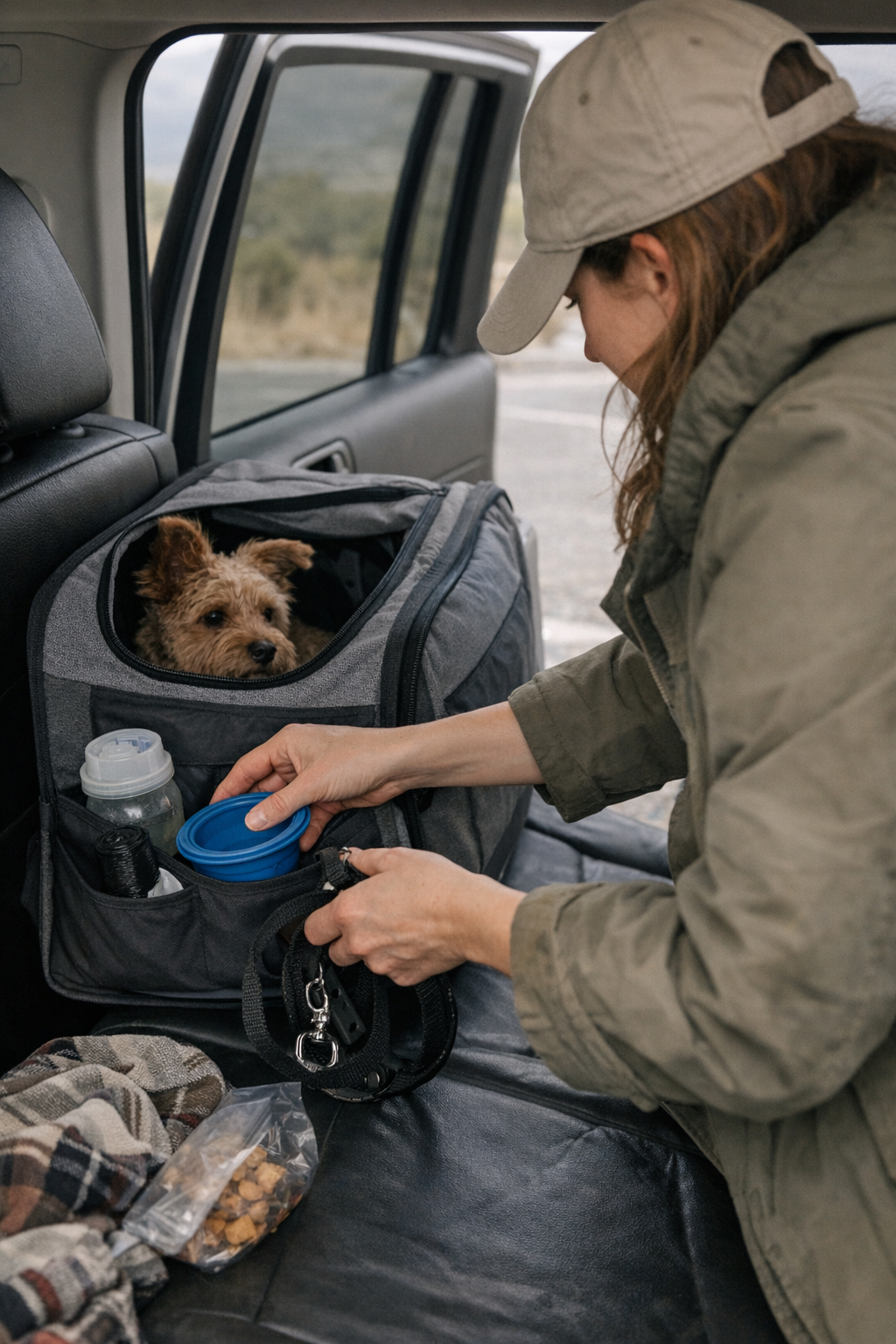
The real test of a pet travel setup isn’t how it looks at home—it’s what happens after three, four, or five stops in a row. That neat, organized bag you felt good about while packing quickly reveals weak points once the routine hits its first true snag. You reach for a cleanup bag and find it wedged beneath a rolled blanket. The water bottle that looked secure now blocks the leash’s clip. What seemed “calm” for your pet—an extra comfort mat, a favorite toy—becomes just another obstacle between you and whatever they need in the next minute. Even your pet starts to notice: every reach grows slower, every pause grows longer, and the energy between stops shifts. In pet travel, friction doesn’t announce itself. It creeps in when the flow is broken, and suddenly the only thing moving smoothly is your frustration.
When Organized Looks Aren’t Enough
A well-packed bag on your kitchen counter can fool anyone. Everything is zipped, snapped, lined up. Hygiene wipes have a dedicated slot; the comfort pad folds neatly; even spare toys have their place. But that order rarely survives the first handful of stops. The real-world moment: you reach for a leash and pull out treats by mistake, or you dig for a waste bag and find three half-used rolls buried beneath less-used supplies. The illusion of “ready” collapses at the moment you need just one thing, fast—and can’t grab it without moving three others first.
It gets worse at seat-side. A cleanup kit in a rear pocket looks clever until the wipes wedge against a water bowl every time you try to get them out. Leashes slip under handles with the smallest shift. A few minutes after leaving, your precise system is already fighting itself: you brace your wrist, hesitate before reaching, and feel your pet’s patience drop as you scramble through an order that’s become all wrong for the kind of stop-and-go routine most trips demand.
The Routine That Repeats—And Where It Breaks Down
Most pet travel routines don’t fail at the start. They fail at repeated stops, once seat position, bag orientation, and reach patterns pile up real strain. Picture a rest stop: you check for water, a waste bag, the leash—each tucked away, but in the noisiest, slowest way possible. The lid on the wipes catches, the side pocket jams against your car door, and your pet’s posture stiffens as they realize every pause could mean a longer wait. With each delay, regular movement becomes tangled: your pet shifts half-out, then back, the moment for easy leashing already gone. Every inefficient reach stacks up—first annoyance, then tension for both sides of the leash.
And it snowballs. Miss the right pocket once and the next stop makes it worse: items migrate to new corners, fast-grab essentials get buried, and each restart requires shuffling everything just to do something as basic as walk your pet or clean up after them. What started as a system now feels like a slow-motion obstacle course.
Real Access vs. Theoretical Order
There’s a gulf between a tidy bag and a setup you can actually use. A perfect row of supplies means little when it only looks neat at rest. In use, the bowl blocks the wipes, the comfort item covers the leash, and every stop means more shuffling—visible cracks, not surface flaws, emerge first. In those real moments, “having everything” isn’t just secondary—it slows you down. The only thing that matters is what you can reach without shifting, unzipping, or fishing items out of the way.
Pets mirror this tension. Every time you pause to dig, their ears drop and attention tightens. Restarting with a fumble signals to them that movement is about to become a chore—and they may resist, adding another step you didn’t ask for.
A Case in Point: The Ten-Minute Test
Try this on your next outing: After ten minutes, stop and—without planning—reach for water and a cleanup bag as if you’re in a rush. Does your hand tangle with a zipper? Do you have to unstack or shift something first? If so, notice how your movement changes: micro-pauses, braced wrists, an awkward shuffle for your pet to wait out. One snag is enough to flip the mood from calm to hassle, and now both you and your pet anticipate the next hangup. The feel of an “almost right” setup becomes one you both dread to use repeatedly.
The Overstuffed Side-Pocket Trap
Most pet travel kits slip into the same trap: the side pocket, useful in theory, becomes a mini junk drawer in practice. High-use essentials mix with stashed-away extras, and you end up unpacking half your bag to get a single wipe. You’ll spot the problem before you admit it out loud: a slow hand reaching, your wrist braced, patience fading while your pet inches restlessly. These aren’t trivial—they’re repeated signals that your kit’s structure is working against you at the exact moments you need support.
Building a Setup That Actually Moves With You
Segment by use, not just by item. Assign the pocket nearest your seat or door to your top three essentials: leash, cleanup bag, water bowl. Don’t layer comfort items, treats, or backups there—let those live in the main compartment, away from your fast-access flow. Only what you must reach for every stop gets that privilege.
And then—leave real breathing room. An open hand-width in your quick-access pocket means nothing blocks, nothing gets wedged, and there’s zero need to brace before grabbing. One open space can flip a stop from three steps to one: grab, use, return, move. It may sound simple, but this is where nearly every real setup falls short. The difference isn’t visible at home; you feel it the first time you move quickly, and your bag—finally—doesn’t slow you down.
Small Changes for Noticeable Calm
Efficiency in pet travel has nothing to do with perfection at rest. It’s about cutting the friction that returns every time the car stops and the real handling begins. The best setup doesn’t merely promise organization—it releases you from interruption. Over a day, seconds don’t compound into chaos, but into calm: your pet waits less, you fumble less, and every restart feels as smooth as the last.
Compare the two outcomes: In one setup, every stop pulls you deeper into a maze of your own making, frustration growing with each touch. In another, structure “disappears”—you remember your pet more than your gear, because everything you truly need, in the order you need, is just ready.
If pet travel still slows you down or keeps forcing awkward workarounds, you’re not alone. Usually, it’s a structural flaw—not operator error—that blocks truly smooth movement. One fix in that access logic can change the whole routine. See structures built for actual repeated use at PawGoTravel.