
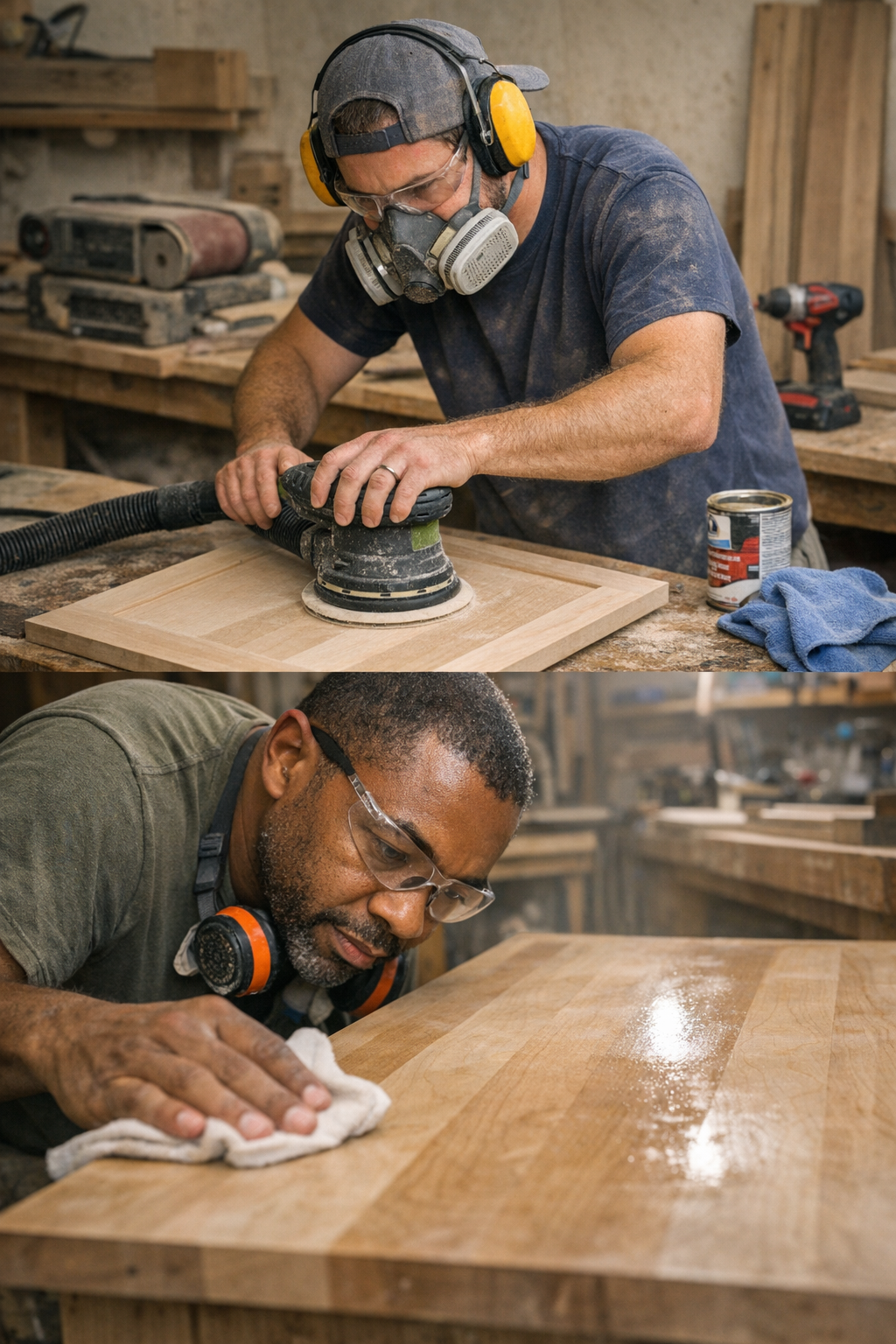
It’s always at the finish line—when you’re convinced the sanding is perfect—that reality hits. You wipe on stain or clear coat, and suddenly every careless track or tight swirl leaps out. At this point, there’s no patch or quick fix; correcting the mistake means retracing your steps, sanding again, burning more time, and sometimes scrapping material. It’s one of the most common, maddening stalls in any real shop or garage: overlooked sanding flaws, coming back to haunt you when it’s too late to hide them.
Why Sander Choice Isn’t Just a Detail—It Decides the Outcome
In the grind of the workshop, tool choice is about control, fatigue, and how each sander shapes real wood under pressure. Grabbing the first sander within reach often feels like the fastest move—but “fast” is meaningless if the tool leaves deep grooves and vibration scars you’ll only see later, under angled light. The gap between “good enough” and truly clean prep is where most projects go sideways, and it’s almost always decided by which sander you use, when, and how long you stick with it.
One mistake—like pushing a belt sander too deep into late-stage prep—presses permanent tracks into the wood. These marks won’t vanish no matter how much you blend with lighter sanders. Add in a tired sanding pad or a machine that rattles after a long session, and those tiny surface ripples multiply. Each unnoticed scar is a setback waiting to be discovered with the first swipe of finish.
How Sanders Really Differ When It Matters
Orbital, random orbital, belt—they’re not just names. Each sander has a noticeable personality that only shows up in real use. Think of flattening a warped maple countertop: a belt sander makes fast work of high spots, but a moment’s hesitation in one spot and you’ve got troughs etched so deep they haunt the finished piece. At this stage, speed is a double-edged sword—every extra second risks irreversible grooves.
Switching to an orbital sander tones down the risk. The flat, circular motion is safer on sharp edges and curves, but it’s not flawless—it leaves those fine, repeating swirls that only become visible under shop lights or in morning sun through a window. Then there’s the random orbital: more aggressive than an orbital, but less risky than belt, it scatters scratch patterns and clears dust faster. The difference becomes obvious over hours of work. With a random orbital, blending is forgiving, and the surface feels truly uniform to the touch—while orbital-only sanding leaves unwanted smudges and haze that show up every time the light changes.
Scene: Maple Cabinet Doors—Living with the Chatter
Say you’re prepping a set of maple cabinet doors, chasing that consistent satin sheen. You try to stretch the orbital through every step. By the third door, the sander’s subtle vibration starts working against you—grain direction changes, chatter sets in, and faint cross-hatching appears. They look minor until finish goes on, and then every defect lines up in the glare, multiplying your frustration. If you recognize this—finding your “quick finish” dragging into a whole extra sanding session—you know how precise sander choice matters at the smallest scale.
The Sequence That Avoids Regret
Better results don’t come from just buying a fancier tool—they come from matching the sander and grit to each stage, then switching at the right moment. The classic routine: start rough, progress in stages, end with finesse. For leveling warped panels or removing glue, fire up the belt sander with 80-grit—fast and relentless, but step away before it starts to “dig in.” Immediately move to random orbital with 120-grit: focus here on blending grooves and harmonizing the grain. When it’s time for delicate edge transitions or curved rails, don’t force a full-size sander—grab an orbital or, for tight spots, a sanding block. End the process with a random orbital and 180-grit, but never drag out this final stage—no more than a few minutes per square meter, or you risk compressing the fibers and ruining stain uptake.
Trying too hard for “invisible” perfection late in the process is its own trap. Over-sanding at high grit leads to dead, patchy spots—a mistake most learn after the first ruined finish coat. Recognize that sweet spot: smooth, ready for finish, but still alive and open to stain.
Catch Mistakes Before They’re Sealed in Place
Stop trusting your eyes alone. A rapid wipe-down with mineral spirits darkens the grain and spotlights every leftover mark: subtle belt sander ridges, orbital swirls, compressed areas that don’t match the rest. Under this temporary spotlight, fixes are possible and quick—before finish makes the errors permanent. A few extra minutes with the right sander and just enough pressure saves hours of rework, and sometimes the cost of new material.
Don’t Ignore Dust—It Bites Back
Every swirl of sanding dust not only clouds the air, but clogs pads, reduces sanding power, and creates invisible scratches that reappear at the worst time. If your sander’s dust system isn’t pulling its weight, you’re grinding spent grit back into the surface. A shop vac connected to the sander, or even a quality dust bag, keeps work predictable and cuts down on backtracking through grits. Less dust means less time wasted, cleaner results, and a smoother workflow—especially on big pieces or batch runs.
Dial In Smarter Sanding Habits
The difference between a pro-looking surface and a painful redo comes from daily habits—not just the gear. Watch for signals: a sander that suddenly feels “sticky” or starts to catch probably needs a grit change, not more pressure. Keep a sanding block on hand for inside corners and tight moldings—forcing a power sander where it doesn’t belong guarantees rounded edges and wonky reveals. Cutting corners to save time here is what actually wastes it later.
There’s a flow to good sanding. Watching a seasoned pro, you’ll see them swap sanders, check grain in raking light, and pause to feel the surface with bare hands. They don’t chase textbook steps; they chase consistency, saving themselves the headache of post-finish surprises. In the end, effective surface prep is about precision, control, and learning to stop before pushing the wood past its best. Sanding isn’t about achieving perfection. It’s about knowing when good is truly good—and having the tools and process to back that up, project after project.
Visit Gumboll for practical tools and gear built for jobsite performance.