
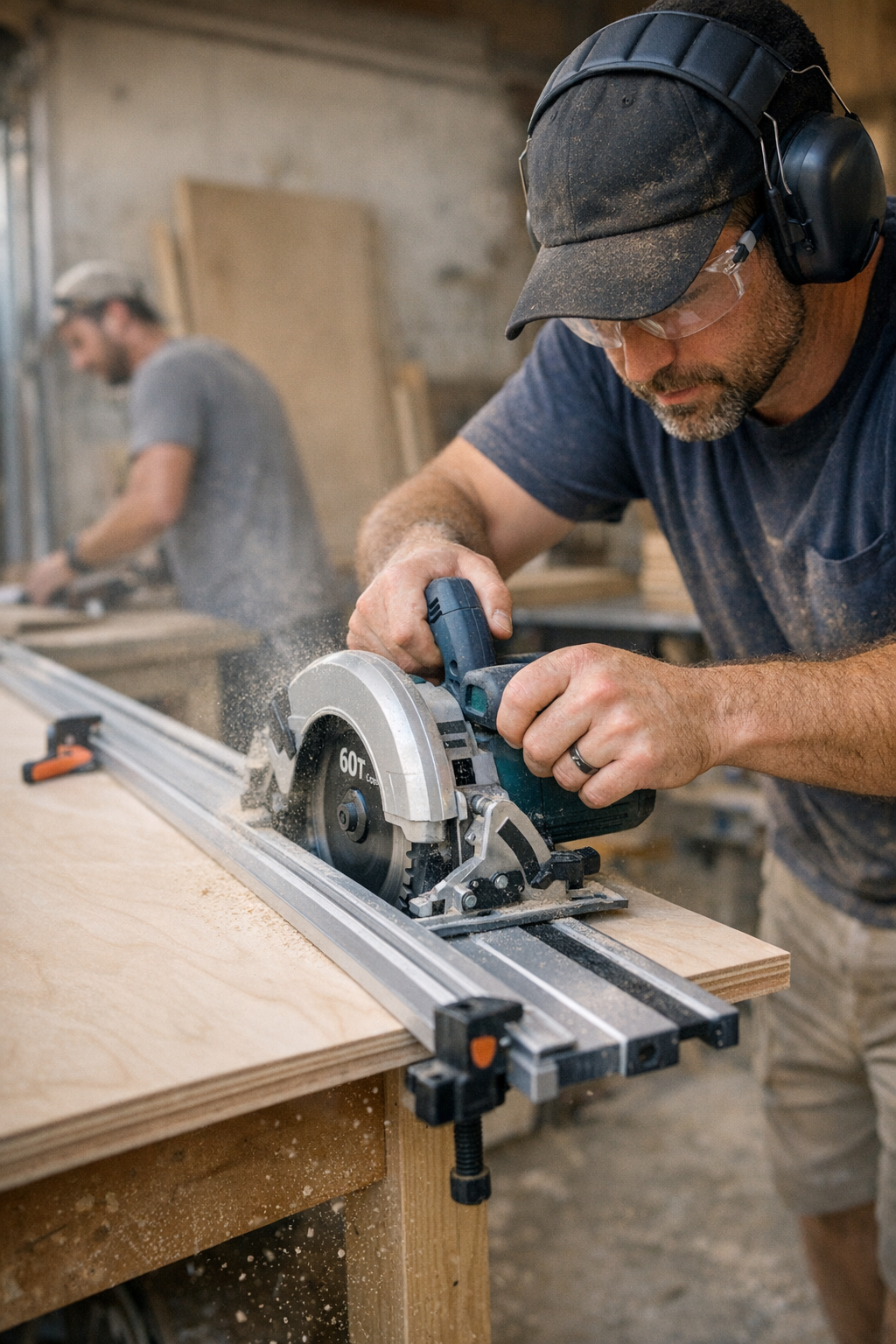
There’s nothing that tests your patience—or your reputation—like chasing clean, accurate cuts through a full run of plywood or trim. The real world isn’t forgiving: one hasty setup, a dull blade, or a guide that shifts mid-pass, and the pieces you depended on start drifting off-spec before you even realize it. Maybe you’re roughing out sheet goods for cabinetry, laying out built-ins on the garage floor, or running boards for a custom install. On paper, it’s just measure, clamp, cut. In practice, every single tool detail—blade, guide, base plate, even a bit of sawdust underfoot—either pulls your workflow forward or drags it slowly out of line.
Where Problems Actually Start: The Imperceptible Slip
Trouble rarely announces itself all at once. You feel a subtle vibration in the saw’s handle as it meets the material. A thin, fuzzy edge glances back at you as the piece falls away. Maybe it’s an unremarkable extra millimeter—easy to ignore, once or twice. But keep stacking those boards, and the initial sloppiness compounds. Suddenly, your “quick cleanup” shifts to grudging filler, patching out-of-square reveals, or—worst of all—wasting another sheet because the error is now baked into everything else.
This isn’t theory. Anyone who’s spent an afternoon chasing accuracy has hit that wall: the first three or four passes go fine, then batch fatigue hits. Clamps never feel tight enough. The blade bites differently. Something’s always slightly out—never quite worth stopping for, until every piece in the pile is off. It’s less about a single bad move, more about a slow tilt that you only see after it’s cost you real material or time.
Why the “Okay” Setup Fails When It Counts
The hidden killer: your workflow is only as strong as its weakest link—and that link doesn’t break, it just gives a little, over and over, until the tolerance is gone. Maybe your blade’s razor sharp but your guide flexes a few millimeters under real clamp pressure. Maybe the base plate, after a couple of drops, has developed an invisible burr that snags and subtly kicks your cut out of line. One or two passes, things look fine. Creep up to a dozen, and “just a hair off” becomes seams that gape and panels you can’t trust to line up.
How Drifts and Defects Multiply
Picture two setups: both start with a crisp plywood rip. But an hour in, dust builds up beneath one saw’s guard, enough to tilt the cut. Or a bargain guide’s plastic flexes when you lean in for a longer pass. You don’t spot it cut-to-cut. You see it when your parts won’t dry fit—edges won’t mate, gaps you can’t clamp away, and the finish line suddenly feels a lot farther off. If that early “almost right” doesn’t utterly hold up to repetition, you’re signing up for cumulative frustration.
Micro-Defects: Tiny Flaws, Big Headaches
Fast forward to jobsite reality—cutting panels for built-in shelves or trim for a client wall. The first few crosscuts look fine. Then you spot splintering right at the visible leading edge, or a chip you can’t hide. A little error—one shaky clamp, dust kickback, a blade you should’ve swapped three cuts ago—can punish every piece that follows. There’s no “undo.” Sand more and you risk blowing your reveal. Try filling and you’re fighting the clock, late into the night, covering up for tool sloppiness that should’ve been caught before you started batch production.
One mistake leads to another. Bad cuts force extra sanding, extra sanding steals your reveal, badly-matched joints waste your lumber or your time—and your profit margin gets chewed up one avoidable error at a time.
Making Small Changes That Bank Time and Materials
Most workflow disasters can’t be fixed with brute horsepower or flash. Sometimes it’s as basic as swapping to a rigid, full-length aluminum guide clamp, then locking it down so there’s zero flex. Or trading your dull rough blade for a finish-grade, carbide-tipped 60-tooth that actually matches the work—even if it takes a minute to change. On a recent batch job, that shift alone shrank blowout from full-millimeter splinters to barely-noticeable scratches. The difference? Less re-cutting, less sanding, and by the third panel, you’re actually ahead instead of behind—even as the cuts stack up.
How to Spot Tool Weakness Before It Spoils the Run
Before the job slides off track, look for:
- Edge quality that’s getting worse as you move through your cut list
- Hard-to-explain burn marks, even with steady, deliberate passes
- Joints that refuse to close, no matter how creative you get with clamps
- Sawdust buildup throwing off your base plate mid-pass—sudden resistance or shifting under your hands
When you can’t “fix it in sanding,” you’re likely fighting a bad setup or a worn accessory, not just user error. Adjust now, before cutting your mistakes twice.
On-Site: How Skilled Crews Catch Issues as They Work
What sets a tight, on-schedule job apart from the late-night scramble isn’t guesswork or “feel”—it’s recognizing the earliest warning signs and acting fast. Little flaws in your setup compound into big ones. A scraped base plate pulls your angle. A guide with flex steals your straightness. A dull blade forces more muscle, making it easy to slip, veer, or leave ragged fibers behind. Ignore the cues and you’re pulling out the filler and sander just to deliver passable work. Catch them, and you control the outcome—every time, not just on the first few pieces.
Field-Tested Habits for Reliable, Repeatable Results
- Clean your base plate before every new batch: One stray shaving or grain can make the saw rock and send your cut off-course.
- Support offcuts from falling mid-cut: A drooping edge yanks the blade unpredictably, ruining control and finish. Stands or sacrificial scraps pay for themselves immediately.
- Replace blades at the first whiff of burning or chatter: Don’t convince yourself “it’ll make it through one more board”—blades are cheap next to wasted material or surprise overcuts.
Consistency Isn’t Glamorous, but It Pays—Every Single Time
You don’t need a show-stopping first cut to finish strong. You need a routine that actually survives a full day’s workload—a workflow that doesn’t sneak in surprises the later you get in the stack. Taking five minutes upfront to check clamps, guides, base plates, and blade sharpness isn’t some amateur move—it’s what lets pros avoid scrambling when the pressure hits. Don’t wait for the visible flaws. Adjust early. The time and effort you bank at the start save you a world of slow, frustrating repair when you can least afford it.
Find tools, blades, guides, and accessories built for real jobsite performance at Gumboll.