
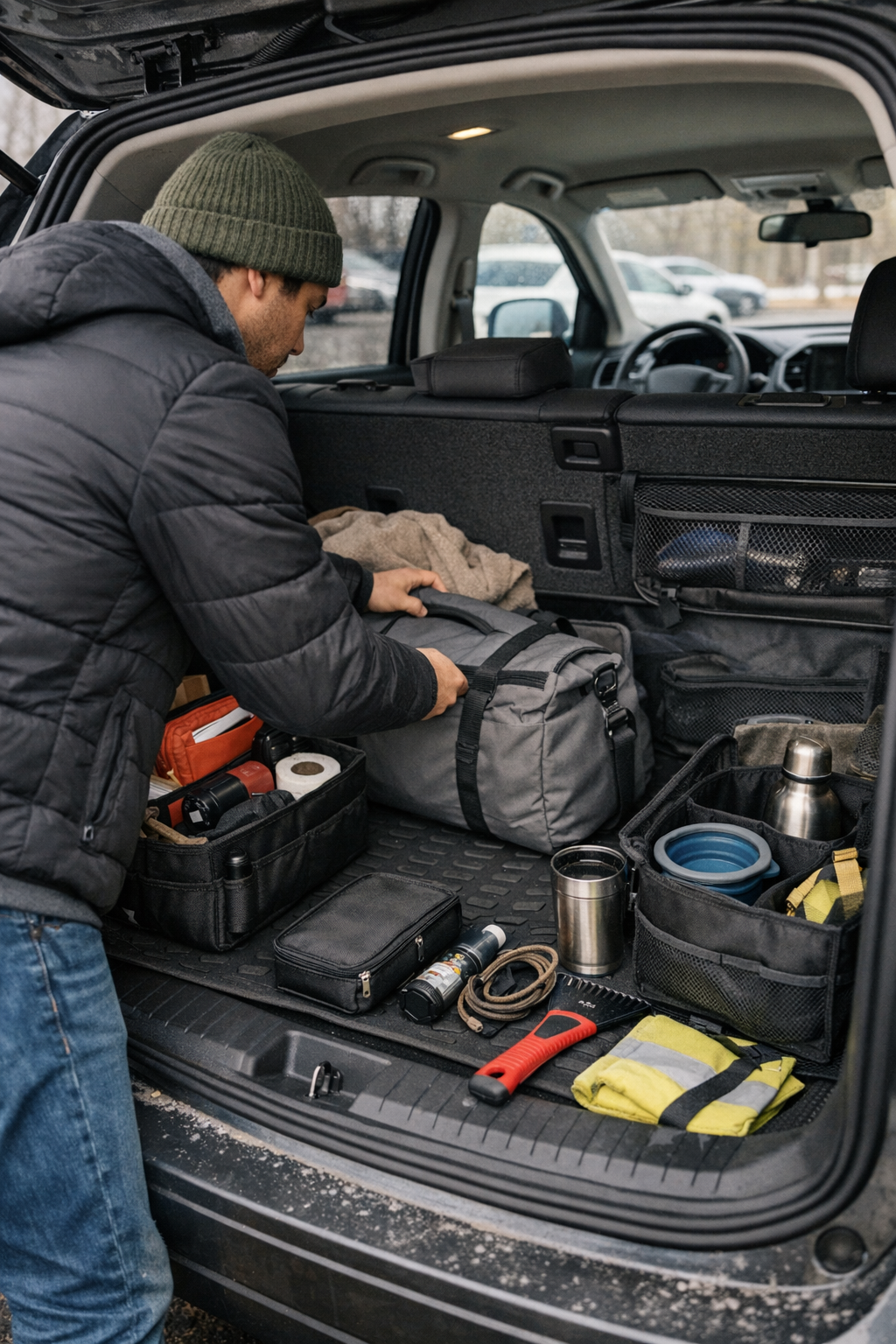
A car that looks organized can still fight you every winter morning. Slide into your supposedly neat cabin—floormats clean, dash wiped, bins “in place”—but the real setback comes the second you try to grab what you need and come up empty. You’re running late, fingers stiff from the cold, and instead of scooping up your scraper or charger, you’re contorting around seat corners, prying open gloveboxes, or digging through a tangled under-seat bin. “Clean” means nothing when reaching for a tool hijacks your routine—especially when it’s freezing or dark and every slow second costs you more than convenience.
When “Organized” Isn’t Quick Enough
It’s easy to think your interior is set up—everything with a spot. But try actually accessing what you use weekly and the illusion breaks. Getting a de-icer means sliding a tote aside or wrestling past a tangle of USB cables just to free a charger that always manages to snake under your bag. Sometimes you’re stretching from the driver’s seat for something shoved in a footwell or leaning awkwardly over the passenger seat when all you want is a flashlight before another icy commute.
This problem doesn’t just show up in bad weather. Any routine—quick errands, back-to-back stops, sharing the car with someone else—turns “hidden clutter” into real friction. When you always have to unbuckle, lean, or empty a bin to get one tool, the neat look just exaggerates how inconvenient things really are. That slow drag of small delays repeats, eating into tight mornings or rushed afternoons and building a kind of low-grade frustration that resets every drive.
The Trap of Tidy But Inaccessible
Most “organization” hacks fail because they hide mess at the price of real access. Throw essentials deep into consoles or floor bins and you’re forced to break everyday flow just to reach what you need. On a frosty morning, you might find yourself down on one knee, coat picking up last week’s salt, stretching for a scraper wedged beneath a seat or blocked by a tote that was supposed to “streamline” the space. A neat trunk liner means nothing if it’s covering up the only tool you can’t drive off without.
If you share your car, it gets worse: someone else’s idea of tidying bins means your most-used gear shifts spots—stacked deeper or switched to the other door. In one week, your “system” is suddenly guesswork, and you add another search-and-rearrange step to every morning—or skip using that tool altogether, until the next time it’s a hassle all over again.
Cold Reality: Where Weak Setups Fail Fastest
Cold weather exposes every small compromise. Head out after a hard frost, hop in, and instantly notice the scraper that was supposed to live in the door has migrated (again)—now stuck under a tangled charging cable or slid to the far side of the passenger footwell. One hurried reach means you’re pulling things loose, brushing grime onto your coat, untangling the charger, and realizing, once again, you’ll be late. Organized appearance can’t compete with setups that actually keep your hands moving, not hunting.
This isn’t occasional; it’s a routine breakdown every time your setup breaks the rhythm of daily use. The longer you live with it, the more obvious the gap between “looks fixed” and “feels right” grows. Multiply that hassle by each cold start, dark return, or busy handoff, and the cost is undeniable—neatness on the surface, but a grind underneath.
The Shift: Prioritize Instant Access, Not Just Storage
Real improvement starts by cutting your “everyday access” down to the one or two items you truly reach for every drive. Forget about taping down every loose cable or building trunk bins for dozens of gadgets. The core is brutally specific: the single charger cable you actually use, the one scraper you always need, the flashlight you reach for in the dark. These belong within direct, seat-side reach—either in a shallow door pocket, a slim seat-edge tray, or a no-guess cubby at arm’s length. If you have to change posture, you’ve already lost seconds you can’t get back in a rush.
Make this the non-negotiable “home zone”—items are always reset there after use, the way you automatically return the keys. Instantly, setup stops being a visual trick and starts working on the level you actually use it: drive, reach, grab, go. No shifting, no digging, no excuses in cold or rain. You save not just time, but focus—redirecting energy from hunting for a cord or scraping tool to actually getting on the road.
Restrict Reach—Do Less, Need Less
Squeezing everything within easy reach only brings back clutter. Narrow it to what really belongs: in winter, that might mean just a scraper and one key cable. Anything else—emergency flares you haven’t touched in a year, or a backup dog leash—lives elsewhere. If you only use an item once a month, it shouldn’t claim premium territory by your seat or door. Let “used weekly” decide what earns your closest spot.
Sort By How You Use, Not What Category Calls For
It’s habit, not label, that should shape your setup. Think through an average week: which tools do you actually grab, and when? Don’t fall for the instinct to build up “emergency kits” in the cabin if those items never come out until a rare breakdown. Instead, keep daily drivers—scraper, charger, maybe wipes or sanitizer—ready without digging. Let the rarely used stuff slide back into trunks, under seats, or gloveboxes, freeing the main zone for what keeps you moving.
Use Organizers That Speed You Up, Not Slow You Down
Visibility isn’t the fix if it just means a mess on display. Stick to slim, easy-access bins and door organizers, but keep them shallow enough that nothing stacks or buries your essentials. The right system stays open enough for a blind grab but keeps gear from drifting, spilling, or blocking the way. Don’t overfill—each added slot is just another way to hold up your reach or tempt you to store too much right where it doesn’t belong.
Every Day, Less Friction—Even on Repeat
The best setups earn their keep on repeat: cold mornings, late nights, quick errand runs, and shared-car chaos. Slide behind the wheel and, without thinking, grab your scraper or charger—every item has an automatic “home” in reach. No delayed departures, no kneeling on cold concrete, no wrestling a spaghetti of cables loose just to top up your phone. Over time, you notice the difference not by how clean your cabin looks in photos, but by how rarely you cuss at the clutter or stop to rearrange things before you can actually drive.
The setups that only look under control leave you slowed and annoyed after every ordinary trip, especially as winter drags on. A tidy bin or covered tray is no win if it buries the gear you actually need when you’re rushed, frozen, or halfway into the next commute. Each time you skip a hassle—no digging, no untangling, no awkward reach—it adds up, building a routine that just works. That’s not about neatness for its own sake; it’s about structure that finally lines up with the way you really use your car, every single day.
Organize your car to serve the routine, not just the photo. Find more practical solutions at DriveWellSupply.