
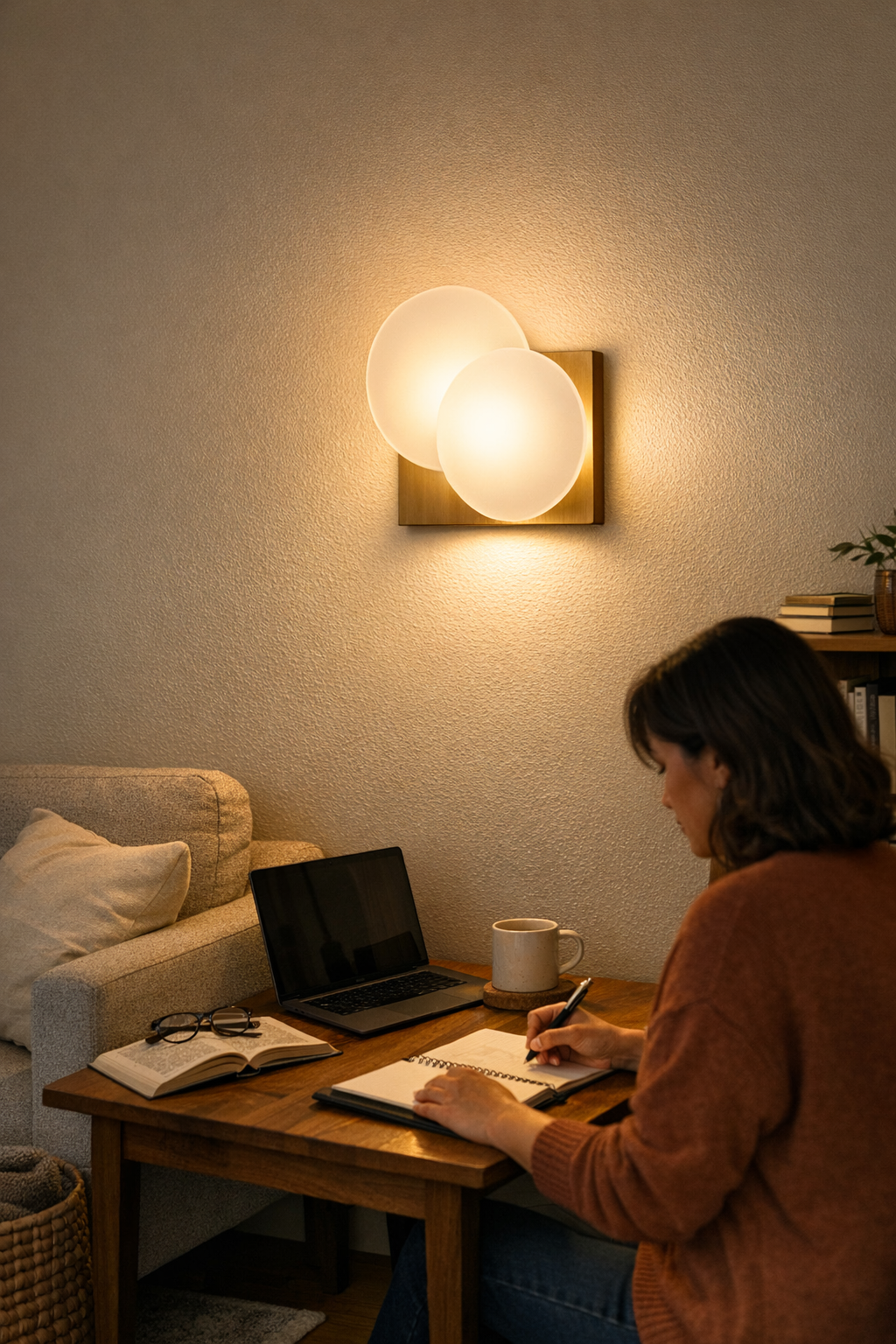
Ceiling lights fool you at first glance: step into any room with a single overhead fixture, and everything “looks” illuminated. But as soon as you try to work, read, or relax, the real issues show up fast—stray shadows slice across your desk, glare bounces off your screen or glossy table, and you find yourself shifting position or squinting to make out details you thought were covered. Light fills the floor, but leaves corners and work surfaces patchy or harsh. After a few days, you notice your eyes working harder, the urge to drag a lamp closer, or the constant trip of cables stretched between outlets and tables. The whole setup may look minimal, but you’re always compensating for something the light can’t seem to reach or fix.
Where Overhead Lighting Lets You Down
On paper, overhead fixtures promise “full coverage.” In reality, the effect is often blunt and uneven. Sit through a couple of work sessions or try winding down on a sofa: shadow lines split your tabletop, while keyboards and documents fade into partial gloom. Every glossy surface turns into a flare point—computer screens, glass-topped desks, even a polished lamp base all catch stray light and create micro-glare you keep shifting to avoid. Table lamps and desk lights edge in as band-aids, their cords trailing wherever you can find a plug, creating clutter that’s always almost invisible but never quite gone. Each quick fix just rearranges the distraction: one day it’s harsh overhead glare, the next it’s a dark edge at your workspace, or a cord in the way of your chair.
Discomfort doesn’t announce itself in a single moment. It builds in small, repeated frictions—reaching under a shelf and still missing the right edge, readjusting your seat to dodge a bright spot, catching a lamp cable with your foot for the fourth time this week. What looks finished is actually patched together, never quite working for the way you use the space every day.
How Wall Sconces Change the Equation
Wall sconces solve problems overhead lights and desk lamps can’t touch. They send indirect, focused light right where it matters—across a wall, down a reading corner, or along the length of your work surface—flattening shadows and smoothing out glare. The change is immediate in mixed-use rooms: open your laptop in a living space, and the shadow that covered half your writing disappears. The bright “strip” along the wall softens the room and keeps power cords off surfaces, so you stop noticing cables before you can notice the room itself. Sconces shift attention back to where you actually need to see—papers, books, a conversation partner—letting your eyes relax for once, instead of battling sharp contrasts or peering past messy support gear.
Unlike table or floor lamps, sconces mount off the surface—freeing up valuable desk and shelf space and clearing cables from walking paths. Surface-mount or plug-in sconce options sidestep complicated rewiring, so you can fix problem lighting in an evening instead of overhauling your room. The right placement delivers just enough light for shared tables, shelf runs, or reading zones, without leaking glare where it’s least wanted. Day-to-day, this isn’t a decorative upgrade. It’s a recalibration: the difference between a room that looks assembled and one that finally feels resolved in use.
Shared Nooks & Real Use Friction
Picture a corner sofa pressed into double duty—half reading nook, half laptop station. Ceiling light spills straight down: one end is overexposed, almost clinical, while the opposite side is left in a persistent, frustrating shade. The “lit” effect collapses as soon as you try to write, read, or even reach for your charger. Table lamps stretch their cords across floor space, but the trade-off is clutter. The effort of shifting, squinting, or sidestepping cables is ongoing—never dramatic, always a little disruptive.
Now add a wall sconce, nudged just 30 centimeters toward the middle of the wall. Suddenly, the oversized shadow dividing your table or sofa falls away. Light pools softly across your papers and keyboard, cables vanish against the wall, and the friction of moving from screen to notebook or guest seat fades into the background. The impact isn’t dramatic at first—you just stop interrupting yourself. Weeks later, you realize what’s missing: the urge to rearrange or the routine frustration is simply gone. The area isn’t just neater, it finally supports the routines you need.
Getting the Height and Spread Right
For practical sconce placement, aim for mounting at eye or upper-shoulder height—about 150 to 170 centimeters from the floor. This height prevents harsh overhead glare, keeps the spread balanced, and ensures the light spills to where it’s most useful, not just diffused across a blank wall. Go too high, and you redo the ceiling mistake: strong light overhead, shadow where you work. Mount too low, and the glow falls short of the desktop or shelf. The advantage of surface-mount or plug-in models is obvious here: you can test placements and adjust before committing, bringing instant payoff to neglected corners and problem edges, all without opening a set of wire strippers.
Plug-In Sconces vs. Hardwired Installs
While hardwired fixtures suit permanent setups, plug-in sconces are the practical route in rentals or multi-function rooms. Run the cable discreetly along the wall; suddenly, surfaces stay clear and you’re not dodging wires every time you sit down or move around. The wall does the visual work—hiding wires and hardware in the background—so the space stays organized after actual use, not just in staged photos. Every return trip to the desk or nook, you notice what’s not there: no crawling for an outlet, no lamp base in the way, no light compromise just because you change seats.
The Everyday Payoff: Calmer, Sharper, Less Distracting Space
Routine is the test. Ceiling-centered “minimalism” starts failing as soon as daily patterns set in: tired eyes by midweek, faint gloom at one desk edge, streaky glare across your work or reading surface. Sconces, when placed where you most often work or sit, silently undo those failures. The result isn’t showy: it’s a gradual, steady ease that marks a clear difference after every repeated use. The cables fade. The desktop stays clear. Shadows lose their bite. Appearance matters less than function, and for the first time, your space supports real living—at the desk, under a shelf, across a shared table—without constant editing and workaround.
If you’re caught in a cycle of glare, dim work areas, or constant cord-jockeying—even in a room that passes for “finished”—lighting layout is almost always to blame. A sconce, panel, or better-placed fixture fixes the real problem: making your space reliably usable, not just visually resolved, from the first day through the hundredth. The next time you catch yourself shifting again, consider if it’s really your furniture at fault—or just the wrong light in the wrong spot.
For practical, everyday indoor-lighting and lighting-support that actually makes your space easier to use—not just easier to look at—visit LightSupport.