
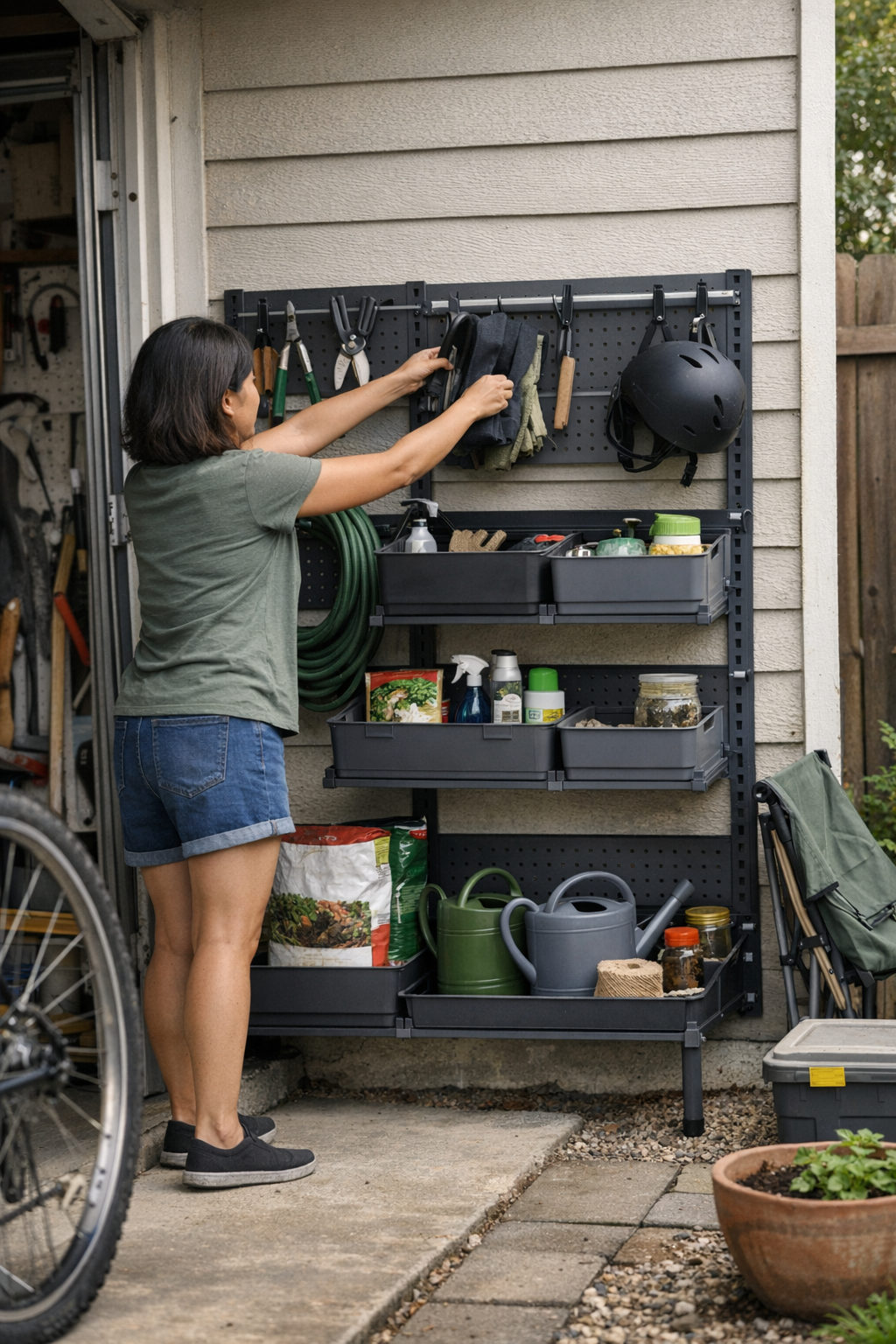
The first day with a new outdoor storage setup always feels like you’ve finally won back your own backyard. The patio edge is clear, the bins along the fence are tidy, the chairs line up as if this time, the system will hold. But give it a week. Now the rake sits awkwardly between recycling totes because someone needed room for a bike, a soccer ball is wedged by the back step because that’s fastest for the kids, and someone—never the spouse who planned the zones—slides a garden trowel behind a bin that already overflows. The clean look dissolves. The footpath shrinks. Even grabbing a broom means shifting a chair first. Suddenly, the “organized” area gets in the way as much as the old pile ever did.
When “Organized” Becomes a Daily Puzzle
Yard storage that looks neat on day one meets its real test after a week of traffic. The difference between a space that just looks organized—and one that actually stays easy to use—shows up fast. It’s not a dramatic mess at first: a bike leans where you need the rake, buckets teeter in a stack, a bag of mulch slides into the path. Each return adds friction in quiet ways. Movement slows. Suddenly, there’s a silent game of slide-and-shove every time you want the hose or gloves; nothing comes free without first rearranging something else. In households where multiple people make returns at different times, priorities clash. Someone’s shortcut is always another person’s headache.
The Unseen Creep of Overflow
In a backyard that actually gets used, the wrong setup turns small mistakes into permanent problems. One person resets every night, but that “system” collapses when everyone else stashes gear where there’s just a sliver of space. Bins and freestanding racks silently max out, then spillover seeps into corners that were supposed to stay clear. The hooks fill unpredictably—overflow on the easy-to-reach ones, others collecting cobwebs because they’re too high or tucked away. Floor space turns into the emergency drop zone for garden shears, bike helmets, or anything that doesn’t fit the system in a rush.
The friction is mostly invisible. A “temporary” chair slowly claims the entire walkway. Someone sets the hedge trimmers down, just for a moment, and somehow that becomes the tool’s new home. Every week, the so-called fix starts to unravel—not as a visible mess, but through time lost in slow detours and a lingering sense of annoyance. Not real chaos, but a slow-moving gridlock that never quite goes away.
Where Flexible Storage Loses the Plot
Flexible layouts—open shelves, big catch-all bins, low racks—promise to swallow anything. They do, at first. Then things get blurry. Bins overflow fast, stacked buckets start toppling, and the “flexibility” turns into a maze of grab-bags and mystery piles. You want the pruners and find them beneath pool noodles, behind an unused soccer net. What once felt like options now feels like hunting through someone else’s garage sale.
Every corner becomes a magnet for items that will “go back later.” A plastic tray near the fence fills, a single glove claims the sunniest post, an old basketball just lives under the table. Even if you’re determined to reset the area, the space itself doesn’t help keep things sorted. Flexibility turns to friction: more stuff, less clarity, the endless cycle of moving piles just to open a path.
Wall-Mounted Systems: Restriction That Actually Frees You
At first, wall-mounted setups look strict—hooks are fixed, trays are shallow. There’s no room for improvisation. But as you actually use the space, the payoff is obvious. Every piece has a true home, and even if someone uses it differently, the wall system’s logic nudges everything (and everyone) back into line.
Compare how a wall holds up after a full week of careless returns: the rake always lands back on its hook, hoses find their trays, helmets aren’t buried in the bin, and the path under the system stays open, never hijacked by “waiting to be put away” odds and ends. You still see less-than-perfect behavior—gear crooked on the hook, a bucket set one spot off—but the structure corrects chaos automatically, making resets rare and never overwhelming. This isn’t about achieving a photo-perfect reveal; it’s about a setup that quietly handles repeated, even careless, real-world use.
The Real Test: The Garage Threshold
Picture the garage edge on a normal Saturday: bikes squeezed next to a row of rakes, folding chairs stacked for one backyard meal, the whole setup well-intentioned but brittle. By week three, a bike blocks half the entrance. The pile of chairs, once neat, migrates so that grabbing a shovel means shifting everything around it. A helmet drops “just for now” and starts a chain reaction—soon there are two chairs to move before you can access the hose. What looked like a practical footprint now blocks movement and slows down every errand.
Rescue attempts feel endless: sweep, straighten, promise to keep it clear. But within days, those open bins fill and pathways narrow again. Without structure guiding behavior, any setup ends up needing constant resets—until the routine feels harder than the original mess.
Reset Without the Resentment
You can only restore “day one” order so many times before frustration takes over. The trick isn’t working harder; it’s designing storage that helps lazy, distracted, or hurried returns land in the right spot—with no heroic effort.
Break the wall in zones: Replace a row of freestanding bins with wall hooks for every full-size tool, and install shallow trays a foot off the ground—just enough room to slide boots, small items, or gloves underneath, with nothing hogging the footpath. The clearance stops piles from creeping underfoot. Even on off days, dropped gear stays above the walking surface, and the main lane stays open, not hidden beneath spills and overflow.
Upgrade sticky corners: Find a zone where overflow piles up—behind the bin, beside the hose, beneath a bench. Don’t add another loose tote. Mount a hook or tray instead. Even one fixed anchor on the wall is enough to redirect daily drops and stop a dead corner from claiming your stuff.
Organization That Lasts by Absorbing Real Life
The only outdoor setup that survives a real month is one that handles shortcuts, half-hearted returns, and the daily shuffle. When design makes it obvious where everything goes—tall items high and tight against the wall, all the quick-grab stuff low and visible, the main path unobstructed—routine use barely disrupts the flow.
This isn’t about a flawless reveal. It’s about knowing that, when you come in dirty after weeding or a kid comes flying off their bike with helmet in hand, the setup won’t punish a rushed or lazy return. The right storage absorbs day-to-day mess, nudges stray items back into place, and keeps any one mistake from snowballing into a turf war or endless reset grind. In a real backyard, nobody needs to become the routine enforcer. The space simply works, quietly holding its own through dozens of uses—no daily shuffle, no creeping bottleneck, no one corner turning into a permanent overflow lot.