
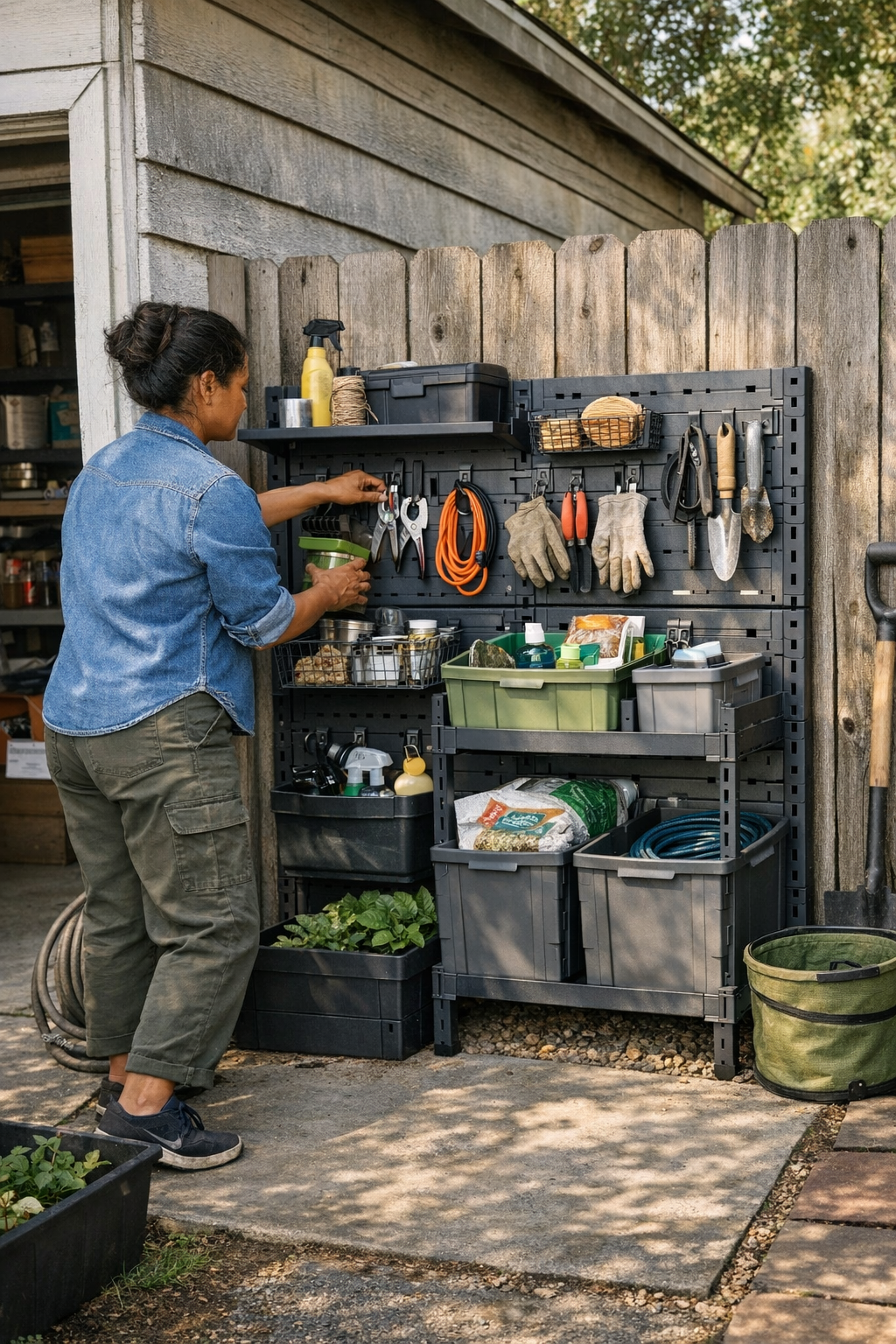
Every outdoor corner and backyard edge quietly exposes its storage flaws faster than most people admit. You organize tools, stash gloves, line up bins—then watch as every family habit and shortcut collides in the same cramped spot. It doesn’t take long: one evening of quick drop-offs, one rushed cleanup after mowing, and the so-called “system” hits gridlock. A pathway that looked clear Monday now bottlenecks with bikes and garden clutter, forcing anyone who needs the hose or trash bin to wade through yesterday’s compromises. This isn’t just about the stuff you buy—it’s whether your setup can handle real return flow with real people moving through real routines.
When Floor Bins Fuel the Blockages
The fix-it instinct kicks in. People buy bigger chests, add deeper bins, convinced that more storage will make the overflow disappear. In single-user worlds, maybe it helps. But with a small yard or shared side zone, deep bins just become another beacon for tomorrow’s pile. The lid clogs up with tangled extension cords and half-dry towels. By Wednesday, propping a shovel or leaning a bike nearby means blocking the front of the bin altogether. The more stuff you cram in, the harder it becomes to actually put away the next thing—until returning a broom or watering can means shoving, restacking, or simply tossing it in with a silent promise to “fix it later.”
Every retrieval or return becomes slower, not simpler. The person who still cares finds themselves emptying the bin entirely to dig out gloves or ease the lid closed one more time. That “reset” doesn’t last. You know it’s inevitable: things will spill out, corners will collect stray tools, and that feeling of a fresh setup collapses under another ordinary week.
Why Wall Panels Shift the Routine
The solution doesn’t come from squeezing more onto the floor. The real difference shows up when you intercept clutter before it lands. Modular wall panels—posted right along the fence, by the side door, or on a garage edge—become breakpoints in the return flow. Hooks catch loppers and bags on the way in, shallow trays snag those gloves that never seem to find a bin. Instead of asking people to move things twice, the system meets them where they drop gear. No wrestling lids, no reorganizing just to get through. The question of “now where?” disappears one item at a time, right at the point of use—not after everything’s in a heap.
The best setups aren’t just mounted somewhere—they’re right in the slipstream of activity. Hooks where sweaty helmets come off, shelves at kid height, trays at the edge of the patio where those sunglasses actually get abandoned. Suddenly “putting something away” is less a negotiation and more a reflex. The payoff is immediate: fewer blockages, less finger-pointing, and the end-of-week cleanup shrinks to a slight reordering, not a full-on overhaul.
A Typical Saturday: How Clutter Creeps In
Picture three people doing yardwork late morning. Pruners dropped for lunch, gloves abandoned mid-project, a hockey stick mixed into the pile for “just a second.” Someone wedges the new compost bucket beside the chest, cutting off the path to the gate. By evening, anyone rolling a bin or walking through is forced into a sidestep shuffle, lifting bikes out of the way or bending over spilled tools just to cross. When finally asked to “reset the yard,” everyone feels stuck—where do these things even go, if the bin is buried and the last hook is at the far end of the fence?
Now, swap that chaos for a fence-line panel with three hooks and a slim rail. Pruners snap onto a hook as soon as the job’s paused. Gloves get stashed at eye level—no lid lifting, no rooting through bags. The hockey stick? Visible, reachable, and neatly out of the pathway. Midday and evening, the main movement line stays open. Cleanup is a walk-and-hang, not a chore of riding herd on tumbled piles. Bit by bit, the setup fights the urge to “just drop it anywhere.”
What Blockages Actually Show
Almost every area feels “fixed” after a weekend tidy—until the routine restarts. Real warning signs appear fast:
- Anytime you move one thing to put away another—or can’t return something without restacking.
- Wall rails or hooks exist, but sit stranded in a corner, never collecting the actual overflow.
- Certain spots always develop as the dumping ground: bucket, ball, broken trowel, last week’s forgotten shears.
- Everyday routes kink up by Tuesday. One bin, one bike, and you’re blocked again.
- Returning items feels tedious enough that the most-used path becomes a catchall zone within days.
These are the pinch points that break the illusion of order. The system isn’t failing because you own the wrong products—it’s failing because it can’t keep up with how (and where) people actually interact with the space. If each routine makes the setup a little bit worse, resets never last. Frustration, not flow, becomes the real daily reality.
Making Returns Almost Automatic
Real improvement shows when returning something is the path of least resistance—not another step to dread. Modular wall panels and fence setups thrive because they shrink the mental gap: snap, set, done. With these right at exits and key routes, “cleanup” dissolves into dozens of tiny, almost automatic actions. Hang up a spade while stepping past. Drop a helmet at eye level while heading inside. Even messy housemates find these pathways hard to ignore.
This isn’t about perfection—someone will always skip a step now and then. But these setups draw clear lines against the major resets. Floor space stays walkable. Bins and bikes stop blocking every project. The long arm of clutter has fewer places to take hold, and the need for three-hour weekend resets fades into the background.
Smart Tweaks: Less Piling, Smoother Movement
Small shifts make a visible difference: move away from deep bins and increase visible, accessible wall storage near your busiest entryways. Hooks at multiple heights make options obvious for both adults and kids. A shallow shelf or mini bin on a panel snags the sunglasses and garden gloves that usually get drowned in larger containers. Each returned item becomes a streamlined action, not an excavation through stacked clutter.
- Mix and match hook types—long, short, angled—so nothing sits awkward and untouchable.
- Rethink wall space as traffic space: are the exits actually clear, or is visibility just hiding deeper reset problems?
The good kind of setup doesn’t just “look neat.” It keeps corner drift in check and gives random items a default destination before they become someone else’s headache. Movement opens up, resets last longer, and the outdoor zone stops functioning as storage limbo.
Past the Illusion: “Organized” Isn’t Always Functional
A chest under the eaves. Baskets lined in a row. The obligatory rack by the shed. From a distance, every space seems workable. But if the system crumbles the first time routines collide, the only result is a cycle of shuffling and stale arguments about whose turn it is to “finally put away the mess.” Outdoor organization that matters isn’t about visual calm—it’s about setups surviving the real week, not just the reset. The difference shows in the spaces that stay open, the pathways people use without thinking, and the clutter that never gets a chance to settle.
Visit TidyYard to explore practical storage options that support real outdoor spaces.