
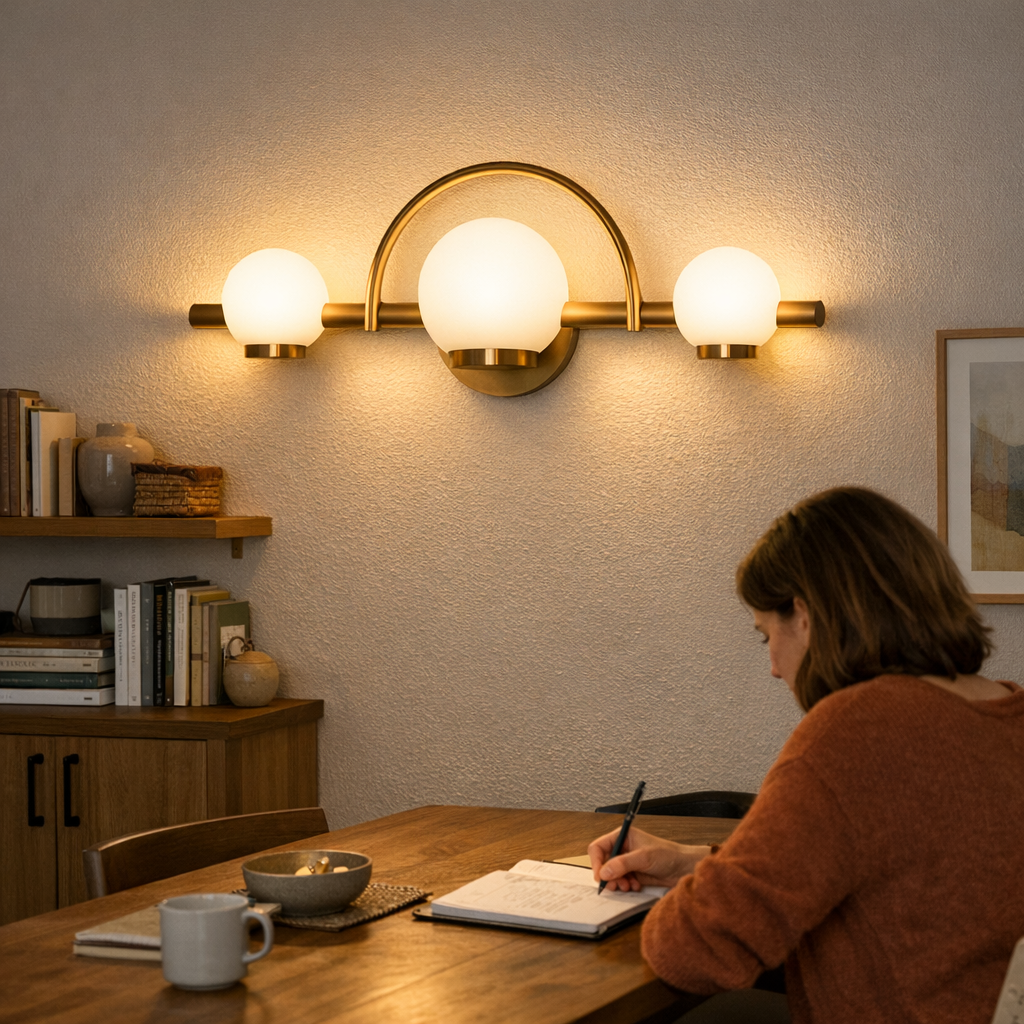
Even with a modern ceiling light blazing overhead, a room’s edges can feel unfinished—especially where you work, read, or search for that missing item. Anyone relying on ceiling-only lighting in a mixed-use space—whether it’s a home office, shared dining zone, or a worktable—knows the irritation: side walls fall into gloom, desk edges get half-lit, shelves hide detail in shadow. Instead of a single, clean solution, you end up with an endless routine—leaning forward to catch more light, moving books to less-dim spots, straining your eyes just to read a label. The frustration isn’t theory; it’s found in every corner you avoid, every shelf you squint to scan, and every time you notice more hardware or tangles than clear visibility. The gap between a “finished look” and actual daily ease is wider than most upgrades admit—and it shows up fast in the real world of indoor lighting and lighting supports.
The Problem That Sneaks Up: Dim Edges and Persistent Shadows
Ceiling-only lighting keeps the architectural lines clear, but the weakness shows when you’re in the room, not watching from a doorway. Sit at a table: under the fixture, brilliant. At the edge—where your notebook or dinner plate actually sits—it’s shadowed, and your own arm blocks crucial light. Reach for a book on a high shelf and its spine is nearly invisible; items blur into the wood grain. Shelves, corners, and sidewalls quietly resist your routines. Each added user casts more overlapping shadows, making shared zones feel crowded and awkward even when the room looks organized.
What’s really at stake is contrast: neat ceiling above, unresolved edges everywhere else. Even seemingly small frustrations, like a desk lamp cord snaking above the baseboard, or brackets clashing with nearby outlets, jump out—because the light itself never fully claims the space. The result: a layout that looks tidy from the center but fights every purposeful use along the periphery.
Ceiling Fixtures: Clean Look, Real-World Limits
The appeal of a flush-mount or panel fixture is clear. No clutter, smooth ceiling lines, and nothing obstructing the room’s design flow—that’s the promise. But after just a few days, weak zones start demanding attention. The workstation’s far edge sits in soft dimness, forcing you to drag your chair or stack notebooks in the scarce brightness near center. Side walls swallow up details and swallow your patience. The ceiling plan appears resolved from a distance, but puts real friction in the path of daily use—forcing workarounds, odd angles, or regular re-positioning just to see clearly.
It isn’t that the room looks incomplete. It’s that every small task—writing, sorting, cleaning, or just finding an object—runs into the same hidden barrier: light focused on open air, not where hands and eyes actually work. Repeated adjustments—leaning over the desk, twisting a screen, tugging a lamp—signal a solution that’s architectural, not practical.
Wall Lighting: The Practical Fix for Unused Zones
Ceiling fixtures rarely conquer vertical surfaces, room edges, or shelves built flush to the wall. Wall-mounted lights and directed task fixtures hit these blind spots precisely where ceiling lighting fails—casting light across the surfaces and margins where daily routines live and break down. The effect jumps out in compact multipurpose rooms: a wall bracket above a sink, a light tucked behind a narrow bookcase, an LED strip running under a floating shelf. Suddenly, the “unseen” zones flip from murky obstacle to usable, visible asset. Now, every routine—reading, meal prep, organizing—flows with fewer pauses, fewer makeshift solutions, and no constant urge to re-light the scene.
Small Example, Big Difference
Installing a slim bracket fixture above the midpoint of a shelf changed everything. The real win? Not just brighter space, but a bracket tucked nearly flush to the wall, hardware fading into its surroundings, and a cable routed behind the shelf—gone from view even at a glance. No more guessing which spot would stay dim. Now, every item stands out, whether it’s an evening reset or a rushed search for a charger. Shared meals, reading, or end-of-day clearing all happen without dragging a lamp closer, shifting piles to the light, or tripping on rogue cords. The shelf’s edge went from always overlooked to automatically useful, with the hardware itself vanishing into routine.
Lighting Support Done Wrong: New Friction Appears Fast
But not every fix works. Mount a wall light too high and you swap one blind spot for another; too low, and glare hits you in the face instead of the task zone. Select brackets that clash or run cables carelessly and the setup starts shouting for attention—the bracket, not the light, becomes the lasting distraction. Plug-in lamps or stick-on puck lights promise instant results, but quickly slide, dangle, or cast moving shadows as you keep tweaking their position. Each fix passes the “neat install” test for a moment but falls apart when daily use exposes persistent shadows, uneven coverage, or the slow creep of visible hardware. Clean mounting matters, but how that support fades from notice under repeated movement is what actually keeps friction away.
The Long-Term Payoff: Everyday Use That Just Works
The true payoff of blending ceiling and wall or shelf lighting isn’t stylistic—it’s structural. Eliminate barely-lit desk edges and evening work sessions go from workaround to habit; hide cables behind the bracket and surfaces pop clear of distraction. When wall lights and low-profile brackets are installed with real use in mind, the invisible payoff is a room you barely have to think about: you stop dragging lamps, stop losing storage to “shadow zones,” and stop trading tidiness for shaky utility. The right supports disappear in plain sight—no re-adjustments, no excuses, just surfaces and shelves ready for whatever the day stacks on them.
It’s always tempting to declare victory at installation, but a week later, those rushed choices show up—glare lines where you work, misplaced outlets, wobbly clamps. Lighting supports that match the real flow of movement and storage erase that low-level resistance. The absence of annoyance, not the appearance of polish, is what finally feels like a finished space.
Practical Tips: Getting the Setup Right From the Start
Lead with real uses: Place fixtures where hands, eyes, and traffic genuinely go. A wall lamp sitting directly above the table’s working edge, a slim fixture hugging tight to the underside of a shelf, or an LED panel hidden just out of sight—these stop discomfort before it starts. Each choice should face its actual routine, not an idealized layout from a distance.
Control cable paths before they control the view: Power cables routed behind surfaces, cord covers color-matched to the wall or furniture line, and restraint on visible outlets make the difference between light as a presence and light as a distraction.
Test, live, then adjust: Don’t trust a “finished” install until you’ve used the space across a week. Watch where shadows recur, which angles force odd movements, and how brackets hit in daily motion. Sometimes moving a fixture or bracketing in a few centimeters solves a shadow or eliminates a recurring cable snag permanently.
Where Lighting Support Really Pays Off
The change is visible right at the margins: That once-dim shelf clearly displays every item. You work across the entire desk without nudging closer to the ceiling light. Dining zones pile on dual roles—eating, working, reading—no longer fighting for the brightest seat. Hardware and support pieces blend quietly out of sight, and lighting stops being a puzzle to solve every evening. The goal isn’t showroom perfection—it’s living without the friction that broken setups create, even in a room that otherwise looks “done.”
When you match fixtures, supports, and cable management to how you actually use every square meter, the line between what looks right and what lives right finally disappears. It’s the simple, lasting difference that well-chosen lighting support can make—out of sight, but shaping every routine.