
There’s a familiar frustration buried in even the neatest closets: the daily scramble for what you actually need. Stare at a row of matching bins or stacks of folded clothes, and everything looks under control—until you reach for one glove, or that bottom sweater, and realize you have to dig, lift, or reshuffle just to get it. Week after week, the seemingly organized zone turns into a slow-moving mess: piles slouch, categories cross, and the undercurrent of disorder seeps into your routine. The surface order is a mirage; underneath, the system quietly fails at the one thing it should make easier—grabbing what you need quickly, again and again.
When “Tidy” Storage Turns Into Hidden Chaos
It usually starts small. A winter scarf gets dropped on top of an overstuffed bin. A last-minute grocery tote is wedged awkwardly behind a row of folded pants. As long as you can close the closet door, it feels fine—until the next round: a second scarf, a third pair of gloves, maybe a baseball cap tossed onto what was once a neat pile. Before long, searching for a specific item means shifting, moving, or completely toppling other things out of the way. Each attempt to stretch the system’s capacity chips away at its clarity, and you lose track of where anything actually lives.
Opaque bins and tightly packed shelves promise a calm exterior, but they’re notorious for breeding mixed categories and “out of sight, out of mind” overflow. It’s not the container’s fault—it’s that hidden clutter always finds a way to spread if nobody can see it spilling out. Small habits, like squeezing socks into the corners of an already-full basket, eventually build into a routine of reshuffling and guesswork, not true organization.
The Real Cost of “Looks Organized”
The problem sneaks up on almost every well-meaning storage setup. Shelves crammed to the edge and lidded bins overflowing rarely announce their issues right away. Instead, you start noticing small symptoms: it takes longer to find a clean towel, you fish around blindly for the right hat, stacks refuse to hold their shape for more than a couple of days. The reset that was supposed to take three minutes turns into a ten-minute headache every Sunday—or worse, gets skipped completely, letting clutter pile up for weeks.
Imagine the classic family hallway closet. In November, bins for hats, gloves, and scarves look identical—neat and uniform. Fast forward to January: you’re late, hunting for a matching pair of gloves, and realize they’ve slipped under a jumble of scarves. Half the contents of each bin have wandered over to the next category. The weekly reset—dump, sort, refold, stuff—becomes a battle, not a routine. And yet, the closet still looks photo-ready when you shut the door, hiding the slow diffusion of disorder underneath.
Why Visible Limits Put You Back in Control
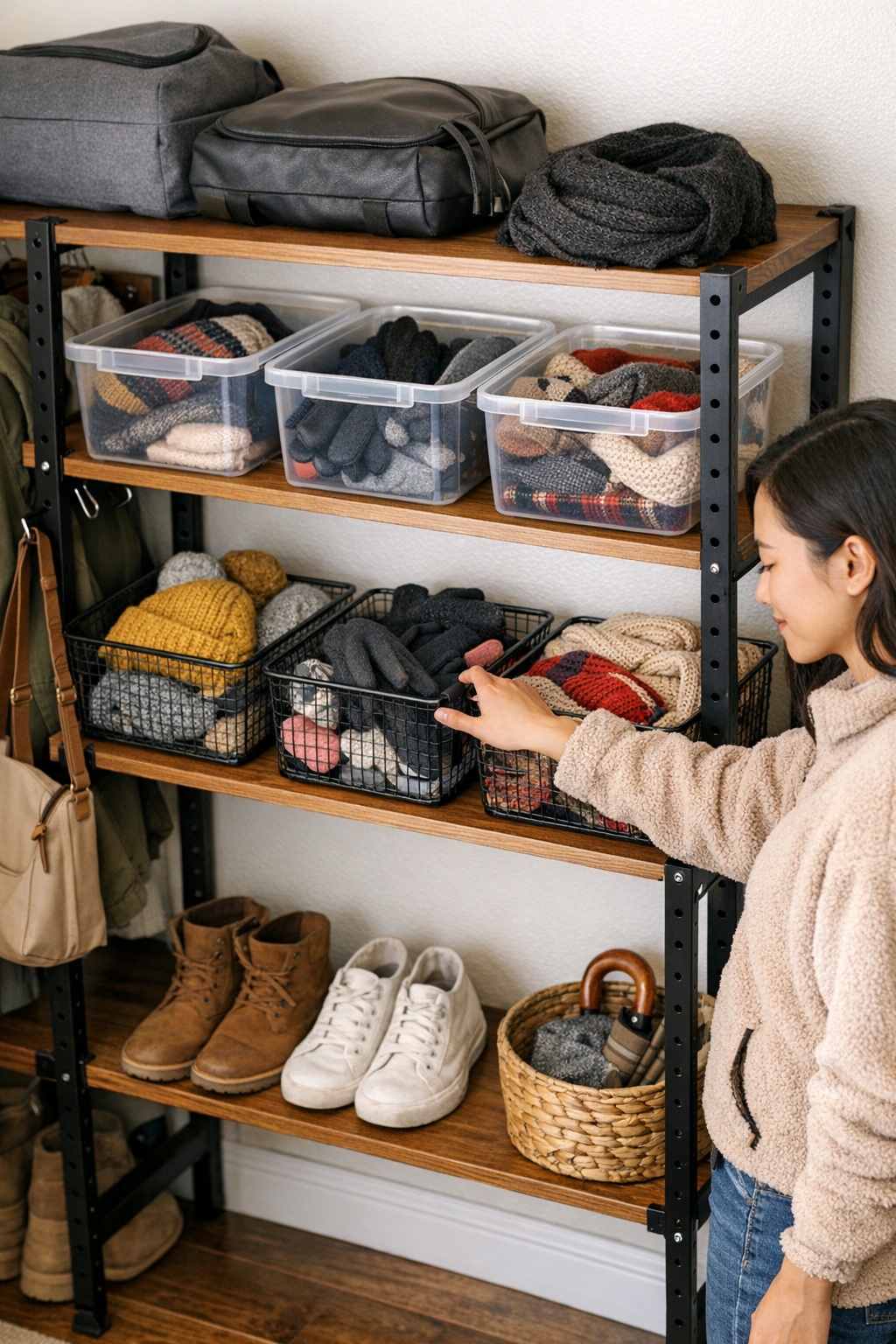
Open baskets or clear-front bins give you instant feedback on what’s happening inside your storage. These containers don’t allow quiet overflow—when something breaks the boundary, it’s obvious immediately. Slide in one extra beanie or add a fourth hoodie, and it’s impossible to ignore the pile creeping above the edge. You’re gently pushed to choose: pull something out, or make space for what just got used. The result isn’t rigid minimalism—it’s a daily nudge to keep categories intact and avoid the “buried beneath” syndrome that plagues closed bins.
The real difference shows up during normal, rushed use. Instead of waiting for the Sunday reset, you spot trouble instantly—a scarf dumped in the wrong spot gets moved, a glove basket that’s too crowded demands a quick edit. Boundaries between hats, gloves, and scarves hold steady because overlap can’t hide for long. The reset shrinks to a glance and a nudge, not a full excavation. It’s not perfection, but it’s maintenance you don’t dread, and speed you actually notice during weekday chaos.
Micro-Adjustments that Make Order Stick
Swap deep, opaque bins for open, shallow baskets, and suddenly the shelf works differently. You see when the glove pile is starting to tip, not after half of it lands on the floor. An overloaded basket is instantly obvious, so you weed out a stray pair before backup starts. Forget a weekly overhaul—the fixes happen each time you return something. This little friction keeps chaos from ever building up in the first place.
Quick improvement: Big, readable labels (“Hats,” “Gloves,” “Scarves”) at the front of each open bin make it even less tempting to dump things randomly. Even young kids (and distracted adults) are more likely to get items back in the right spot if every category is obvious at a glance.
The Spaces Where Visibility Is a Game-Changer
Storage friction is sharpest in zones you touch daily. Entryway shelves where shoes collapse into a pile by Tuesday, kids’ cubbies that become black holes for stray socks, linen closets where towels sink beneath teetering stacks—these are the places where open or clear storage does its best work. Each time you dig or shift to get what you need, you get a free—and immediate—alert if things are piling up.
You’ll see it under the bathroom sink too. When baskets hide everything, extra bottles, tubes, and boxes sneak in until the drawer jams. With a shallow see-through bin or a lower-profile tray, you spot the extra toothpaste or unused bottle right away, and either use it or toss it, not shuffle it around for months. The same goes for laundry rooms: clear limits stop the “just stuff it in” approach from quietly turning utility shelves into catchalls.
Not Everything Needs to Be on Display
Some things simply aren’t for everyday viewing—off-season shoes, extra blankets, or emergency supplies. Closed bins still have a crucial place for dust control and less-used gear. The trick is to keep your daily rotation visible and finely limited, while letting closed storage hold only what’s truly “back stock”. If grabbing something from a lidded bin feels like opening an archeological dig, that’s a sign it’s time to prune—not just to press down and force a little more in.
Set the Right Boundaries for Your Routine
The goal isn’t to show off every item you own, but to make staying organized almost automatic. In high-traffic zones, reach for open bins or transparent containers that make overflow impossible to miss. Use closed bins only for items you don’t need weekly, and make those bins a last stop, not a dumping ground.
You know you’ve found the right setup when putting things away is simple and getting them out is just as quick—no shuffling, no rebalancing, no mental inventory required. The real mark of an organized shelf isn’t the pretty surface, but how it behaves when the day is rushed and routines are strained. When weekend resets get shorter and daily pick-ups get easier, you’re not just organized—you’re genuinely in control of your space.
Clutter creeps in quietly when you let boundaries fade. Baskets and bins with visible limits keep your system honest, making small daily corrections feel natural instead of exhausting. Let your storage show you when it’s full, and you’ll spend less time digging and more time actually using the things you keep.