
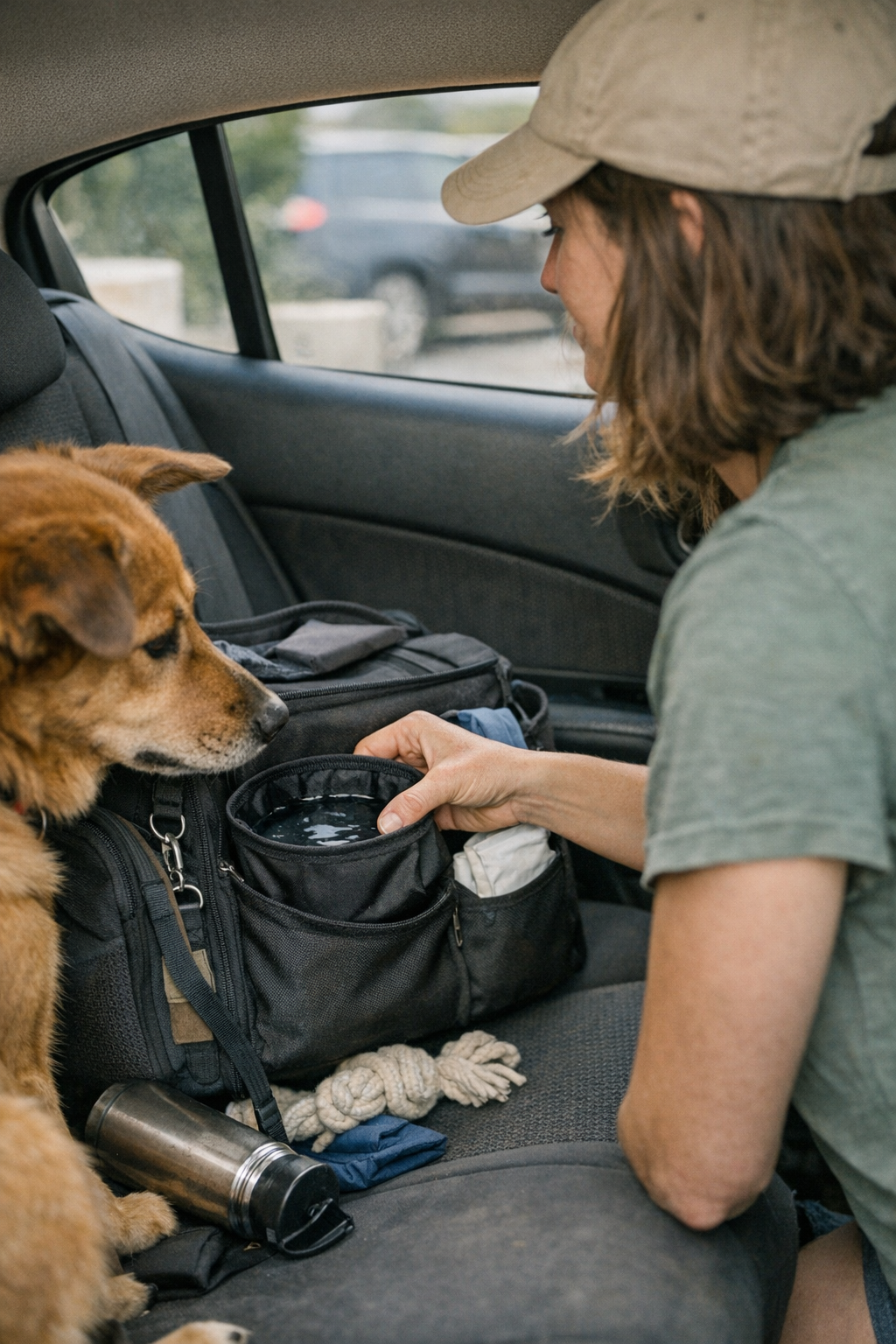
Most “organized” pet travel bags only look good the moment you step out the door—give it two stops and any hidden flaw makes itself known. The handle feels comfortable, the zippers are all closed, and every item seems to have its place, but as soon as your pace is interrupted—rest stop, quick cleanup, roadside leash—what once felt smooth turns into a slow shuffle. The problem isn’t whether the right items are packed; it’s whether reaching for them under real travel pressure brings order or chaos. A setup that resists this friction signals the difference between PawGoTravel’s approach and yet another bag that falls apart at the first restart.
Getting Out the Door: Why Looking Organized Isn’t Enough
That first optimistic minute—dog circling your feet, travel bag looking slick, car keys in hand—always fakes you out. On paper, everything is where you want it: wipes tucked away, bowls settled deep, leash clipped neat. But this grip on control ends at the first unscheduled moment—a pit stop, a street-side wait, a sudden dash for water. Now, the arrangement that seemed so considered forces you into a frantic mental search: where’s the bowl, did the leash loop under, why has the wipe pouch sunk behind extra snacks? What looked “together” at home is just one zipped layer away from being undone by real movement. The gap between “packed” and “useful” starts here, not at some later crisis.
Stop-and-Go: When Pet Curiosity Collides with Setup Flaws
Pet travel rarely unfolds smoothly—dogs get bored, distractions pop up, and your “system” is dragged from entryway order to vehicle-blur within an hour. At each stop, seat edges and footwells become improvisation zones. The moment your dog starts fidgeting at a red light or bolts upright at a highway rest stop, neatness unravels. Now, can you grab the bowl or leash in a swipe, or is one blocked behind a zipped layer or tangled among toys? If you have to start digging, travel rhythm collapses. Every unnecessary reach adds time, frays patience, and blurs that line between pet travel and a recurring hassle. The pet’s agitation rises, and you find yourself shuffling a pile instead of handling a trip.
Repeated Motion Means Repeated Friction
It’s not the first stop that ruins most setups—it’s the third, fourth, and all the rest. Each small pause uncovers new weak points: treats slip deeper, wipes get buried, leashes snag. Every restart means pulling, restacking, or unzipping parts that shouldn’t need attention. A bag optimized for “tidy once” falls apart in cycles—what seemed perfect at home turns clumsy when you’re pressed to move fast at curbside. Items built into elegant layers disappear from reach the moment chaos starts, and the more you try to keep up, the worse it gets. At some point, you’re reorganizing more than you’re traveling.
Real-World Pet Travel: Scenes Every Owner Recognizes
That Mid-Trip Pause: Calm to Chaos in Moments
Parked at a crowded rest stop, your dog quiet, bag close—then a squirrel dashes by, your serene setup vanishes. The travel kit you prepared becomes a puzzle box: the bowl is trapped under the emergency leash, the wipes are behind a zipped compartment, a toy crashes onto the floor with one bad grab. You try to anchor the leash while your dog surges forward, scrambling for what you need while the seat-side area devolves into a mess. Seconds pass; agitation climbs. By the time you dig out the essentials, you’ve lost momentum, both canine and human nerves are frayed, and your “orderly” travel area now looks defeated by a simple pause. This isn’t rare—it’s the default for bags prioritizing looks over lived-in flexibility.
Cleanup Supplies: Present, But Never in Reach
Every pet trip brings mess—muddy paws, spilled kibble, fur everywhere. Most travelers tuck wipes or cleanup kits neatly into side pouches at the start, then lose them under misplaced toys or snacks after the first repacking. The smaller the mess, the harder it is to justify the struggle, and soon just finding a wipe through tangled items turns every minor spill into a drawn-out ordeal. It’s not a catastrophe, but the repeated inconvenience wears you down. Travel fatigue grows worst when simple cleanup becomes two steps harder each time, and the thought of another delay makes each restart run slower.
One Adjustment Too Many: The Hidden Tax of Overlap
Repeat use exposes which setups truly bend to the trip and which ones break down into friction. Let a chew toy slide over the wipes pouch, clip a leash at the closest D-ring—by stop three, you’re wrestling overlapping clips and restacking layers just to touch the basics. The deeper reality is clear: you’re spending as much time resetting your bag as you are actually moving. A bag that “holds everything” isn’t enough if it organizes you into more micro-interruptions. PawGoTravel’s focus on layout is visible here—either your most-needed items are isolated from the clutter, or you pay with choppy handling all trip long.
What Makes a Bag Work: Beyond Just More Pockets
Why the “Vertical Bottle” Trick Can Backfire
“Smart” features on paper—like deep vertical bottle sleeves—promise neatness until the bottle’s blocked by a fold, a toy, or a crumpled towel. Now, grabbing water means removing two other things first, and handling slows where speed matters. A bowl or bottle in a quick-exterior pouch turns “where is it?” into a clean grab, ending the stop before impatience wins. Tight packing isn’t a solution when it forces delay, and every clever stacking trick becomes an enemy in the chaos of real travel. Bag setups that sacrifice rapid reach for shallow neatness work against you, not with you.
The “Prepared” Look: Why Calm Isn’t Always Quick
A visually calm entryway setup often means hidden trouble on the road. Blankets, jackets, and toys layered for aesthetics force more sorting at the exact moment your dog surges with excitement. What helped keep things “tidy” at home now blocks access in real use. Even the best comfort item—snuggled on top—quickly becomes a hurdle if it hides bowls, traps wipes, or locks the leash under too many layers. Every extra move makes the bag less nimble. If your order comes at the cost of speed, the trip loses twice—first to mess, then to handling frustration.
The Real Fix: Prioritizing Use Over Stacking
No pet travel bag truly improves your trip by squeezing in more things—it gets better by removing overlap and putting your go-to items dead center, right where you’ll need them on the move. The best fixes aren’t glamorous: pull the wipes to a seat-edge pocket, keep the leash clip away from anything zipped, anchor the bowl so one hand and no digging gets it out. Owners who recognize which three items they grab at every stop and reset those for instant access cut out seconds at every pause, and stress seems to drain away alongside the extra steps.
How Small Fixes Change the Trip
Move a single pouch to the front, pin down the leash in a dedicated spot, shuffle comfort toys so they never bury the cleanup kit. Each change is small, but during a half-dozen trip pauses, the payoff is obvious: less rummaging, no repeated unzipping, and a bag that follows your trip instead of forcing you to manage its mess. The end result isn’t always pretty—sometimes the outside looks less “clean”—but your movement is smooth, your dog stays calmer, and you actually want to grab the bag the next time out.
Where Setup Meets Real Travel: Supporting Your Rhythm
The value of a travel setup isn’t how it looks after packing—it’s whether you stop reorganizing and start moving the way you meant to, even when the dog’s excitement throws chaos at you stop after stop. Find the gear that follows your actual travel rhythm—reaching, reloading, sitting, restarting—without quietly sabotaging you after the first layer is disturbed. The win isn’t a prettier layout; it’s real-world, repeated ease. After all, pet travel is about momentum, not just first impressions.
Find the gear that fits the trip’s real rhythm at PawGoTravel.