
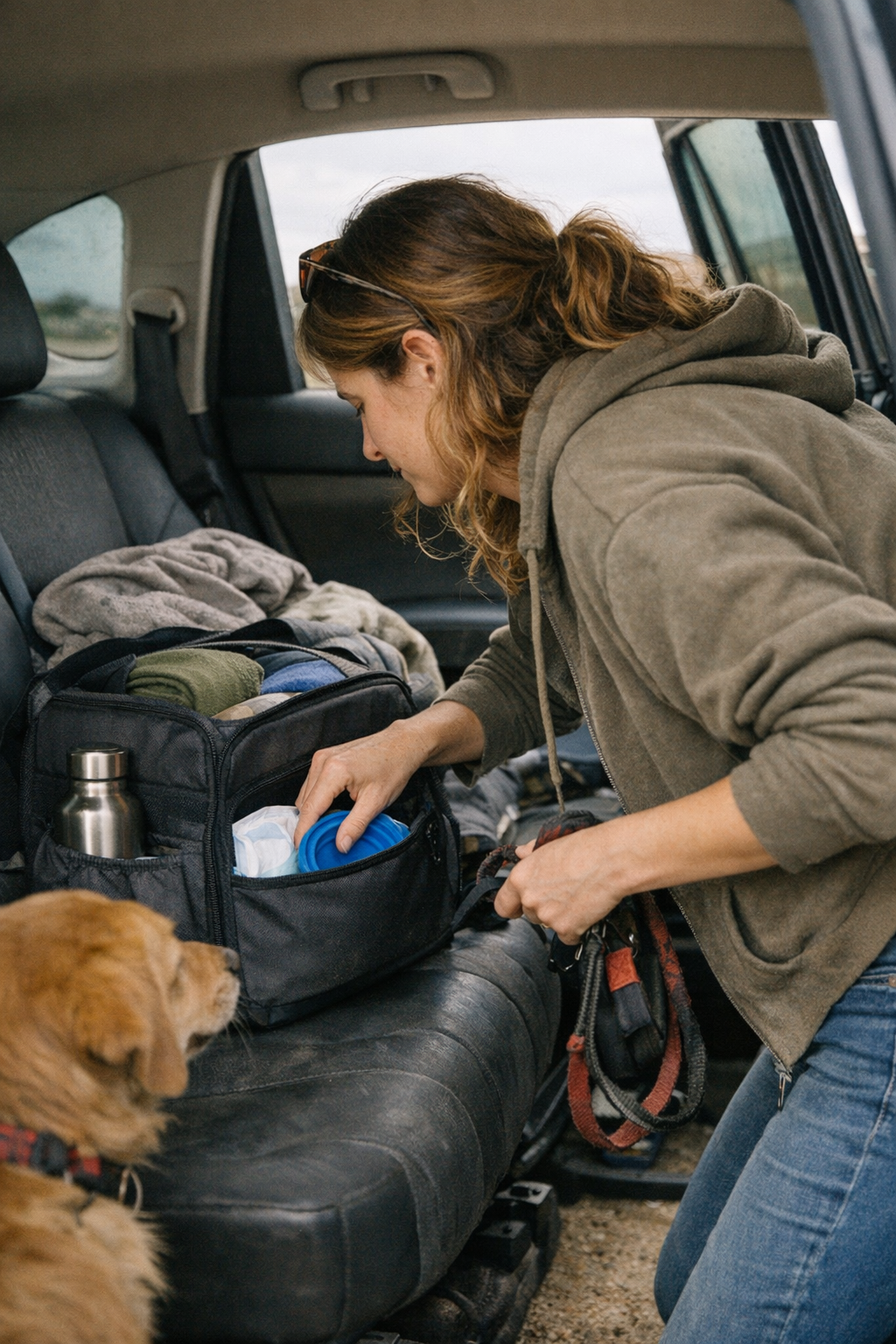
The most common pet-travel mistake isn’t forgetting something—it’s trusting a setup that only looks ready while sitting still. The problem doesn’t show until you’re halfway through a day of stops, leash pulled tight, a pet circling the seat, and you reach for a wipe or bowl and grab at the wrong pocket—again. That initial “everything-in-place” feeling from home evaporates fast once you’re actually on the move. Bags that seemed organized break open at the first sign of movement: a treat pouch dumped out, wipes buried, or a water bowl shifting under blankets. Awkward reach, blocked quick access, and dog and human gear tangling together—these aren’t rare slip-ups. They’re the friction that keeps repeating trip after trip, slowing you down when you need to move most.
When “Organized Enough” Isn’t Enough On the Road
Most pet owners have lived the letdown: a travel bag looks dialed-in until the chaos of a normal afternoon undoes all that order. Maybe that bowl seemed secure in a side pocket, but now it’s trapped under a blanket and you’re kneeling outside the car, elbow-high, to pull it free. Or wipes set “handy” at home now require digging through a jumbled compartment with one hand, leash or door in the other, while your pet twists to escape.
By the third stop, the routine falls apart: bags tossed aside to see into the bottom, treat pouches toppled, awkward stretches across the car just to find a single item. Each mini inconvenience stacks up, and a system that felt efficient now drains momentum on every stop.
Real-World Friction: The Hidden Cost of Travel
Travel stress isn’t just big messes—it’s the slow grind of repeated, fixable annoyances. A few real patterns stand out after even a brief run of stops:
- Blocked access: The item you grab three times a trip—water bowl, wipes—ends up buried every single time, never where you need it in the moment.
- Two-hands-needed problems: Wipes or leashes stashed so deep you can’t reach them while keeping your hold on the door, dog, or bag.
- Comfort gear causing slowdowns: That blanket soothes your pet but consistently slips loose and blankets everything else, usually when you’re in the biggest rush.
- Tangled overlap: Leash, keys, and phone all slide together with pet gear, forcing you to dig for each piece, doubling the interruption at every stop.
- Perpetual reshuffling: Each movement—grab, handoff, zip, unzip—feels like a reset. By late afternoon, the routine is half handling gear, not the pet.
It’s not chaos—just time lost and patience chipped away, every time you fight your own setup to get moving again.
Repeating the Same Moves: Why Setup Weaknesses Multiply
The weakness shows up not once, but in cycles: a setup that works for one stop fails when you grab, stash, and reuse gear five times in a row.
Picture it: muddy paws after a walk, leash in hand, lifting your pet back into the car. You know wipes are somewhere close—except you’re also juggling a treat bag, a bowl, and a comfort blanket slumped over the pile. The search repeats. Each time, a quick clean turns frustrating, and the so-called “system” means pausing to dig—or give up and let paw-prints spread inside the car.
This isn’t one tough day; it’s every errand, every weekend trip—an organized bag that grows more unworkable each time you’re forced to repeat the same slow routines.
A Small Fix with Outsize Impact: Front-Pocket Access
The anchor that changes this rhythm: keep key daily-use items—wipes, water bowl, leash clip—always in an open, front pocket, shielded from clutter, reachable in one natural motion.
After enough frustration, the benefit is obvious. Keep that outer pocket strictly dedicated—no stuffing blankets, no loose treats—just the things you reach for three or four times on any stop. The difference? You still reach that pocket easily after a day of re-packing and movement. That single split-second reach, not a full inspection, now gets you what you need—with the same reliability six trips in as on the first one. Instead of reshuffling or adjusting at every break, you simply move on.
This adjustment sounds small, but it wipes out half the slowdown and lets you stay focused on the next step for you and your pet.
The Mismatch Between Visual Order and Real-Life Access
Pet-travel bags and organizers are often sold by how neat they close, packed with tidy dividers and labeled zones. But visual order means nothing if it doesn’t speed up your movement on a real, repeated trip. If you need to move something aside to get what you really use—or keep reaching into the wrong pocket—the bag’s “system” becomes its own kind of slow trap.
The honest test: a less structured bag with nothing blocking the main access zone will outperform a clever grid of pockets if you can always grab essentials without pausing. In travel, function beats form—especially at the worst moments: rain, mud, a restless pet, or a packed car.
Diagnosing Where Your Pet-Travel Setup Is Failing
Red flags almost always show up in small rhythms:
- Diving into the same compartment for wipes or a bowl at every stop, never finding them on the first try
- Cleanup gear only surfaces after messes already reach the seat or mat
- Bags or pockets so jammed you need to drop something else to open them one-handed
- Pet gear and your own keys or phone mixing, slowing both of you down as you swap items mid-motion
- The fresh-out-of-the-house “order” eroding into repeated mini-adjustments and quiet irritation
Each hassle is minor alone, but combined they turn a routine outing into a slog. Rainy days, muddy fields, or quick errands with multiple stops multiply the pain fast.
What Actually Makes Travel More Repeatable?
Reliable pet travel comes from structure built for repeated, messy, distraction-heavy movement—not just tidy packing. What lasts on real trips:
- Essentials always in the fastest, least-blocked spot—even if the rest looks less tidy
- Compartments designed for on-the-go one-hand access, never double-handled, never under anything floppy
- Clear, structural separation: your stuff and your pet’s don’t meet in the same grab-and-go zone
- A rhythm that lets you reach, use, restore, and restart without thought—no unzipping a new pocket every cycle
When you build for this kind of access and separation, you notice it fastest during back-to-back stops, in less-than-ideal conditions. The outsized result: less friction, more moving, and a routine that adapts to you and your pet—rather than the other way around. No travel setup erases every messy moment, but structure that survives movement is what changes the whole experience after the third, seventh, or tenth stop.
Explore practical pet-travel setups that work in real life at PawGoTravel.