
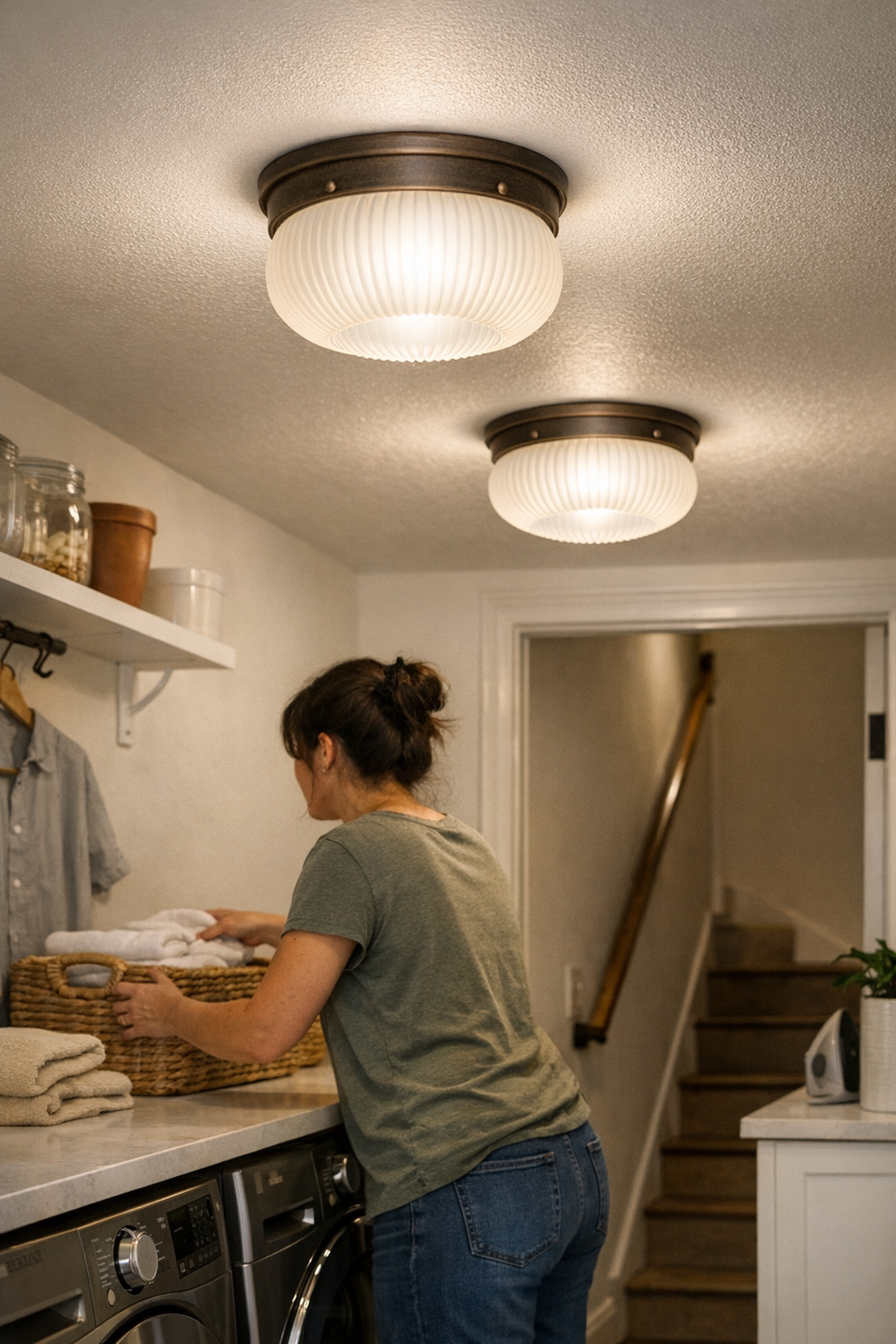
The right indoor lighting is less about what draws compliments—and more about what stops you from stumbling, squinting, or second-guessing every time you pass through a room. Look at the hallway you rush down ten times a day, the bathroom mirror where your face always looks off on one side, or the spot in the laundry where no matter how much you clean, a shadow masks missed dust. For most people, the gaps don’t show up until a light fixture turns routine movement into a minor obstacle—hesitation on the stair turn, double-checking the counter edge, or nudging closer to a too-dim mirror. It isn’t the wattage, or the style. It’s whether lighting actually covers what you need— and stops hiding weak spots that slow you down or make you adjust how you move.
Recognizing Small Lighting Setbacks in Real Life
Poor lighting doesn’t always scream for attention; it just quietly interrupts. Maybe you pause at a stair turn because the bottom step blends into darkness. Maybe you lean at an awkward angle to see your chin in the mirror. Maybe you wipe a countertop twice because the side nearest the fridge sits in shadow. These aren’t dramatic breakdowns—they’re the friction points that keep cropping up because the fixture isn’t built for this room, this routine.
Even a new fixture can backfire. That “bright” flush mount at the center of your hallway may look balanced at first, but cross the threshold at night and the walls near the door still blur out. Carry a bulky basket down the stairs, and suddenly the lower steps dip into gloom, making the trip feel like a risk—especially when your hands are full. Style and brightness can’t compensate for spread that misses key zones or for shadows that get sharper over time.
Why Brightness Alone Doesn’t Solve the Problem
Rooms can look bright on paper and still leave you struggling in daily use. Step into a hallway: the middle glows, but each end fades after dark. Overhead lighting in a bathroom turns your reflection into an uneven study—face washed on one side, shadowed on the other, and skin detail guessing in the gloom. In laundry or mudrooms, a strong ceiling light gets fogged up by humidity or steam, leaving you hunting for corners and refolding clothes you thought were sorted.
Then there’s glare— the quietly aggressive mistake. A fixture at the wrong height tosses harsh light straight into your eyes at every pass, especially on stairs or in narrow corridors. Movement slows; you find yourself looking away from the steps, not at them. Instead of making you feel confident, the space throws tiny jabs of uncertainty every hour.
Repeated Routines Reveal Lighting Weaknesses
The wrong lighting doesn’t just fail once—it makes its presence known every day. Each routine exposes the unresolved edge:
- Crossing the hallway: The center’s bright, but open the door and your eyes strain to catch the shadowed edge.
- Stair use: A single fixture centers the glow, but the last step blurs at dusk—making you slow down or pat with your foot.
- Mirror use: Light drops off on either cheek, so you tilt and shift, searching for evenness in reflection.
- Laundry: Steamy air dulls the bulb and you end up missing lint piles or struggling to see if a sock matches the rest.
Each friction is small—none are deal-breakers. But that’s what makes them costly: they don’t demand a fix, so you just work around them, and the irritation compounds until you find yourself dreading a part of the house that should be automatic.
Smart Upgrades: What Actually Helps in Daily Use
Lighting upgrades that stick aren’t about chasing trends or cranking up the wattage—they’re about matching light spread, placement, and fixture build to the room’s demand. Practical clarity beats out aesthetics in every real test: how it feels after weeks of traffic, not just for the first “wow” after installation.
Hallways and Stairs: Filling Gaps, Not Just the Middle
The most visible fix in long or turning hallways is distributing light so movement feels automatic, not careful. Shifting from a single central flush mount to a staggered pair of damp-rated ceiling fixtures fills the dead zones—eliminating dim corners, making each rise and run obvious (even when your arms are full or rain clouds darken the space). That hesitation at the stair turn vanishes; people walk without slowing, and it’s easier to land shoes where they belong instead of tripping over what you can’t see.
Bathroom Mirrors: Even Reflection Wins Over Watts
A single overhead bar turns grooming into a guessing game, with clean light in the middle and darkness at the cheeks. Adding sconces or side-mounted mirror lights brings both halves of your face into the same clarity—suddenly, you’re not craning your neck or shuffling side to side to get a true reflection. The payoff isn’t luxury; it’s reliability—shaving or makeup is straightforward, and the bathroom mirror stops being a source of doubt.
Laundry and Utility Spaces: Battling Humidity and Glare
Standard ceiling bulbs in laundry rooms lose the war against heat and humidity by midweek. A damp-rated panel fixture, built for steamy air, throws steady, diffused light across the counter—no glare on the appliance lids, no faded corners, and no more squinting to tell if a shirt is actually clean. Things look even and sorted, even under the worst conditions.
Tips for Making Lighting Work for You
- Check visibility in all conditions: Don’t rely on that first impression. Walk through at dusk, after a shower, and on grey days—weakness appears at different times.
- Map fixtures to habits, not just to the plan: Watch how you cross, reach, or turn in the space. Place lighting to support those exact moves (especially for stair ends, mirror sides, and far counter edges).
- Don’t risk cheap fixtures anywhere humidity lingers: Even non-bathroom spaces need damp-rated options if fog, steam, or laundry heat ever build up; ordinary bulbs degrade and shadow new spots.
- Lead light away from eyes, not against them: Adjust direction and placement to avoid glare, especially where you walk straight toward a light (end of hallways, stair turns, utility sinks).
When a Lighting Fix Sticks—What That Actually Feels Like
The best lighting is the setup you notice only when it’s gone—the steps that are clearly visible even with your arms loaded, the mirror that’s never a guessing game, the counter that stays obvious edge to edge after a full round of chores. Frustration fades, movement becomes automatic, and small compensations you didn’t realize you were making simply disappear.
Well-chosen fixtures don’t call attention to themselves, but their benefit shows up every time you cross the space or stand under them—not at installation, but after the routines that real lighting is built for.
Explore more practical lighting solutions for everyday spaces at LightHelper.