
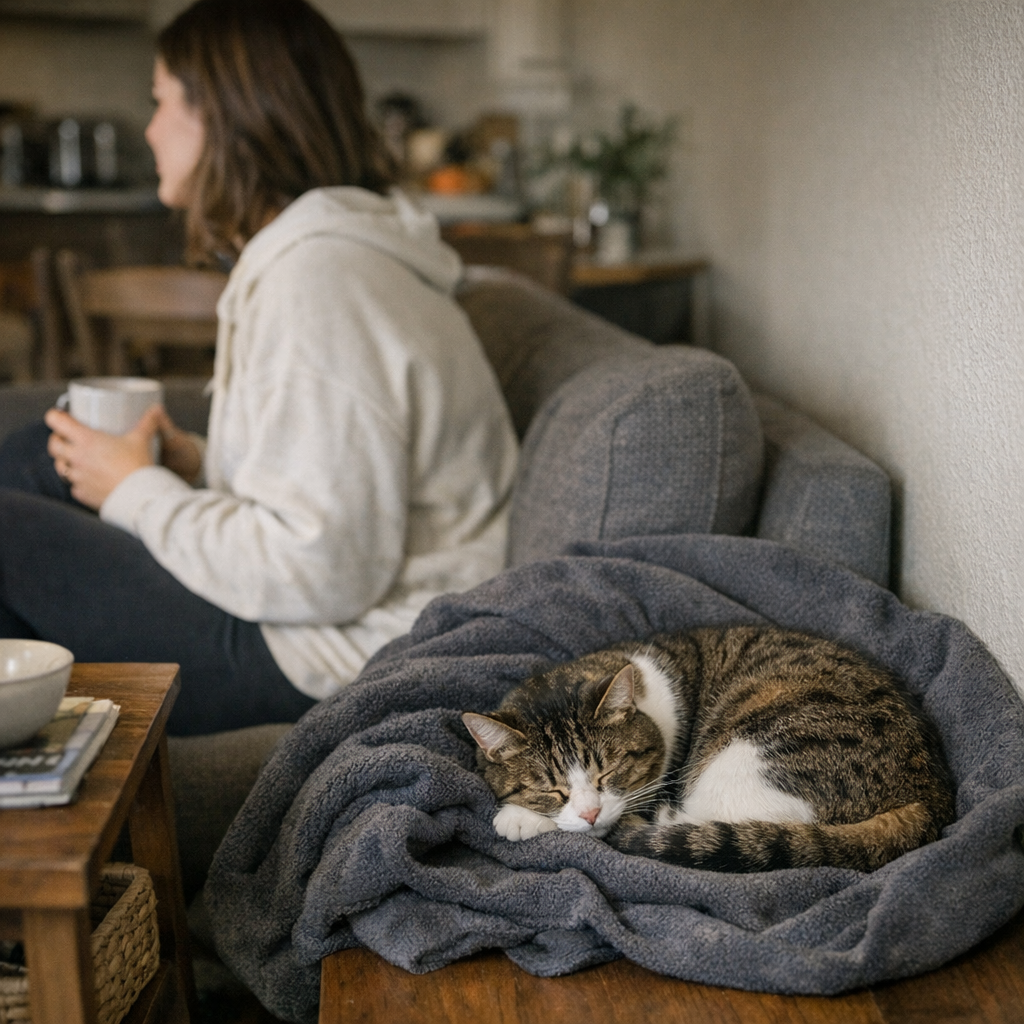
The mistake shows up fast, but never all at once. You set up a soft cat bed—maybe a fleece blanket, freshly washed and squared at the living room’s edge, clear of the walkway (or so it seems). It looks right for a day or two. But then the routine frays: you’re pulling toys out from under the blanket, shaking off crumbs, or re-smoothing a rumpled surface every evening. Your cat circles the area, dozes briefly, abandons halfway through a nap, and by dinner you’re hearing restless yowls or those unmistakable pre-zoomie signals. You got the fabric and spot “just so,” but the problem isn’t comfort—it’s interruption. With most indoor cat setups, it’s not the plushness that fails first; it’s the placement. Where the rest zone sits decides whether it survives your real routines—or just looks tidy for photos.
Why Cat Naps Keep Getting Interrupted
Every household has a rhythm: footsteps, dropped keys, doors, the vacuum’s whine, kitchen clatter, or feeding corners that double as corridor. Even if the bedding is plush and cool, if the setup sits in a busy lane—a spill zone near the kitchen, a corner skirting the litter box, or the foot of a high-traffic couch—it constantly absorbs stray interruptions. The nuisance isn’t always dramatic. It’s a toy skittering under the blanket during morning play, a dusting of litter tracked up by afternoon, or a too-close shoe print marking the nap zone’s edge. Each small disruption chips away at your cat’s rest until you’re both dealing with agitated afternoons and needy evenings—proof that comfort materials alone won’t rescue a poorly positioned space.
When “Organized” Isn’t “Usable”
Tidy isn’t the same as functional. You can line everything up, vacuum around it, and flatten the blanket daily, yet a week in, the routine sags: shoes overlap the corner; feeding time leaves crumbs inching dangerously close; and you’re fetching a missing mouse toy for the third time by dinner. If your cat is abandoning naps early or seeking out weird corners despite everything looking clean, it’s not the pillow’s fault—it’s a friction point built into daily foot traffic, clutter drift, or overlapping chores that your original “neat” placement couldn’t block.
Small Frictions That Stack Up
When you trace a hectic hour in a real home, the friction points multiply:
- Nap bedding creeps into walkway space as people loop the table or kitchen—each pass knocks the setup askew.
- Morning meals scatter kibble toward the blanket; the favorite toy ends up lodged underneath after five minutes of play.
- Afternoon cleanup brings a mop or broom perilously close, and footsteps shake the spot mid-nap.
What shrinks isn’t comfort—it’s usable time. The main nap area stays empty unless the house is quiet. The rest of the day, your cat flips between shallow half-naps, loitering by doorways, or scouting for some other stable corner, burning energy just avoiding the next interruption. You end up in the same loop: fixing what the layout let unravel.
Toy Drift, Litter Trails, and Continuous Tension
Some mess hides in plain sight: a single toy, bits of grit, or muddy footprints creeping closer to the rest area. More often, it’s the sense that you’re always “almost caught up” but never actually ahead—bedding that won’t stay put, objects to rescue, one more wipe-down that delays the next routine. By evening, the difference is obvious: your cat is alert, restless, pestering you just as you want to unwind, or doubling down on noisy, persistent play. This isn’t a training or discipline problem. It’s exactly what happens when rest gets layered beneath traffic, spillover, and shifted clutter—so naps break down, and cleanup becomes a daily rescue operation.
How Placement Makes or Breaks Calm Cat Routines
The main divider between an easy nap zone and a trouble spot: buffer from repeat disruption. It’s not about hiding your cat away but shielding rest from friction points—paths where other chores, cleaning, or feeding repeatedly collide with nap time. No setup survives a day if it’s part of your to-do loop.
Small Adjustments, Noticeable Results
Try a practical shift. Take a blanket that’s always near the litter mat (where scooping, treading, and stray bits show up like clockwork), and move it two steps behind a sofa or against a wall clear of routine passes. Fold the bedding just tightly enough to keep out wandering toys, and avoid overlaps with shoe drop-zones or bag corners. The change isn’t subtle. Suddenly:
- Naps stretch longer, even when the house isn’t dead silent.
- Toys no longer roll under bedding or disappear mid-day.
- You aren’t crawling under furniture for errant fluff mice.
- Your cat circles less, settles more, and finishes naps rather than starting new spots every hour.
- Evening cleanup condenses to a quick smooth-over, not a prolonged hunt for crumbs and toys.
Eliminating every noise or motion is impossible—but when rest is buffered from direct spillover, the nap zone holds up with far less daily maintenance, and the whole routine stops feeling like an extra task.
Spot the Signs Your Cat’s Rest Setup Isn’t Working
The real clue is rework: Your cat leaves naps unfinished as soon as dinner starts, or skips the bedding entirely when daily activity rises. Despite a fresh bed or sunny spot, if you’re seeing:
- Repeated switching or circling through nap spaces in a single afternoon
- Short naps leading to more evening vocalizing or attention-seeking
- Frequent reset of bedding, or picking objects out almost daily
- Your own movement slowed as you navigate around dish refills, stray toys, or cleaning—all sharing space with the nap setup
Those are signs: the rest zone is absorbing too much routine collision. Real-life function means the setup avoids—not absorbs—your daily friction points.
Neat Isn’t Lasting
Day-one neatness slides fast. Bedding takes on kitchen smells, collects shoes, attracts tracked-in bits from the litter area, or gets kicked out of place with every pass-by. No matter how compact or pretty, any overlap with daily cycles—laundry, refills, cleaning, bag drops—means the setup becomes just another surface you’re subsidizing with extra attention. “Out of the way” visually doesn’t guarantee peace for your cat.
Making Adjustments for Long-Lasting Harmony
After you carve out even a narrow buffer from cross-traffic—just far enough from litter, kitchen, or walkway—everything shifts: naps run longer, settle deeper, and break less often; and you finally stop constant micro-resets. Usually within days, your cat eases up on late-evening yowls, and you notice fewer spread-out messes or mid-afternoon troubleshooting. When the setup suits your true daily rhythm, end-of-day chores contract: you aren’t picking over bedding, clearing toys, or dodging extra sweep-ups. Good bedding can’t fix a bad spot, but better placement makes the comfort last past day one, and the novelty doesn’t wear off by the week’s end.
Quick Checklist: Is Your Nap Zone Actually Working?
- Is the area safely out of major household loops—not just tomorrow, but every day?
- Avoids overlap with food bowls, litter cleaning, and main pass-throughs?
- Does bedding stay put, even after active routines?
- More finished naps than aborted ones?
If you’re missing one—or all—a small move can change everything, no new gear required. It’s about noticing where disruption pushes in, and sliding rest just outside the line of fire.
Real-World Example: The Living Room Reset
Behind the sofa: In a real home, a thick blanket started near a walkway—ideal until toys rolled in, shoes left dirt, and every quick pass ruined whatever order you managed. Mess escalated daily; nap times shrank. A move behind the sofa, tucked against the least-used wall, stopped 90% of spillover. By three afternoons, naps lasted, and the end-of-day sweep shrank to a single pass. There’s no styling magic here—just subtraction of avoidable friction, letting cat and human routines coexist without constant overlap.
What Lasts After the Tidy Look Fades
No bedding, no matter how soft, can outlast a layout that keeps absorbing daily shrapnel—stray litter, toys, or footsteps that never pause. The setups that work in real homes aren’t “perfect,” but they reliably avoid the bottlenecks that pull you back in, day after day. Once the routine holds with less effort, evenings actually settle—and the work of having