
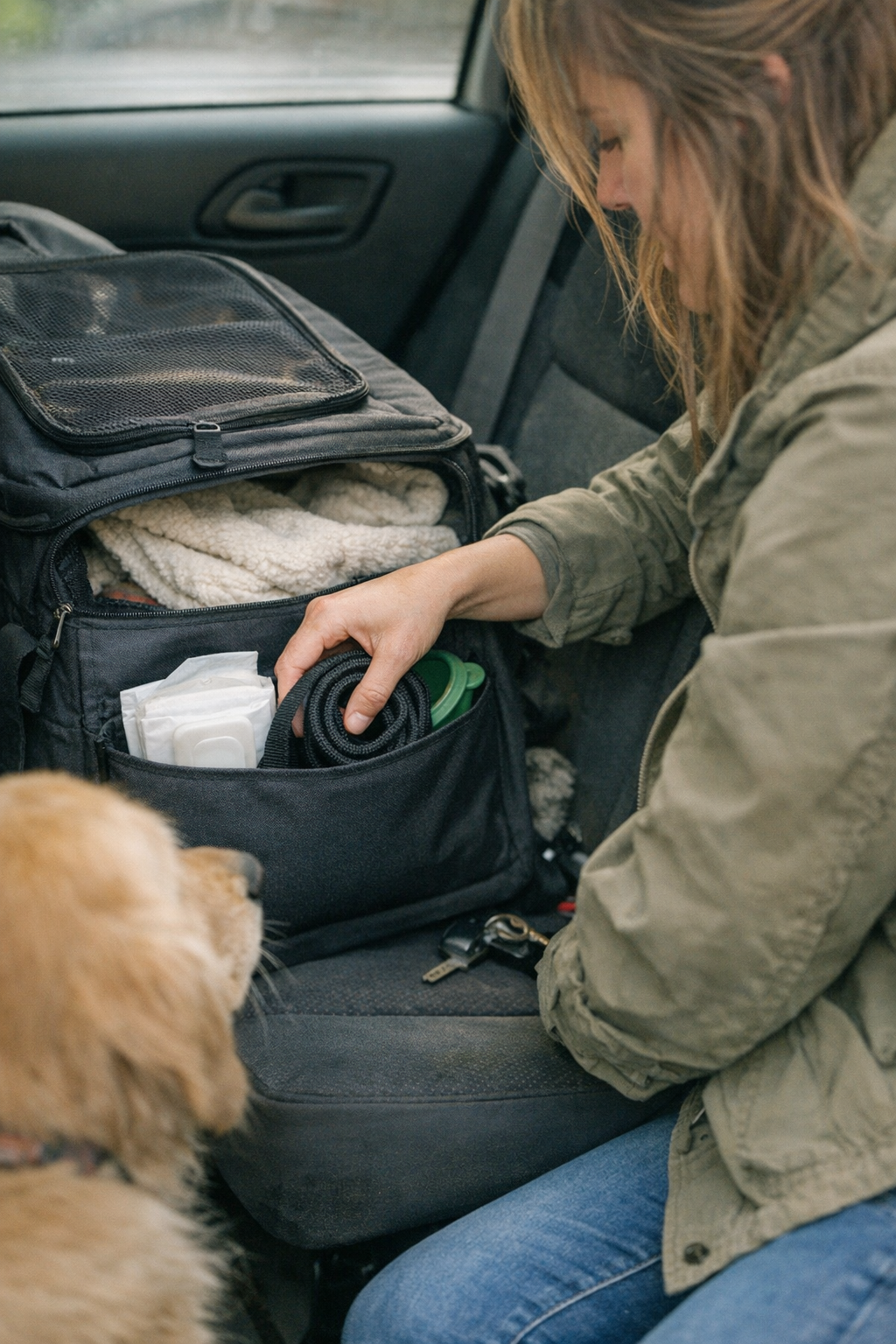
The pet-travel setup that looks tidy in your hallway rarely survives real travel without tripping you up. You fill pockets, zip every pouch, and feel “set”—but the illusion lasts until the first round of stops. By errand two, reaching for a leash means digging under crushed wipes, comfort items slide over supplies, and what looked sorted now feels tangled and tiring. The friction isn’t just a side effect—it’s the difference between feeling in control and losing time, patience, and calm on repeat. A setup that seems “organized” at home can unravel fast when seat-side access, restless pets, and blocked pockets collide after just one drive-to-walk-to-café cycle. PawGoTravel’s product world is built around this lived-in gap: setups that move as well as they look—because travel doesn’t play by home-layout rules.
The Friction Beneath the Surface: When “Ready” Doesn’t Mean Reachable
Even the best-looking pet travel bag can fail the only test that matters: can you get what you need, one-handed, during a real stop? The moment you find yourself clawing for a clean-up bag or wrangling for a single treat, the problem reveals itself. Pockets close up after shifting, loose items drift beneath bulkier extras, and your pet eyes you—unnerved by every new fumble. Multiple stops in a morning—vet, park, café—turn your “organized” kit into a game of blind scavenger hunt. Every pause is a small scene: rooting for wipes while your dog noses at crumbs, or unzipping the wrong pouch as traffic creeps by. The preparation that felt solid at home breaks down when quick, quiet access really counts.
Scene in motion: You roll up to the drive-thru, pull the handbrake, and reach for a wipe—finding it trapped beneath a jumble of leashes, tossed garbage bags, and a bundled comfort blanket. Your pet turns, sensing the slow shuffling, and suddenly both of you are tense: what could have been a smooth pause now feels like a tiny crisis of access.
Seat-Side Struggles: Where Neatness Breaks Down
Most bag systems don’t show their weak points until you’re packed in tight—driver’s seat, door edge, limited elbow room. That tidy row of supplies? By stop two, leashes have migrated to the bottom, slim pockets press shut, and fabric collapses as you lean sideways. A soft carrier that sat up perfectly on the kitchen table now bends in half at the seat’s edge; you find yourself using an elbow for support, a knee to block a restless dog, and still can’t grab the treat pouch. “Ready” turns to “reset” every time a single item slips and you end up emptying half the bag to reach it. Comfort extras that soothed your pet at the start now bury supplies, trading calm for slowdowns.
Cleanup bags or waste pouches can be present but still functionally lost: reachable only if you pick the right side or upend the whole bag. In real use, it’s common to chase wipes that fall deeper with every bump, or to find your hands full of tangled leashes while trying to catch a runaway snack sack. The front-seat shuffle isn’t a one-off—it’s a repeating signal that something structural just doesn’t hold up on the move.
The Repeated Friction Cycle: Every Stop Adds Up
The catch is subtle: real travel is short-cycle, multi-stop, and always a little messier than planned. You never just arrive and unpack. Trips splinter—park, vet, curb, one more store. Each time, something falls, hides, or mixes—a water bowl you can’t spot, treats kicked beneath a blanket, a leash wedged out of reach. Handing off items or steadying your pet becomes a weird balancing act: your body half-turned, one hand on the bag, the other digging past bulk to fish out a forgotten supply. “Efficient” flips into “clumsy,” and every quick restart nags you with a new delay.
Small moments compound: The awkward reach, the fidget to get your hand in the right spot, the gentle nudge as you accidentally bump your sleepy dog—these are not quirks but warning signs. By the third loop, the kit that was “optimized” has collapsed into controlled chaos. Patience thins. The “quick stop” becomes a reset drill. Handling slows at every restart, and energy—yours and your pet’s—drains faster than expected.
What Makes Real Travel-Ready Organization?
A “travel-ready” setup isn’t just about neat zippers and upright pockets at home. The test is whether the bag gives you consistent, low-disruption, one-motion access to the things you need most, stop after stop, seat after seat. Repeated use exposes any kit’s weak spots—does a side pocket stay open when your hand needs it, or collapse as you try to reach? Are supplies packed in visible, separate but stackable slots—not crammed, not hidden—so a leash or wipes never live under something softer and harder to grab? Can you access essentials half-turned, with a pet nosing in, or only when you’re perfectly positioned and calm?
Real-World Fix: The Single, Stable Access Point
Pushing through failed setups led me to try bags with strong, side-opening pockets—and the contrast was immediate. After a few weeks of repeated trips, I noticed those moments I dreaded—noisy rummaging, two-handed tugs, startled pet reactions—just stopped happening. A single wide pocket meant wipes and leashes stayed visible, upright, and in reach from any angle. Even in a tight spot with traffic crawling by, the bag’s structure stayed open, and I could get what I needed without shifting my whole body or waking my dog. The background noise—my own frustration, my pet’s agitation—quieted. The value wasn’t in looking neater, but in actually moving cleaner.
Recognizing the Early Warning Signs
If you’re repeatedly fishing for basic gear, waking your pet to extract treats, or needing two hands for a simple grab, your travel organization isn’t working—it’s silently adding friction. The leash always one layer too deep, treats migrating to the blind corner of the pouch, or cleanup bags needing a full bag tilt: none of these “habits” fix themselves by repacking. These are built-in faults, slowing down every handoff and undermining the whole goal of calm, in-control travel. The right kit eliminates—not delays—these built-in obstacles.
Why Quick, Quiet Access Matters
Traveling quietly—minimizing snaps, tugs, and searching—does more than save time: it helps your pet settle, keeps you less distracted, and makes every step more predictable. A good setup isn’t about visual tidiness so much as about how silently and smoothly items come to hand during the real, irregular flow of a trip. The difference plays out most clearly mid-errand: seat side, cramped, and with your pet watching for cues about what happens next.
Most travel layouts fail here because their structure gives out under repeated vibration, shifting, and stops. Soft-sided pouches and tight, upright organizers hide disorder for a while, but collapse, tip, or jam at just the wrong moment. Real readiness isn’t a static state—it’s how well the setup keeps handling predictable, fast, and calm as stop-and-go routines pile up.
Making Each Restart Smoother—Every Time
Pet trips are never just single rides—they are attended by interruptions, restarts, and more opportunities for clumsy friction than you prepare for. What works at home falls apart when your setup forces two hands or repeated shuffling for every wipe, leash, or bowl. A stable, seat-side-access carrier or organizer is not about looking clever, but about shrinking the gap between need and reach, trip after trip. When each pause and restart becomes a tiny moment of ease—not a scramble—your energy holds out longer, your pet stays more relaxed, and the whole routine finally fits the messy reality of travel, not only the tidy promise of home.
Shop travel-tested pet carriers, organizers, and seat-side access gear at PawGoTravel.