
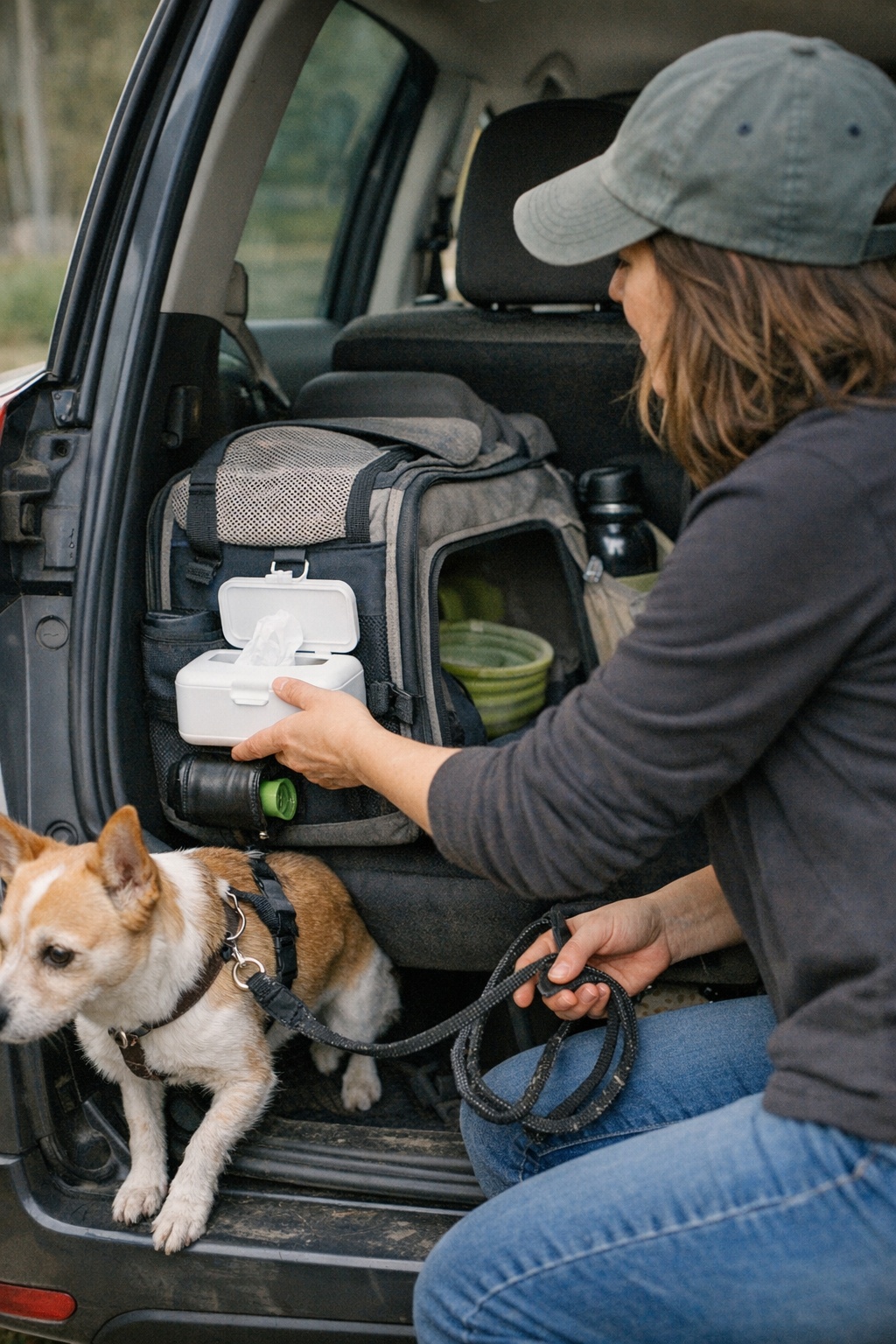
On the surface, a pet travel setup can look ready—zipped, stacked, even Instagram-calm—yet the first seat-side stop exposes everything the picture hides. The moment the car door cracks open, what seemed “prepared” starts slipping: cleanup bags slide under a treat pouch, a portable bowl covers the wipes, or that comfort blanket blocks your reach for the leash. Instead of pulling out what your dog needs in one motion, your hand hits a wall of overlapping gear, forcing an instant dig or a full-scale reshuffle. The real divider between hassle-free travel and travel that slows you down isn’t how organized your setup appears—it’s whether your most-used essentials are truly within single-move reach when the pressure hits, not layered out of sight or tangled under seat-side showpieces. This is where PawGoTravel setups show their difference: not in how they look parked, but in how they keep you moving at every repeated stop.
When “Ready to Go” Isn’t Ready Enough
Tidiness lasts about one stop—until living with your kit proves otherwise. A travel bag packed with wipes, bowls, and cleanup rolls feels solid in theory, every pocket zipped and divider snapped. But your very first exit—a curbside sniff break, your dog pressed forward—exposes soft spots fast. One hand steers the leash, the other rifles past “organized” layers, and suddenly a single missed pocket or overlapped pouch means you’re pausing, kneeling, or moving a barrier item just to complete the simplest clean-up. Moments like these aren’t managed by packing checklists—they’re dictated by how quickly you can reach what matters when your attention is split between your pet and the traffic behind you.
The trouble doesn’t start with outright mess; it starts with buried basics. You can have six pockets and still be digging every stop if your top-use items—cleanup bags, wipes, snacks—drift beneath less-used comfort gear or behind a tangled leash. It feels like “not a big deal” on stop one, but after the third slow reach and reshuffle, every motion grates a little more. By mid-trip, any friction turns “organized” into “overmanaged”—and the pace of your travel grinds down, even as your bag still looks set from the outside.
Seat-Side Setups: Quick Access or Quick Friction?
The seat edge becomes a test area every single time you pause. “Organized” pockets collapse under real use: wipes hidden beneath comforters, toys blocking zipper tracks, or a bowl wedged just where you reach. The simplest misstep—stuffing wipes under a pet sweater, or loading a toy in front of the leash—means a cleanup bag comes out with delay and frustration. Suddenly a five-second grab is a fifteen-second interruption, all because order on paper became overlap in practice. Worse, every extra second at the door turns a practiced transition into an awkward mini-mission, especially when your dog’s energy meets your own impatience at the stop-and-go edge.
The Overlap That Sneaks Up on You
Overlap creeps in when pet and owner gear compete for the same tight section. Your water bottle tangles with the leash. The cleanup pouch moonlights as a snack bag, so a single reach dumps out both—forcing you to sort not just for a treat, but for every later cleanup. These small collisions pile up: every repeated tangle breaks your rhythm, keeping you fumbling with your setup instead of focusing on your pet’s needs. “Well-structured” turns into “constantly managed,” and any early confidence fades with every seat-side stop.
How Small Frustrations Multiply
A single fumbled grab sounds forgettable—until real trips turn it into the norm. The first delay, you shrug off. By stop three, reaching for a wipe means slow-motion item shuffle. Each curbside exit brings another pause, another moment resetting pockets, or bracing for that next minor snag. The more you move—park, stretch, start again—the more the little interruptions multiply. By the end of the day, it’s no longer about an “organized” bag, but about how many times organization fell apart under active use. That invisible drag shapes the whole routine, pushing the feeling of travel from smooth to slow.
Real weak points don’t appear on a packing checklist—they show up through movement. “Looks organized” doesn’t mean “handles fast,” especially when each stop becomes another test for buried or blocked basics. By the fourth or fifth repeat, an acceptable packing system reveals itself as unsustainable, and every added layer of digging or rearranging reinforces the need for a smarter order: essentials first, obstacle gear out of the way, and access direct and distraction-free—every time, not just when you start out.
Real Travel, Real Movement—Where Setups Show Their True Color
No scenario exposes weak design faster than a crowded sidewalk stop: leash coiled, dog tugging, another pet headed your way. You need a cleanup bag—now. Your hand finds toys or tangled leashes instead, blocked by a comfort item wedged for “neat” packing. Seconds tick: the bag won’t open, your pet’s pulling, a car slips behind you, and suddenly a basic routine spirals into a fumbled, stress-prone reset. The lesson isn’t about making your gear prettier. It’s about eliminating the disruptive pauses that bottleneck seat-side stops; it’s about designing for the seconds that matter most, where every unnecessary search is magnified by real-world movement around you.
A Real Adjustment: Practical Fixes That Change the Game
After too many stops pawing past stacked pockets for wipes, I mounted a wipe pouch right beside the main carrier handle—always facing the door side. That single change let me keep one hand on my leash and pull wipes instantly, without fumbling. Not only did the wipes stop disappearing under blankets or toys—in six rest breaks, I never dropped a thing or had to kneel and sort. Recovery was faster. Instead of triple-checking every item after a pause or worrying what shifted, cleanup and movement kept pace. The tidy look didn’t matter. Fast, single-move access—every stop—did.
The Trouble with Looks-First Travel Organization
It’s easy to organize for neatness—building a setup that matches visual order, lining up sections to look clean or photo-ready. But the real test is use: access speed in the seconds when your attention splits between the curb and your dog. No comfort item, no divider, no matching pouch helps if you still have to dig under layers or untangle a leash just to locate a cleanup bag or bowl. What looks smart in the back seat often becomes the trap at the sidewalk.
Common Trouble Zones
- Cleanup bags buried behind blankets or loose toys
- Essential pouches wedged where they block seat-side grabs
- Comfort gear tight enough to hinder quick zips or snaps
- Hydration bowls crammed behind leash hooks or at the bottom of a pocket
The result? Visual calm, but actual slowdown. A system that promises order but delivers delays—because each stop asks for a two-handed search or a full rearrange when all you wanted was a one-step reach.
What Actually Works During Seat-Side Stops?
Direct, visible access to your most-used items outperforms any layered storage, no matter how organized it feels when zipped. The moment you can snap a pouch, stash a dispenser, or clip a bowl right where your main hand lands—unobstructed—you cut the restart drag of traveling with pets. Frequency rules: the gear you touch most belongs at the edge, always in hand’s reach, never at the bottom. Comfort gear is fine—unless it blocks direct access every stop, in which case, it slows the entire trip, no matter how nicely it’s folded.
For travelers making stop after stop—long drives, city runs, multi-part park days—the only metric that matters isn’t post-packing appearance; it’s how easily you can slide from curb to seat, reset and roll, without stalling yourself, your dog, or your plans. The best travel setups aren’t about the photo—they’re measured by how little they interrupt actual movement, by how invisibly they support your next action, not how well they hide clutter in a staged pause.
Keeping Travel Practical—And Less Frustrating
Perfect configuration doesn’t exist, but workable travel does. The best setup is the one that cuts down the two or three-second delays at every curbside moment, that lets each essential live open and ready instead of packed and paused. Every extra step managing a bag is a step you’re not spending on your pet—or your plans. Even a visually perfect bag becomes a burden if it turns travel into a moving puzzle with each new stop.
The only real test is in repetition: Do your stops run smoother as the day goes, or does every curb remind you where the friction still lives? Essentials should be direct, unobstructed, and ready in one step; every overlap or buried item invites another stall. Your kit’s structure should shape itself around your repeated movement—not around what looks sharp once in the rearview mirror. In the end, the right setup isn’t about the packing photo—it’s about how