
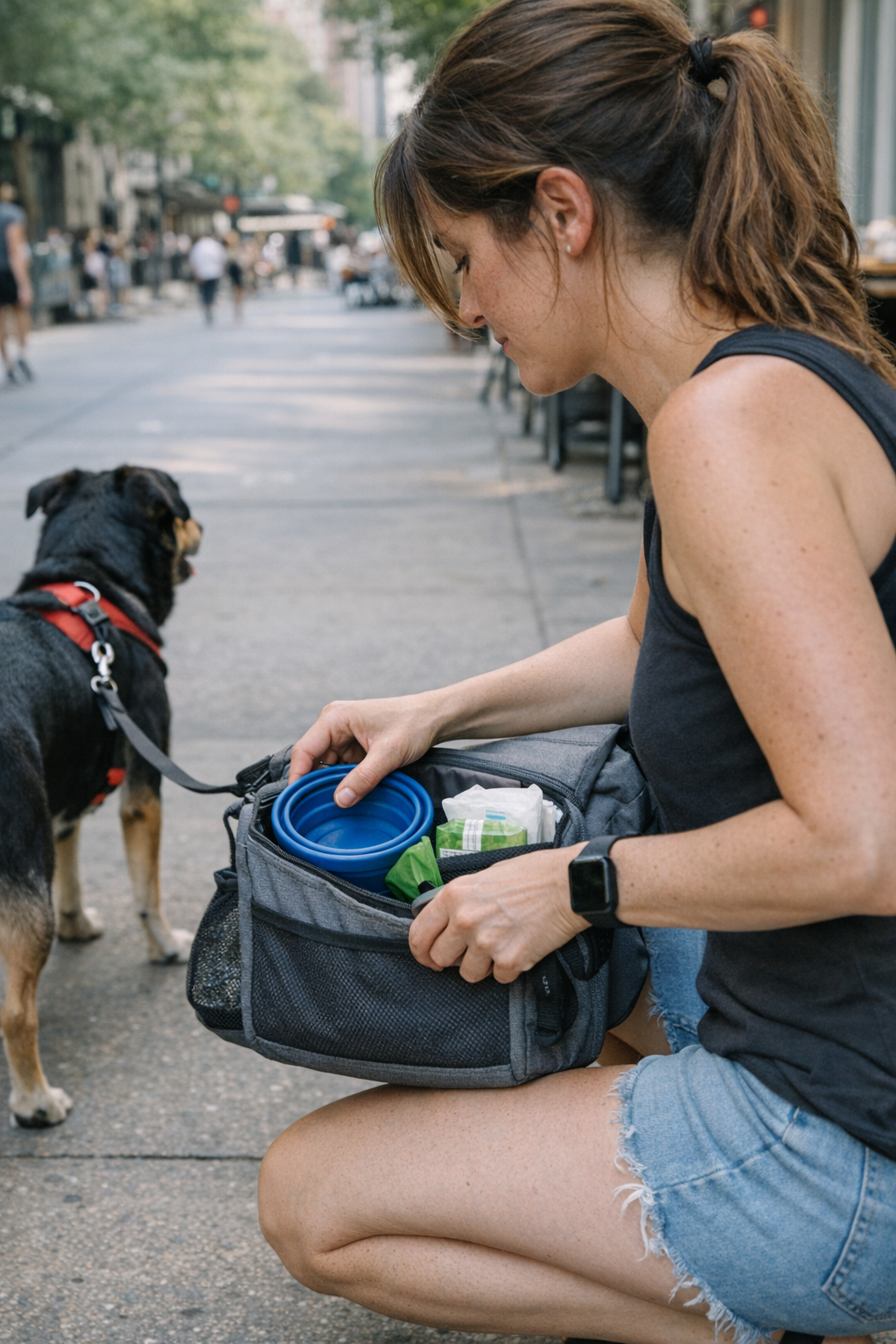
Your pet travel bag looks ready on the counter—but out on the street, every stop and restart tells the real story. What seemed organized at home quickly turns slow and awkward after just a few city blocks, with every pause exposing some friction: missed reach, blocked pockets, cleanup gear hidden too deep, items overlapping so you fumble at just the wrong moment. The real difference isn’t in how neat things look before you leave, but in how well your setup recovers—again and again—when you’re back in motion, seat-side, or squeezed into the crowd with essentials just out of reach. PawGoTravel designs for that repeated reality: less stalled searching, more on-the-move access.
Every Restart Tests the Setup: Organized Isn’t Always Easy
The first block always feels fine. Everything’s packed, your pet trotting along, and your bag looks tidy, maybe even over-organized. But five or six stops later—waiting at a light, skirting a construction zone, pulling aside for a quick cleanup—small flaws show up fast. The first time you need a waste bag, you realize it’s stuck under wipes. The next pause, your water bowl is somewhere below a crumpled blanket. Leash clips that seemed “secure” now demand both hands to unclip, just to cross the street. It isn’t about gross mess, but about every workaround that costs you a step or adds a second of confusion with a distracted dog at your knees and pedestrians squeezing by.
Each block, annoyance multiplies: you reach for a pouch, but it’s blocked by something else. You unzip, shuffle, think you have the right pocket—then hit snacks first, wipes next. The irritation isn’t huge, but it repeats fast. The simple act of grabbing what you need becomes a slow-motion juggling act, never quite smooth enough to keep your stride.
Repeated Stops, Repeated Annoyance: When Access Becomes the Real Challenge
City walks don’t just test your dog; they test your setup’s ability to recover. Crosswalks, surprise detours, waiting for crowds to move—the core items (waste bags, wipes, bowl) are always needed at exactly those awkward, stop-start moments. If any of them gets buried, that’s where a quick cleanup or drink break turns into a minor scene for everyone around. You reach for the kit, open one zip: not it. The next: wrong again. The pet yanks, traffic grows, and now you’re publicly fumbling because quick-access was only a theory, not a reality.
When cleanup or comfort gear isn’t physically ready—right pocket, right slot, right away—each small delay stresses both pet and owner. That delay might only be five or ten seconds, but on a city block with impatient foot traffic or while managing an excited pet, those seconds cut deeper. Multiply that cycle across a typical walk: the pain isn’t in one big failure, but in the way little annoyances stack up and break whatever flow you had.
Looks Ready, Works Slow: When Visual Neatness Masks Travel Flaws
The most common trap? Thinking an organized bag is the same as a ready bag. You pat yourself on the back for clean compartments and labeled pockets, but under real pressure the structure folds. A zipped main section keeps things tidy—until you need wipes with one hand while the leash is twisting in the other and the dog is nosing into a fence. If your set-up demands a three-step shuffle for every cleanup, or if water means digging under seat covers, your “preparation” is actually working against you.
Even a travel bag that visibly reduces clutter can become a repeat interruption machine. Essentials layered beneath less-used items—or owner gear stacked over pet items—only trade one kind of mess for a different friction. In those moments where you need fast access, you’re stuck negotiating with your own system, losing time for every stop, every sudden pet swerve, every mid-walk re-pack.
Snapshot: The Cost of Carry Flow Slowdown
The real cost is breakdown in movement, not just a few lost seconds. When you’re at a seat edge, parked at a curb, or in a coffee shop with your dog curled at your feet, the hassle doubles. Hauling up an entire bag, unzipping, sorting, then re-packing around a restless pup is instant stress. If your travel setup forces you to unload half the contents for one leash or waste bag, you face an ongoing cost: forced manual resets, and the temptation to skip steps just to avoid more slowdowns. Sooner or later, you start leaving out comfort items, or skip a cleanup, because access feels like a hassle every single time.
The overlap between your own items and your pet’s creates a different brand of trouble. The water bottle meant for both of you bumps into wipes; your keys tangling with waste bags leads to subtle, constant reshuffling. Each overlap is a built-in delay, slowly sapping confidence and forcing you to second-guess your own setup, right when you need to act quick and move on.
Fixing the Pattern: Moving to Genuine Quick-Access Zones
The fix isn’t more compartments—it’s protecting true quick-access for high-repeat items. After enough walks with awkward, buried essentials, the logic gets brutal: every core travel item (cleanup, hydration, leash clip) gets a single dedicated side or outer pocket, never blocked by blankets or owner gear. The reset is physical, not just mental. When you reach standing outside a bus or in rush-hour crosswalks, the needed pouch lands in your fingers without fishing, flipping, or doubting.
From the first day with this rewrite, the payoff is obvious: faster every time, no hesitation. Leash, bag, or bowl is always a single reach away, even as the rhythm of your walk shifts or the crowd closes in. After a week, the quick-access ritual takes hold—those items never drift, never get absorbed by clutter, and never slow the next restart. The visible order never comes at the price of real travel flexibility.
The Real Test: Does Your Setup Keep Up, Not Just Keep Order?
If you catch yourself pausing, fishing around, or having to reset your travel bag after every basic stop, the weak link isn’t your packing skill—it’s a layout that fails as soon as movement restarts. Visual neatness has no rescue value if your essentials are still buried where they can’t be reached in two seconds or with one hand, seat-side or street-side.
In real city walks or seat-through trips, what counts is structure—quick-access always protected, repeated-use items always exactly where you left them, no matter how often you pause or reshuffle. A pet-travel setup that can’t handle recovery after interruption will wear you down even if it looks perfect at the start.
Practical pet travel isn’t about starting organized—it’s about how fast you’re ready to go again, and how little friction stands in your way each time. If you need setups that reward real-world movement, not just pre-trip appearances, the solution is closer than it looks.