
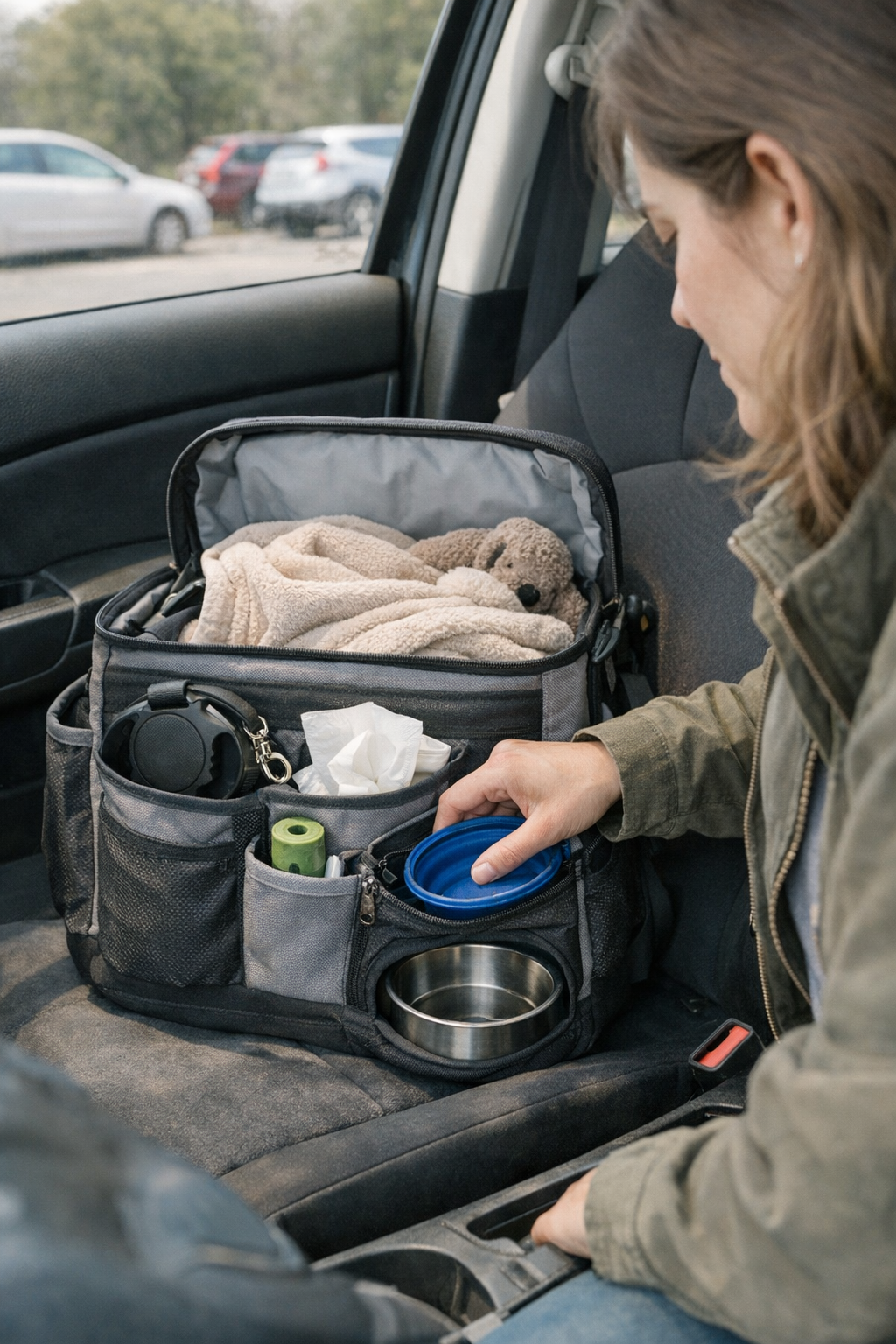
Your pet travel bag can look like it’s ready for anything—right up until your second or third stop, when the real flaws show up. The first drive out feels smooth. But then comes the next pause: you grab for the leash, fumble for a waste bag, or realize the wipes you need are trapped under your own keys. What looked “organized” on the seat suddenly feels rigid, tangled, or just plain wrong for the way your trip actually unfolds. If a bag’s pockets make sense only while motionless, they don’t survive real pet travel—every minute spent untangling or digging is a stop your pet gets restless, and a trip you’re repeating the awkwardness that never showed up in the mirror at home. This isn’t about neatness. It’s about how setup structure fails—or saves you—once you’re actually on the move and fumbling for the essentials mid-routine, not just admiring the kit fully packed.
When Pet Travel ‘Looks Ready’ But Doesn’t Work
Anyone who travels with a pet knows the pattern: you stack the bag, double-check the carrier, sort the treats, leash, wipes, and bowls. Everything looks in place—until the leash gets buried under the blanket, wipes vanish beneath a bowl, or you fish out treats along with your phone. The illusion of order collapses as soon as you need speed. Instead of a quick reach, you’re shuffling, pulling at velcro, or repacking on the sidewalk, all while your pet starts circling or whining in the backseat. The problem isn’t mess, it’s that the order never holds up once the trip becomes stop-and-go.
Even with supposedly “smart” layouts—labeled sections, upright carriers, extra zippers—the real trouble comes when you have to grab one thing fast. Owner items and pet gear get tangled. Reaching for the leash yanks out a toy or sends a bowl flying into the footwell. That one “clever” pocket, instead of helping, turns into a bottleneck. Under repeated access, everything you thought was separated blurs together, forcing you into a silent reshuffle after every stop.
Small Delays That Stack with Each Stop
One stop? Not a crisis. Stop number two or three and you notice the difference. Pulling out a leash means moving two comfort toys. Your dog stares while the waste bag hides under the snacks. Every pause becomes a reset—returning each item to a slot, wishing you didn’t have to. It’s not just time lost. It’s the low-level annoyance that adds up, both for you and your pet. A tidy-looking setup becomes a source of micro-delays, interruptions that erode the flow you thought you had under control.
The Repeat Flaw: Where Structure Breaks Down
The most common flaw isn’t a lack of sections—it’s organizing by looks, not actual stop-by-stop needs. Packing everything on one side creates a perfect surface, but in practice, items you need first and most often fight for the same pocket. The symmetrical bag with mirrored pockets looks ready, but at the rest area, those “identical” spaces want to be used at the same time—and don’t. Dragging the leash free dislodges comfort items. Getting to wipes means unburying them from under your own snack stash. One movement starts a cascade of others, and repeated friction builds with every return-to-car moment.
Each Restart Reveals Where It Breaks
The structure rarely fails at the first stop. It’s the second, third, or—on busy travel days—the fourth time you pause that the overlap and spillover become unavoidable. You’re holding a leash, wipes are under two other things, the bowl slips sideways every time you drive off. Your hands fill up, your pet gets livelier, and every attempt at a quick grab stretches into a minor reset. When the cleanup pouch or waste bags live in the same compartment as the rest, even finding a single item leaves your setup less organized than when you started.
Segment, Don’t Stack: Real Separation Means Real Ease
So what actually changes this experience? Not more pockets, but true separation—dedicated zones for the grab-and-go essentials. That means a leash, a bowl, wipes, and waste bags each with their own path to your hand, never blocked by comfort toys or wedged with treats. It’s the feel of opening a single side pocket and getting exactly what you need the first time, not sifting through a top layer of items you don’t.
Smart setup options—vertical pouches, separate side-access pockets, or modular panel layouts—show their worth during messier travel moments. Bathroom break at a busy gas station? Wipes and waste bags are right where you reach, not behind a blanket. Muddy paws and impatient dog? The bowl isn’t trapped by last night’s toy; it’s in its sleeve, ready in one motion. There’s no hidden repacking. There’s no “dig, return, and hope it makes sense later.” The whole routine gets lighter because it’s finally built for movement, not just parking-lot show-and-tell.
Single-Motion Grab vs. Forced Repacking
When essentials live in their own zones—a waste bag and wipes pocket, a dedicated leash holder—resetting becomes one motion, not a full cycle of shifting and re-tucking. Comfort items and human snacks find a true “elsewhere.” You stop carrying chaos forward at every stop. Instead of your organization decaying, the kit holds up. There’s less memory work, less fidgeting, less stop-time tension. The bag “works” because it’s no longer fighting the routine you actually use.
Everyday Travel Scenes: When Structure Fails or Holds
- Coffee stop mess: You plan for a fast pickup. Instead, the leash is pinned by snack packs, and freeing it tips over the bowl. You fix it, but at the next stop the whole stack shifts again.
- Rest area scramble: Dog paws are muddy. The wipes, supposedly “easy to grab,” are buried under a bulky blanket. Cleanup becomes a slow, juggling act.
- Reload routine stalls: Pockets line up evenly, but they clash in real use. Putting things away while keeping a hand on the pet just means more overlap, more mixing, more chance of missing the next quick grab.
- Blanket-bowl standoff: The comfort throw sits on top all morning. When you reach for the water bowl, you dig a path through unrelated items. Quick access becomes a repeated, clumsy detour.
Each scene, minor on its own, points to the invisible drag: a structure pretending at readiness, but always just about to trip you up. Tiny delays collect, and the bag that once seemed like the solution starts to feel like a process that barely holds together.
Shifting to a Flow-First Pet Travel Setup
It’s not about adding more. It’s about separating by use-pattern, not just by sight. Stack your true everyday essentials at the top or place them in a side pocket that never hosts anything else. Comfort extras, toys, and treats follow—never overlapping or living above the items you touch after every stop. The best bags let you define these boundaries: vertical waste bag sleeve, a wipe-dedicated panel, a leash-clip spot, a sealed bowl pocket. When comfort gear goes in its own secured area, routine stops lose their drag. The experience improves—not by perfect packing, but by building a flow that holds when travel gets choppy.
How Does Real Structure Change Travel?
Two or three stops in a single day—one at a muggy park, one on the way home—tell you fast if your setup strategy holds. When you can reach, return, and reset in seconds, the static disappears. Your pet doesn’t fidget, you don’t second-guess, and tiny interferences vanish. The nagging sense of “almost organized” gets replaced by one-handed, actually-ready access—the sort you notice more by its lack of friction than any new look. The weak points are quieter, and travel feels lighter, not because the bag is fancier, but because it was built for how you actually use it under real, imperfect conditions.
Final Fix: Make “Ready” Mean Ready—Every Time
The most useful pet travel setup isn’t the tidiest-looking. It’s the one that stays out of your way on every pause, every reach, every return. Swapping visual order for true separation and reach, you cut repeated interruptions and remove the constant temptation to give up and repack. The perfect bag doesn’t exist—but the workable one keeps up with you, leaving ordinary travel lighter, movement clearer, and rest stops simply easier to restart.
Browse practical travel bag and setup solutions at PawGoTravel.