
Why Small Pet Messes Turn Into Big Interruptions
Every daily pet routine has a breaking point. Miss a stray kibble or let a water splash dry under the bowl, and suddenly a fast reset turns into a slow, awkward detour. Most owners push these minor messes forward—kick a crumb aside, step around a spill, promise themselves a proper wipe-down “later.” But these tiny leftovers repeatedly jam up practical care, turning a normal feeding or water refill into a friction point you notice at the worst times: before work, when you’re carrying groceries, or late at night when you’re already tired. This isn’t just untidiness. It’s one invisible snag after another—each one making that CalmPetSupply corner that looked manageable now feel like a stop-and-go zone.
The real cost? Small routines break apart. A quick bowl rinse drags out when you need to move a scatter of toys first. Water and fur combine into sticky smears that don’t wipe away with a single pass. Crumbs edge under the cabinet or mix with tracked-in grit after one missed morning. By the next day, what started as “good enough” now trips you up over and over—a few extra steps, a little more bending, another search for a cleaning tool that wandered off.
How Pet Spills Compound Over Time
Skip a single wipe-down, and you barely feel it. Skip twice, and the mess doubles back: dried water rings under the bowl, fur fused to damp spots, crumbs tracking from kitchen tile to hallway. Owners often think, “It’s just today’s mess—but tomorrow I’ll be on top of it.” Yet “tomorrow” keeps slipping, and the space quietly becomes harder to handle. The cleaning task that should have been one swipe now needs scrubbing, rearranging, or a shuffle-and-chase session with dust and food bits underfoot.
Over just a week, these micro-messes gather up everything else: hair, grit, stray litter, even odors if left invisible. Shared home zones—kitchen corners, porch landings, laundry cut-throughs—pick up evidence that never quite resets. The real interruption isn’t just dirty surfaces—it’s the slow drag that inserts itself into every routine: a pause to clear a space, a delay searching for a mislaid towel, that creeping feeling you’re always just behind and never quite set for the next care round.
Everyday Scenes: Routine Disruptions You Recognize
What does this look like hour by hour?
- You reach to refill the water bowl, but there’s always something blocking access—the brush from yesterday’s grooming, a towel bunched and in the way, or a treat bag that’s drifted too close. One extra move every single refill.
- The spot you skipped last night soon grows into a patch of dried hair welded to floor as water dries—and when you step across the kitchen, you track more than you clean. The clutter migrates instead of shrinking.
- Cleanup wipes or towels are technically “nearby” but never right where you need them: on the wrong shelf, inside a half-shut drawer, or mixed up with laundry. You put off the wipe, do it late—or grab a paper towel from another room, breaking flow and adding double steps.
- At a glance, mats and feeding station bins look organized, but every pass means weaving around toys or sliding storage back into place—not quick resets but constant sidesteps.
What once worked—everything within arm’s reach, quick in/quick out—shows hairline cracks. You notice one stubborn trouble spot that always lingers, or a care tool that ends up everywhere except where you need it most. By Friday, each routine feels heavier. You’re not just cleaning; you’re work-arounding the setup you thought was “fine.”
Quick Fixes that Build Friction—or Break It
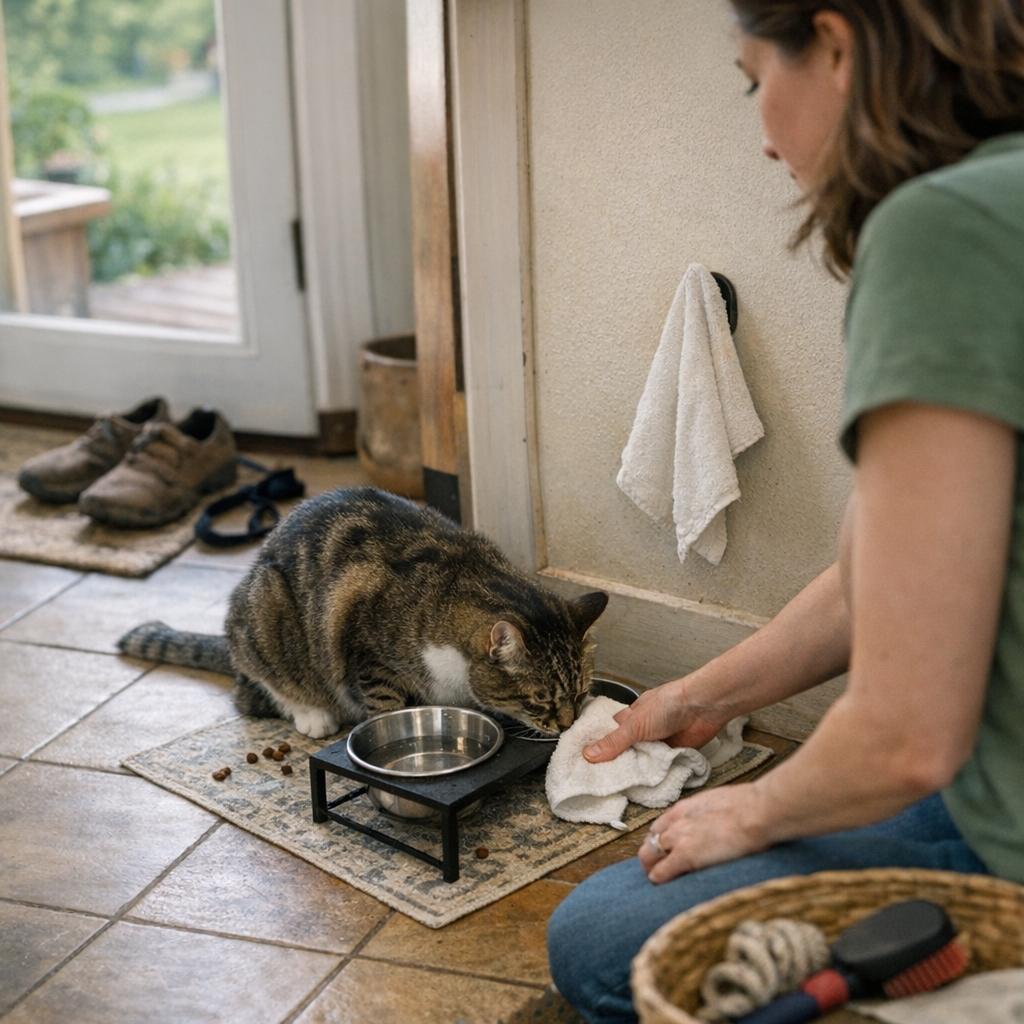
The go-to “fix” is to stash a towel or wipe nearby for emergencies. But when it needs a free hand to grab, or it keeps wandering after laundry day, the fast route from spill to clean keeps shifting. One area gets faster; another slows down. You’re always moving one thing back just to wipe up something else.
Perfection isn’t the point—reliability is. Cleanup should fold into care without detours. A rinse, refill, or quick swipe shouldn’t mean bumping into extra steps. If the right tool is always visible and reachable—never blocked, never halfway across the room—then every piece of the routine stays light and automatic. One missed beat, though, and daily care feels heavier, not easier.
Making Simple Adjustments: What Works in Real Homes
The best reset isn’t complicated: a single towel or reusable wipe always on a hook beside the feeding zone, never in a pile, never in another room. Each refill or meal pause becomes a micro-reset: grab, wipe, hang back, move on. No decisions, no hunt, no “where did I put that?”—just direct, friction-free action every time.
These adjustments prevent the daily buildup. Hair and crumbs stay corralled, water spots don’t crust into sticky trouble, and the feeding space doesn’t creep outward. Over dozens of routines, the difference is obvious: there’s no migration of mess, no shared-home interruptions, no late-week “how did it get this bad?”
Most people notice a turn when the cleaning tool returns to its hook out of habit, not effort. Cleanup snaps back into the natural flow of feeding and resets—never becoming an extra burden, never left to snowball. Small friction points fade, and normal care stays just that: routine.
Tidy vs. Functional: Knowing the Difference
There’s a visible gap between “organized” and truly workable. A feeding setup can look photo-ready—matching mat, lined-up bowls, hidden bin. But if a routine wipe takes effort (blocked by the layout, stuck under something else, or just missing), the area is only cosmetically calm. The mess is suppressed, not solved.
True function means every tool appears where it’s needed and goes back automatically. Feeding, water checks, and surface wipes happen in-position and in-sequence, not as end-of-day chores or future catch-ups. It’s the chain reaction—remove one block, and the whole routine flows; ignore a weak link, and every step feels compromised.
Keeping Routines Undisturbed: The Practical Takeaway
The drag on pet care isn’t from major disasters—it’s the constant resistance of “almost ready” setups and missing basics. After a refill, a meal, or a walk, the friction shows up: a towel out of reach, a surface half-blocked, a cleaning tool gone missing. What should be a split-second reset now drags, and inevitable messes get deferred.
Knock out those small barriers—keep every tool visible, remove obstacles, avoid storage that makes access slower—and normal routines stay smooth. It’s a difference you feel daily: resets that aren’t a chore, care routines you can trust not to spiral, and a space that quietly stays under control instead of turning into a distraction loop.
Make your pet’s space work for you instead of the other way around—one practical reset, every time, with the right tool right at hand.