
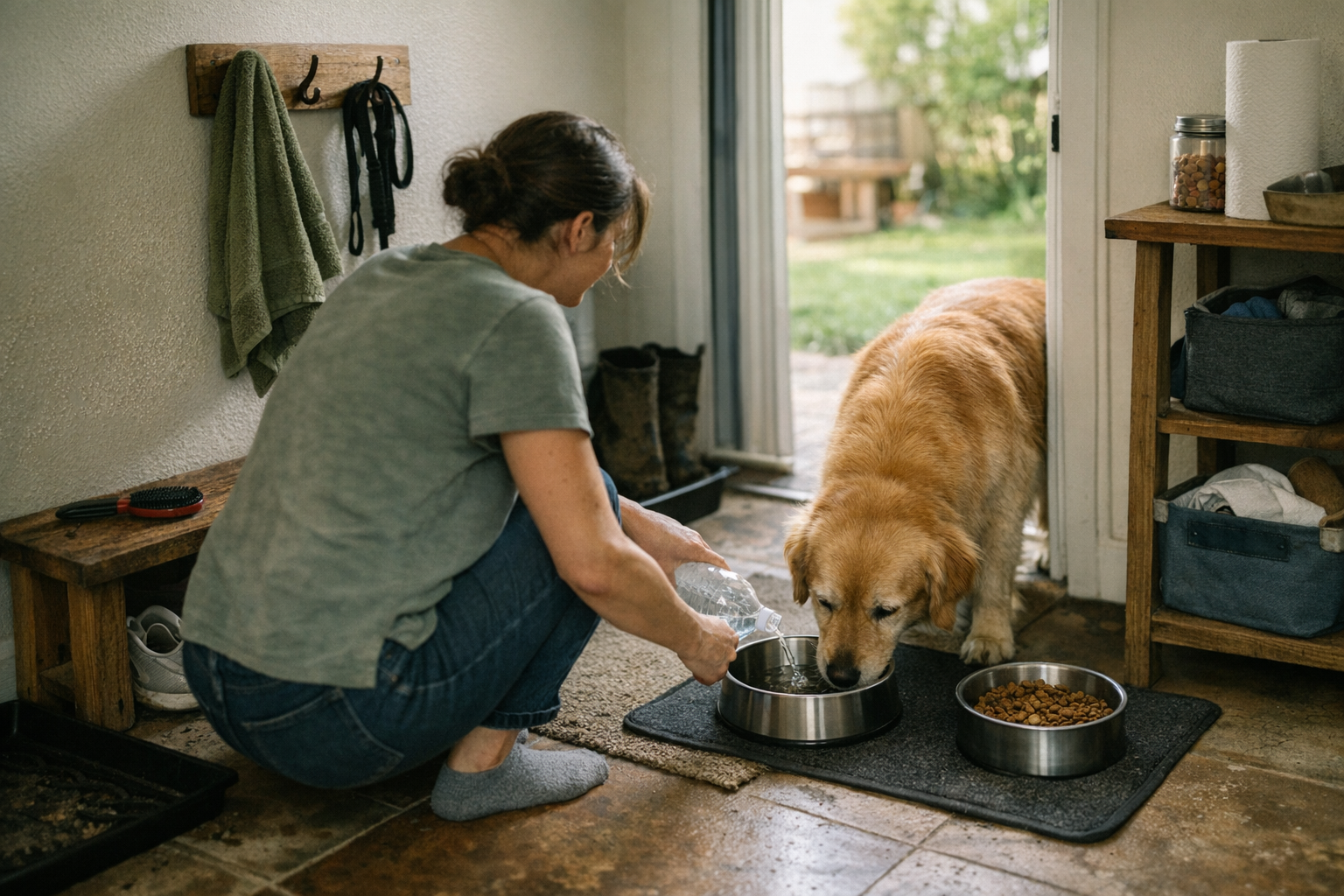
You can wipe a countertop and pick up scattered toys, but a home only works for real daily pet care if the setup matches what actually happens—where things get messy, where your hand reaches by default, and where supplies save or waste your energy. The letdowns don’t start with a disaster. They start when you kneel to refill the bowl and a tote bag’s in the way, or when you rush to wipe muddy paws and the one decent towel is across the hall, not by the door. One thing out of reach means the mess sits until later—or spreads. Those gaps add up: every time you hit friction, cleanup slows, resets get missed, and your setup stops helping you.
Small Gaps, Big Friction: Where Pet Care Routines Break Down
Routine drag almost never announces itself. You go to scoop food and find mail piled on the bin. The water bowl’s dry, but you only notice after you’ve finally sat down. That brush you left out for quick use? It’s tucked away, so the quick fix gets skipped yet again. What should be automatic turns into a repeat search—and eventually, a silent drain that makes each extra step feel heavier than it should.
These friction points blur into the background. The feeding spot made sense by the door, until you’re dodging shoes and chasing the mat every meal. A towel is “right there” in theory, but it’s never waiting when muddy paws actually cross the threshold. What started simple quietly builds into a string of minor resets—postponed wipes, missed wipes, fetch-the-brush, detour-for-the-bottle—stacking until the end of the day feels cluttered no matter how often you regroup.
Real-Life Reset Struggles: Scenes From Everyday Use
Morning: You toss kibble in a rush, knock crumbs to the floor, reach for a paper towel—and remember they’re nowhere nearby. Crumbs stick as the hours pass. By the time you’re back, it’s a bigger, dryer mess—and cleanup is now a chore, not a quick swipe. Damage clicks in long after the moment.
After a walk, damp paws hit tile. Last week you kept a towel at the door; now someone has tidied it away, and you’re tearing down the hall as mud hits both carpet and kitchen. The reset wasn’t missing so much as out of reach—which, when you’re tired or pressed for time, is the same difference.
These aren’t just lapses—they’re signals that your routine design asks too much. A refill bottle out of sight puts off water changes until dry bowls cause a scramble. Grooming tools placed “tidily” instead of conveniently get skipped at bedtime. The gap between “looks good” and “works right now” is sharpest on the busiest days, when you realize your routine only held up when nothing else went wrong.
The Spreading Effect: When Pet Gear Takes Over Shared Space
Pet care gear doesn’t just collect around feeding areas—it spreads. A bowl nudged to avoid kitchen foot traffic soon ends up wedged behind table legs, forcing awkward reach and repeated reshuffling. Toys dropped in the living room become sudden obstacles when you’re carrying groceries. An area that feels orderly at noon can turn into a new circuit of clutter by dinnertime, triggering repeat interruptions.
The headache isn’t always the pile itself. It’s the moments your hand hesitates: searching behind shoes for a brush, stopping mid-step to locate a refill bottle, or circling back when the only clean towel is at the other end of the house. Friction peaks at the worst times—late at night, as you’re rushing out, or after work—slowing you down just when you’re least willing to deal with it.
Why “Tidy” Isn’t Always Enough
Visual calm can be an illusion. You can line up containers and tuck away every bin, but if feeding means walking to another room for the scoop, or if every wipe-down means bending or dragging supplies into reach, you quickly stop bothering. A sealed food bin that’s “out of the way” gets skipped for refills. A mat that slides underfoot means more time repositioning than cleaning. Friction lives in the gap between what looks organized and what helps when you’re running out of patience.
These small weaknesses reliably return: a towel never left at the threshold, a water basin that has to be checked constantly, a mat that never stays flat, supplies that migrate back out of reach. One minor inconvenience is tolerable; three or four mean you’re always a step behind and pet care never feels quite effortless.
Shape Your Space for Real Life, Not Just A Clean Snapshot
The real fix is not a dramatic overhaul—it’s placing basics where you always reach in a rush. Put a water bottle right by the mat so you pour without thinking; hang a towel at pet height on the spot where paws enter, not three steps away; stash a brush at the main traffic point so last-minute grooming isn’t another trip. These shifts make resets part of your routine, not add-ons that fall off on busy days.
Watch your own friction points. Stopped mid-routine to hunt for gear? Postponed a task because tools were “put away” instead of on hand? Those are the gaps slowing you down. Fix the placement, and the whole system starts running itself—because the setup finally matches your actual flow, not just your highest-effort days.
Reduce Reset Friction: Keep Basics Within Reach
The real test of any pet setup isn’t Sunday-deep-clean perfection—it’s how much it interrupts you at your most distracted. Store towels, refills, and brushes exactly where spills and tangles happen. If you can clean up every mess with a single reach—no detours, no digging, no retracing steps—you cut the routine drag before it multiplies. That’s a care setup that actually backs you up when you run low on energy.
Place the essentials where you naturally pause: at the entry, by the bowls, along traffic paths. Every obstacle removed and every reach shortened means less drag, less resentment, and fewer repeats. Routines that soak up messes and allow quick resets don’t just save time—they absorb chaos so you can return to what actually matters.
Lasting Calm: A Routine You Can Rely On
Most pet routines don’t collapse because you missed something huge—they slip because basics are misplaced, supplies are separated, or cleanup asks too many extra moves. Store the tool where the problem happens—at the point of entry, right on the usual path—and watch daily mess become a two-second reset instead of a multi-step hassle.
Everyday, a setup that’s correctly aligned means your care actually matches your energy—especially on hard days when a single delayed reset can undo your best intentions. The difference is visible: less friction, more time, and a home that looks calm because it’s easier to keep that way, not because you scramble to maintain the illusion.
See which small realignments make the biggest daily difference at CalmPetSupply.