
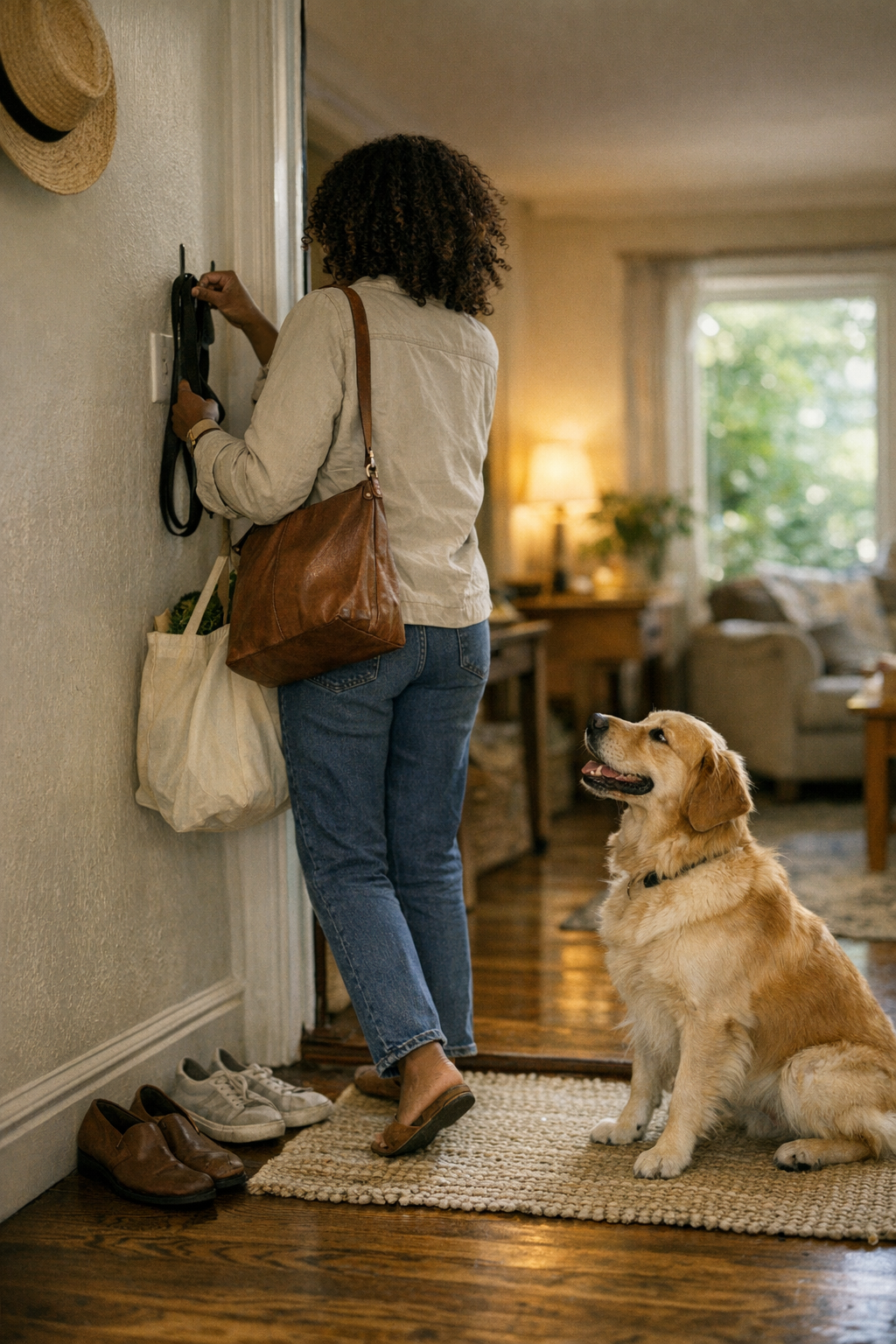
Most dog owners know the after-walk entry isn’t the easy reset it looks like from outside. The routine stutters at the same friction points: you juggle keys and groceries while your dog circles, pausing and peeking for cues. Under the usual excitement, there’s an invisible logjam—a shoe blocking the path to their mat, a bag left in the landing zone, the leash dropped in a pile instead of hung within reach. It only takes one misplaced item to turn homecoming into stop-and-go chaos, adding up to a routine that feels more tangled than welcoming. What appears tidy at first glance often breaks down exactly where dog and owner need a clear handoff.
Entryway Friction: Where the Routine Really Gets Stuck
Everyday home entries set the tempo for the evening—yet most doorways quietly sabotage the flow. You enter, balancing a bag, maybe dripping rain, and automatically step around a shoe you keep meaning to move. Your dog tracks your motions, nose low, looping awkwardly because the spot they expect to claim is squeezed off by something you dropped “just for now.” Your leash, supposed to hang by the door, is instead tangled with a jacket or under a week’s mail. The setup might seem under control, but the actual sequence — bags shuffled, leash scrambled for, paws dodging human clutter — gums up even the best-planned routine.
This isn’t just excitement. It’s repeated misfires, triggered by a path that’s blocked or a handoff that’s never clean. One loose boot shifts a calm greeting into confusion. A leash stashed on a chair becomes a choke point: now you’re elbow-deep in clutter while your dog circles for direction.
The Unseen Costs of a Blocked Path
Clutter doesn’t just slow things down—it drags the reset across the whole routine. The longer a dog’s re-entry gets snagged, the more everything else stalls: dinner is later, you’re still cleaning mud off mail while also reshuffling bags, and that “settle-in” feeling slips further away. The friction stacks quietly until nobody lands in the evening calm—just a pile-up of small annoyances both sides come to expect but never accept.
What Actually Happens During Settling: Real Scenes from Daily Life
After a rainy walk, you’re tracking mud, arms full, thinking about dinner. The towel is never where it should be—blocked by a recycling bin or lost behind bags. Your dog aims for their spot but tiptoes, diverted by whatever’s crowding the mat. A soaked paw slaps a dropped envelope. Before you can even hang a leash, you’ve got damp mail, a restless dog, and off-track momentum. These aren’t rare emergencies—this is standard entry protocol for most homes.
At night, coming back from that last outing, you reach for the leash, but boots have migrated in front of the wall hook again. You fumble, get the leash free, but the dog has already circled twice, not sure if this means “wait,” “go,” or “just lie anywhere.” Each minor block forces a micro-decision, scattering the homecoming into separate, slower steps. What should be a handoff becomes a repeated stall.
When Organization Isn’t Enough
Visual order doesn’t fix practical breakdowns. The corner that looks decluttered at noon turns into a barricade by evening, the thing you “set aside” turns into yet another block, and the leash “put handy” gets buried in the run of daily life. Most setups look better than they work. If routine stalling sneaks up despite what appears under control, the structure—not the dog, not your energy—is slowing the flow.
Recognizing Disguised Routine Trouble
There’s a sharp distinction between an entry that works and one that wears you both down with micro-friction. If you’re forced to reshuffle bags nightly, or your dog whines and stops at that same cluttered edge, it’s not a personality issue—it’s a structural problem. Stay alert for signs: are you always stepping over one bag too many to drop the leash? Does your dog detour or delay—even when you want them to settle quickly? Every micro-stall is feedback that the system favors appearance over function. Under repeated use, comfort is lost not to affection but to setup neglect.
How After-Work Frustration Creeps In
Small blocks pile up quickest when you’re tired. After a long workday, you want to unwind, but the first five minutes collapse into leash-finding, shoe-moving, and swapping places with a restless dog who can’t find what they’re supposed to do. That’s not a “rough day”—it’s a routine built on friction. Evening calm evaporates, replaced by quiet irritation that’s tough to spot but real in cumulative effect.
Fixing the Flow: Small Shifts with Big Impact
The unlock isn’t full remodeling. It’s identifying where momentum dies, then making just enough change that your routine becomes repeatable—and survivable. One fix: keep bags and shoes a full step past your dog’s “entry line,” not just out of your own path. Get a leash hook high enough to stay visible, low enough to grab without bending past clutter. If you hang the leash up every time, even in a hurry, it becomes a visible reset for you and the dog: outside is over, now we settle. A towel within reach—never behind boxes—means paws get wiped when it matters, not after the damage is done.
Putting It Into Practice
- Create a “clear zone.” The first step inside is reserved—no random drops, no shoes, no parcels. This strip is a guaranteed runway: you and your dog both get space to pause and reset, not trip and scatter.
- Hang the leash, every single time. Pick a wall hook at entry level and use it, not the nearest chair or shelf. Over time, both you and your dog link “leash there” with “walk done.”
- Tidy as you arrive, not as a chore later. Shift bags and shoes out of the zone before you relax—even if it nags in the moment. That quick reset relieves the worst routine pressure points.
You’re not erasing all clutter—you’re targeting the spots where mess turns functional flow into a tripwire. Dog life is messy. But the most stubborn friction is where dropped items keep blocking the same threshold, trapping you both where you least want to stall.
The Real-World Payoff: Smoother Transitions, Less Waiting
When the entry is actually clear, the leash is easy to hang, and paws are wiped right at the door, routines compress fast. The dog goes straight from door to mat—no detours. You walk in and head for dinner or rest without circling back, and those early-evening interruptions shrink by half. The impact shows in fewer missed cues, less repeated circling, and a routine that finally feels as smooth as it looks in your head.
It feels minor—until you stop having to fix the same hang-ups night after night.
When Good Looks Aren’t Good Enough
Photo-ready setups often hide the same weak links: a box that organizes supplies, but edges into the dog’s landing zone; a tidy mat crowded by last-minute shoes. A routine only works if your dog’s hesitation vanishes and you stop stumbling—even when things get messy. If the same corner keeps absorbing stray items and breaking your rhythm, it’s time to fix what blocks easy movement, not just what “looks right.” Consistency in path and placement beats appearance every single day. If a single friction point stays stubborn despite your efforts, direct correction beats another round of tidying.
Let Your Daily Return Actually Reset
Homecoming shouldn’t be flawless—just workable, every single time. Setups that clarify what goes where, that remove repeat friction and give your dog an unblocked line to their own reset, make every return cleaner, calmer, and easier to keep up. Fix the bottleneck, and the rest of your dog-life routine starts to fall in line.
For practical entryway tools, leash hooks, and everyday gear that actually fits the lived-in routine, visit DogPile.