
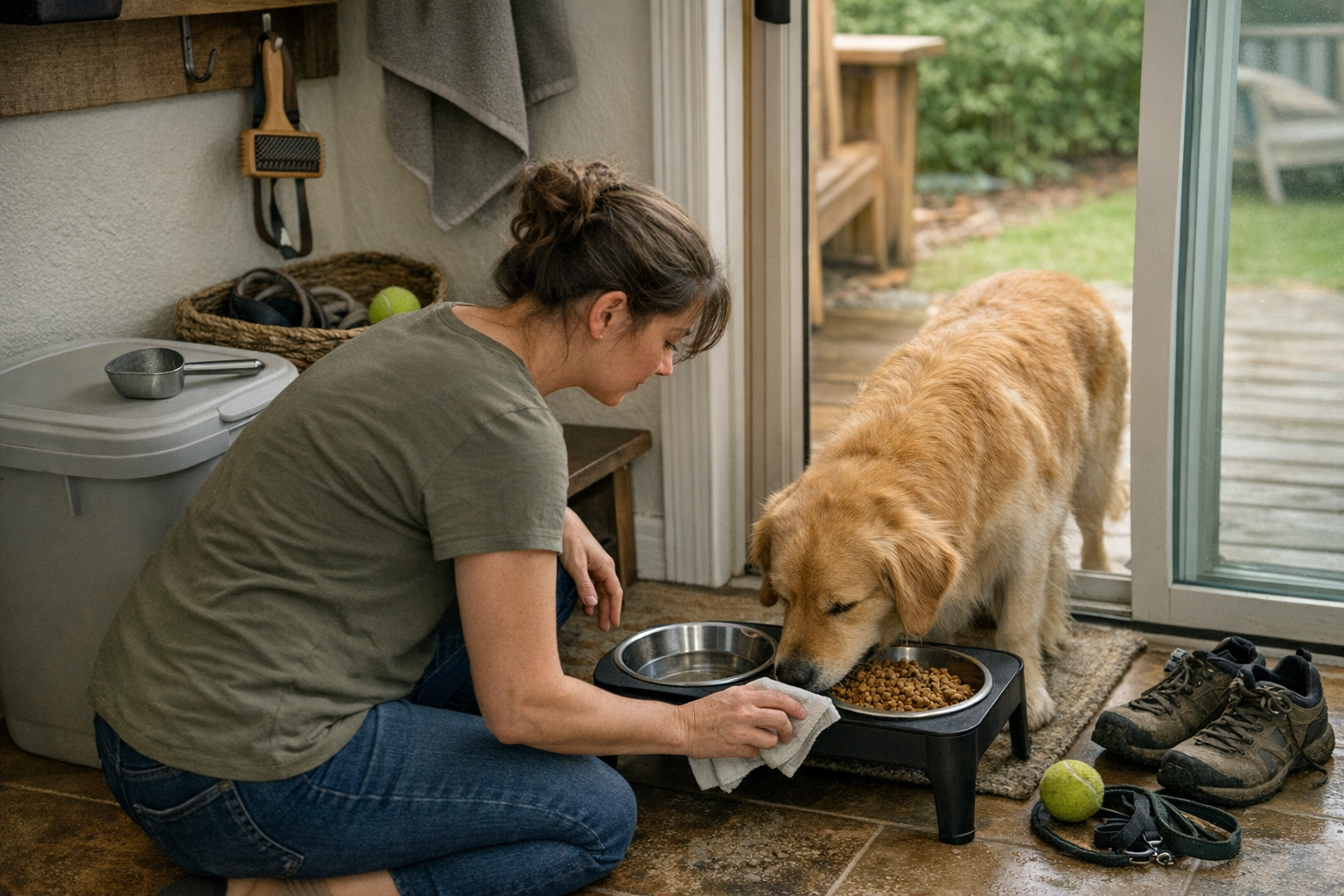
Where Pet Care Routines Start to Strain: Small Slips, Big Friction
It’s easy to think your daily pet care setup is working—dishes set out, towels folded, everything apparently in reach. But the daily routine proves otherwise. The first sign? You reach for the scoop and it’s not in the bin; you wipe up yesterday’s water ring only after the bowl sticks to the mat; toys are stashed in a basket, yet you still step around a stray ball that rolled where you need to walk. These are the routines that look controlled but feel slow. Tiny slips—one open lid, one towel misplaced—create double work and constant interruptions. Over time, the setup you thought would save effort starts building up friction you can’t ignore.
Seeing It Happen: How Tiny Gaps Erode Routine
Picture the reset: feeding spot wiped, water bowl emptied, toys stacked away. It looks finished—until next morning. The kibble bin’s lid, left cracked open for one distracted minute, lets in a stale smell. A towel dropped “for now” is missing when muddy paws appear. Suddenly, feeding is tangled with clearing laundry or searching for a clean cloth. The mess isn’t headline-worthy, but the routine slows: small gaps mean you circle back, make substitutions, or hunt for basic tools just to keep up with simple care. Momentum breaks, and even a clean area turns into a hard-to-keep habit.
Quick Fixes That Don’t Always Stick
A setup can look tidy—dishes in order, storage bins handy, tools nearby. But if you go to refill water and have to clear toys from in front of the cabinet or wrestle a scoop out from behind a sack of treats, surface order hasn’t solved real use. Over and over, you wipe bowl residue that’s now crusty, dig out a brush caught in a drawer, or try to scoop food with a kitchen mug because the actual scoop is lost in the morning rush. The lost time isn’t dramatic—just one more repeated hassle every day. Underneath, it’s not clutter; it’s a routine that quietly gets harder with each missed reset.
When “Good Enough” Turns Into Constant Reshuffling
Day one, it’s manageable. But let one round of cleanup slip: the towel for paws is damp and out of reach, so you improvise with a random rag. The scoop is in the sink, so you guess at portions. Afternoon means stepping over toys to refill the bowl, or clearing the counter of yesterday’s crumbs before prepping dinner. Every shortcut opens another: what started as “fine” turns into a series of stutters—detours, retracing steps, and more resets just to complete the basics. Over a few days, this pile-up replaces flow with friction, as every chore drags behind the last one.
Small Habits, Tangible Impact
The real fix isn’t an overhaul or fancy organizer—it’s hitting the reset as you go. Seal the food bin every time, even with one hand full. Place essentials where you actually grab them, not just where there’s room. Run a damp cloth over bowls right after use to stop buildup before it starts. Hang up the towel even if you’re headed out the door, so grabbing it isn’t a side quest next time mud tracks follow you in. Each of these micro-resets blocks a future interruption and puts your real routine back within easy reach.
Making the Routine Self-Sustaining
The best pet care setups don’t just cover the mess—they cut the time you spend stopping, searching, or correcting. Keep cleaning cloths where feeding happens, not just with the mops. Drop a small basket for toys right by the main living zone so you’re not collecting balls from every corner. Parking a spare hook for towels or leashes by the door isn’t about decorating—it means you avoid delays when a walk or post-yard cleanup should take seconds, not minutes. Each small action, done immediately, keeps care flowing and every next step lighter.
What Consistent Resets Actually Feel Like
The difference isn’t just visible. It’s having the right tool in hand on the first try—no clearing space, no searching for a missing cloth, no workaround because the scoop is missing. As these pauses disappear, the job shrinks from a list of chores to a sequence of fast, repeatable motions. You’re not chasing order—you’re maintaining it as part of the flow. Over time, this is what makes a routine not just look better but feel genuinely easier each time you use the space.
Closing Gaps for Everyday Flow
The real trick to stress-free pet care isn’t chasing after tidy appearance. It’s tying off those micro-gaps—every lid snapped shut, every towel rehung, every tool placed where you reach for it—in real time. Each reset predicts the next interruption and blocks it before it returns. That’s how a routine designed for daily life keeps pace with real mess, real clutter, and real energy. One setup might look calm. The one that works better—CalmPetSupply style—cuts the drag down and gives you room to keep up, day after day.
Find setups that help you keep your care routine steady at CalmPetSupply.