
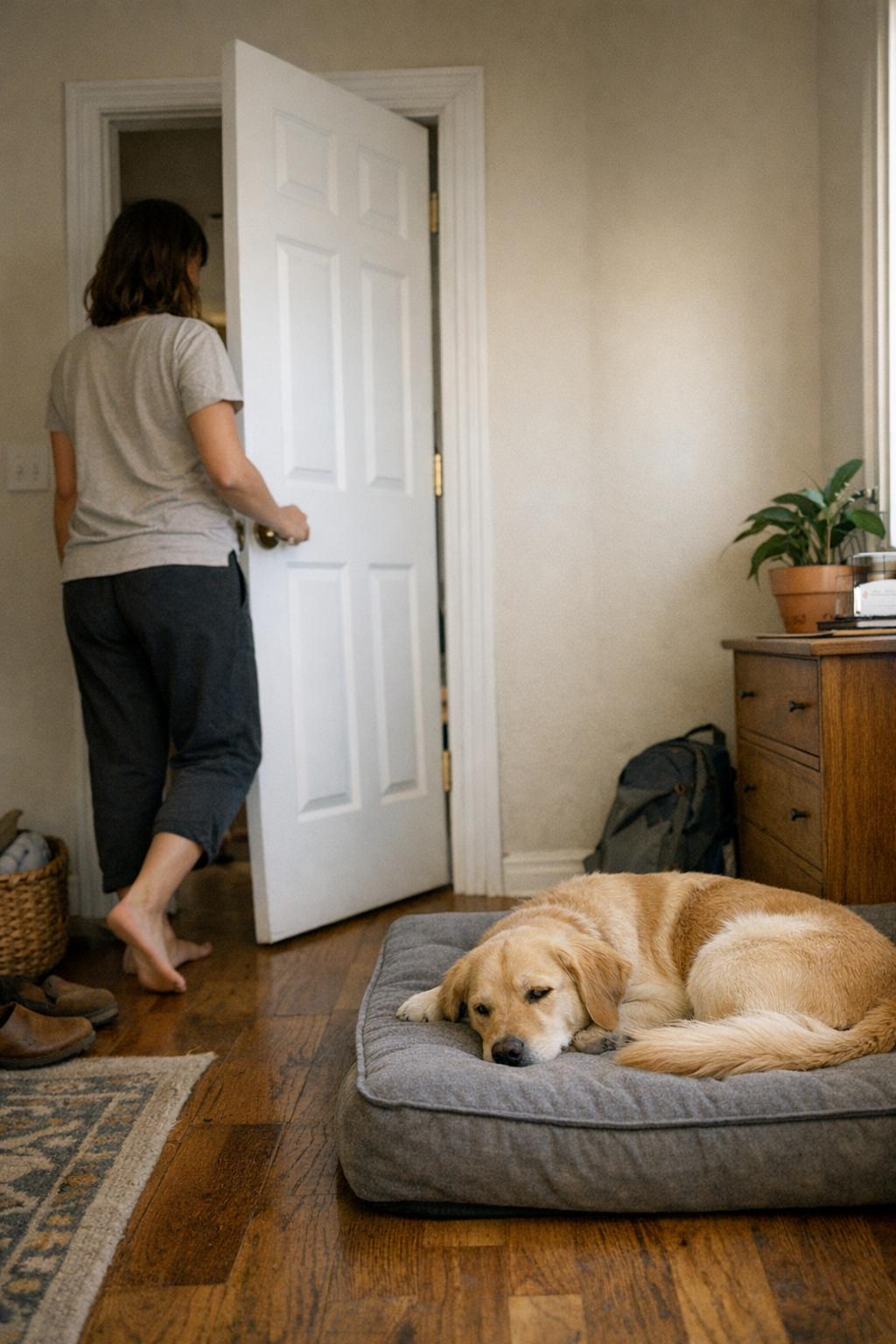
Most dog owners know the sound of a door clicking shut doesn’t just mark leaving or entering—it marks a change in the whole flow of the day. Your routine might look organized from a glance: leash on the hook, bowl in its spot, floor mostly clear. But if your dog stands frozen near the door, circles the entryway, or waits for permission that never comes quickly enough, the weak point is obvious. Every morning, small annoyances stack up: reaching for the leash and finding toys in the way, returning after a wet walk only to discover the wipes are across the room, squeezing past a bed that sits too close to the threshold. Tidy in theory, but each step gets snagged by invisible friction built into the setup. The slower your transition, the more each day makes you feel it. Here’s what actually starts to drag—before you’ve even poured your coffee.
The Unseen Morning Bottleneck
The trouble isn’t just where the door is. It’s how every routine is forced to pivot around it. Most owners don’t really clock what’s off until their dog hovers at the door, stalling for cues in that blank space after it shuts. Instead of a clean shift to feeding or walks, you get a clutter of circling, sniffing, or just hanging by the entry, never quite moving on. These aren’t just lost seconds—they slow the whole chain. By the time you’re done nudging your dog forward, grabbing supplies from two spots, and untangling the leash from under the bed, the “quick morning” turned into a waiting game you didn’t intend to play.
You catch it in little signals: a dog reluctant to leave the doorway, that glance back at the closed door, or hesitation between steps. Once you notice, it’s impossible to ignore—your setup isn’t smoothing the way, it’s quietly training both of you for delays.
Routines That Stall Before They Start
Picture the pattern: you close the door, ready to start the next thing, but your dog hovers in the entry—still on standby. You reach for the leash, but it’s tangled with a toy or partly pinned under a stray mat. After a wet walk, the wipes are across the threshold, so you’re forced to cross the dirty floor twice—wasting time, adding mess. One inconvenience is nothing. But every repeat makes this stop-start rhythm the new normal. Instead of entering the day, you and your dog rehearse the same shuffle: waiting, moving things, pausing at the bottleneck until everything is reset for the next round.
How a Closed Door Becomes a “Wait Here” Cue
Dogs know patterns. Door closes, energy stalls—soon, the entryway becomes a holding zone instead of a passage. It’s a checkpoint where your dog waits for a signal that comes too late or not at all. Again and again, the closed door prompts lingering, double-backing, circling, and hesitation even after obvious “go ahead” cues. The result: every transition gets stretched, not because of training but because the space pushes your dog into a “wait here” loop instead of a clear move-on.
This is how routines turn sticky. The entryway may look calm, but each repetition builds stop-and-go habits. The dog’s presence at the threshold keeps things on hold, making the difference between routines that flow and those that stall right out of the gate.
Repeated Friction in Real Time
This isn’t just a morning phenomenon. When beds or mats overlap with the door’s path, every return home forces awkward negotiation—careful not to pinch the edge, careful around the dog, careful stepping over scattered toys. The doorway fills with tiny obstacles. One extra step, one bed push, and you’re slower every time. Even in a tidy setup, too much within reach becomes the enemy of quick, predictable movement—especially when you’re rushing to reset the space before work or guests.
The Difference Between “Looks Fine” and “Works Smoothly”
You organize the entryway: hooks for leashes, bed flush against the wall, bowl not blocking the door. On paper, nothing’s wrong. But the friction hides in plain sight:
- Bed just close enough to turn the doorway into a default hangout—so your dog waits in limbo rather than resting elsewhere.
- Towel for muddy paws placed nearby, but awkward enough to grab that the floor gets tracked anyway.
- Water bowl close enough to trip over during a quick exit or return—making a “good” setup one more thing to dodge when time is tight.
It’s the routine that feels slow, not the room that looks messy. Each step back from a walk or meal becomes a mini project: move this, shift that, call the dog again, then finally start the real next task. The drag isn’t visible—but you feel it in every delay and repeated correction.
The Impact of Small Frictions Stacking Up
Every return is a test: bed still in the swing path means you sidestep or nudge it each time; dog pauses at the entry, so you’re giving repeat instructions instead of moving forward. Over days, these patterns train both owner and dog. Your entire morning starts to stretch, your patience wears, and the “new routine” is built around waiting by the door. The weak point sticks, no matter how good the rest looks.
Tweaking the Setup: Simple Changes, Real Differences
The answer often isn’t complicated. The most effective change? Rotating the dog’s bed lengthwise against the wall, with space clear of the door’s swing—suddenly, no more indecision at the entry, no more door checks, no need for repeated reminders. The dog’s path is direct: door closes, bed is right there, and lingering at the threshold quietly disappears. Cleanup after walks? Now supplies are next to the exit, instead of requiring backtracking across the floor.
A New Pattern That Reduces Waiting
This small shift replaces a “wait for action” zone with a settle-and-reset cue. Instead of using the doorway as a holding pattern, the dog sees a clear space away from foot traffic—the cue is to move on and relax. That new routine bluntly reshapes everything: feeding starts faster, you get out the door sooner, and “wait by the door” fades into the background. The same space does more; the invisible drain is gone.
Seeing the Routine From the Dog’s Point of View
To a dog, that bed or mat near the door is a signal: “Don’t relax yet, action is still coming.” Even if the area looks organized, rest doesn’t happen until the physical layout actually clears a path forward. Every pause at the threshold is really the setup talking back—reminding your dog to hang tight, circle, or hover close, instead of dropping into a true reset. That hesitation repeats, rooting a pattern that’s hard to undo just by rearranging items visually.
Making Calm an Easy Default, Not an Exception
The best signal isn’t about enforcing “good behavior.” It’s about making rest easy and obvious—clear, physical permission for your dog to quit waiting and let you continue the routine. Once the bed, bowl, toys, and supplies actually support flow instead of crowding it, repeat interruptions fade without you having to micromanage. The day runs quieter, and the difference—less circling, fewer reroutes, no extra steps—shows up fast.
Spotting the Weak Point—And Addressing It Early
Letting the “door hover” slide is like accepting a yellow traffic light that never switches. The cumulative effect: meals get nudged later, walks start less smoothly, downtime becomes about managing delays rather than actually resting. The weak point isn’t dramatic, but it multiplies—quiet, persistent drag until the whole routine feels one notch rougher than it should.
The actual fix is deliberate, not elaborate. Give the rest spot its own clear, inviting zone—no crowding the door, no waiting in the way. Reinforce calm there after each return or door close, and watch as the bottleneck at the entry gives way to a smoother, more reliable rhythm.
What’s Actually Changing in the Day-to-Day Flow?
Soon, you’re giving fewer reminders, dodging fewer obstacles, and actually moving on right after the door shuts. Cleanup between walks is easier: towel is by the threshold, wipes are within reach, bowl isn’t the first thing your heel hits coming in. The space stops demanding little corrections and actually helps you reset—one move per step, not a cascade of minor interruptions. Visitors may not notice the difference, but your routine will.
Paying Attention to Where Friction Hides
Most setups get organized to look right, not to work right. “Bed here, bowl there, toys in a bin”—but the invisible roadblocks only clear out when the entire daily path runs smooth for both human and dog. The problems—waiting in the doorway, slow resets, item-blocking—disappear only once the arrangement sends a clear signal. Instead of letting the threshold decide what happens, design your setup to tell both of you what step comes next—no room for uncertainty or pause.