
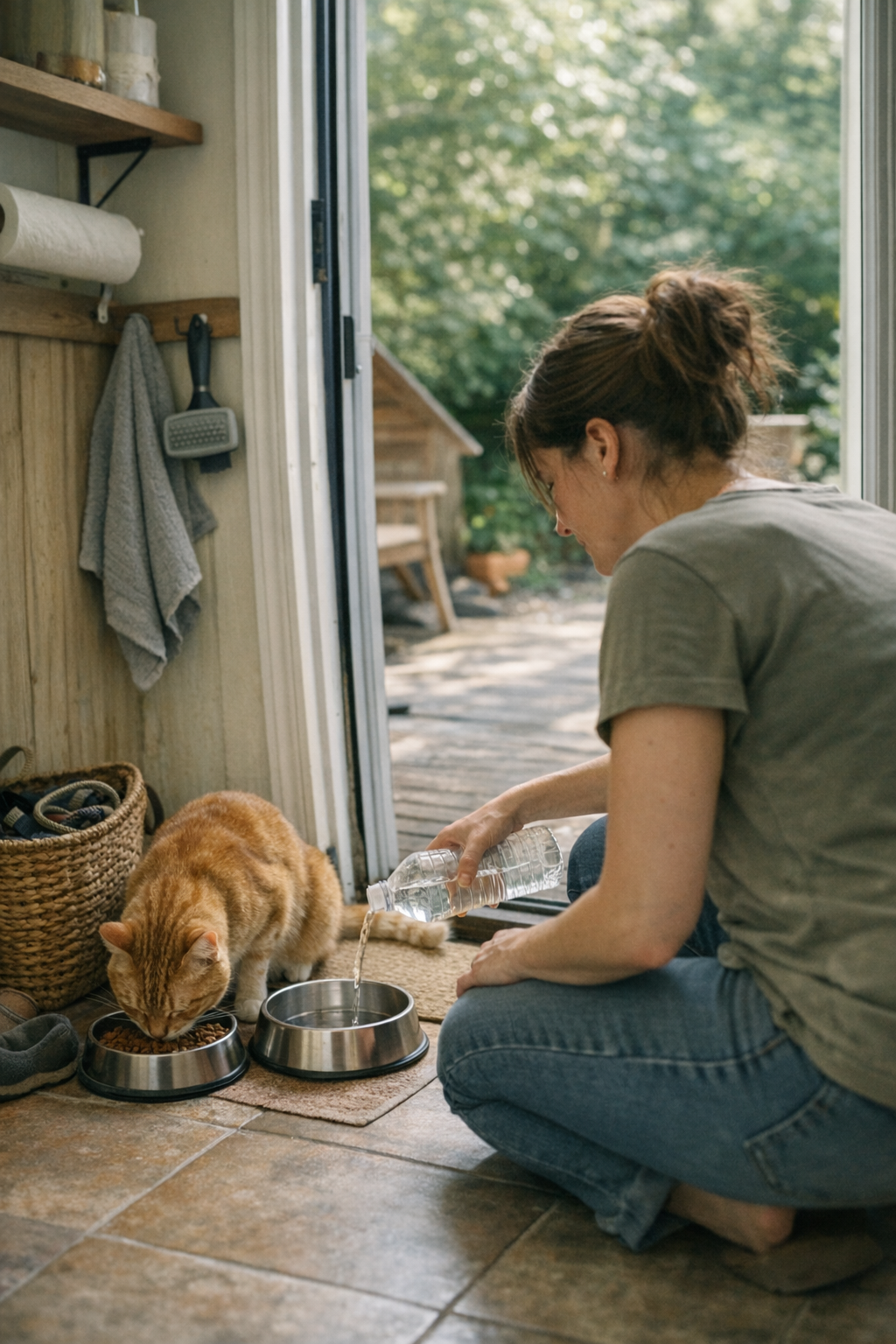
Most cat and indoor pet routines break down at one point: the moment you try to do a simple thing—topping off water, grabbing the brush, or wiping a rim—and the tool you need is blocked, missing, or across the room. A tidy feeding corner might look calm in the morning, but actual daily care reveals friction fast: yesterday’s mail piles in, cleaning cloths drift from reach, and essentials end up mixed with kitchen clutter. By midweek, what began as organized devolves into a sequence of small, annoying delays—and every minor interruption turns what should be a quick care reset into yet another pause.
The Quiet Build-Up in Cat and Pet Routines
A system that feels under control on day one quickly unravels once routine hits. A fresh water bottle by the bowl, a wipe cloth folded neatly, the brush right where you left it—by midweek, that order rarely survives. Try topping off your cat’s bowl before work, and you find yourself shifting piles, clearing last night’s kitchen leftovers, or scanning for a brush that’s migrated behind a bag of treats. The refill bottle’s no longer at hand; it’s been nudged behind cleaning sprays or left in another room. One missing towel after a hasty wipe becomes a hunt each night. These aren’t single-point failures, but together, they drag the whole process. The routine—feeding, water, quick cleanup—always feels just out of step.
Each stalled moment—clearing space before you can scoop, crossing the kitchen for water, digging out a cloth—doesn’t cost much time individually. But with every cycle, the feeling builds: the setup isn’t keeping pace, and you’re working around it instead of with it. Your cat notices too—waiting at the empty water bowl, pacing as you sort through countertop clutter, or leaving messes untouched until you find a missing wipe.
When Surface Neatness Isn’t Enough
A space can look neat while hiding constant low-level hassle. The bowl, mat, and brush might be lined up on Monday, but by Wednesday, bowls crust over at the edges, fur builds up under the mat, and supplies have drifted just far enough to make “quick” care slow. Each search for a brush or towel adds a minute and a second guess: Is this just untidy, or is the whole routine out of sync? Your pet waits, the feeding area’s less clean, and you’re tempted to skip the wipe or delay the refill just to get on with your day.
What fails first isn’t obvious: a late-morning missed wipe, a water bowl lower than you meant to leave, or a brush not where it should be. Letting these slide “just for today” means routine care becomes triage, not maintenance—the core setup can’t support efficient resets, and you end up patching problems instead of avoiding them.
Real-World Examples from Everyday Pet Care
- The grooming brush you need is wedged behind pantry items, turning a two-minute session into a five-minute search.
- After a water spill, cleanup stalls because the towel lives in a different room, so a fast wipe becomes a break in flow.
- Feeding derails when you realize the refill tub got left in a busy corner and now requires a backtrack as your cat circles impatiently.
- Food crust hardens on the bowl after a late meal, and tackling it becomes an extra chore no one wanted tonight.
- Muddy dog paws hit the hallway because the foot wipe vanished or never made it back to its spot, and now shared space gets messier than planned.
These are not major failures, but in steady repetition, they create a friction your routine can’t shake. Every small detour—whether it’s searching for supplies or leaving a mess to deal with later—reminds you the setup still needs real adjustment, not just a tidy surface.
The Difference Between Looking Good and Working Well
Looking organized and staying functional do not always match. A countertop cleared of visible clutter can leave the essentials tucked out of reach, shifting effort to hidden resets and late fixes. A brush out of sight keeps a room looking calm but means a grooming session is never quick. The tools you need migrate out of arm’s reach; the space stays presentable but works against you the moment the routine is repeated.
Some setups shine in their first days—a spotless feeding corner, everything right where it should be. But over time, if each supply needs extra steps to retrieve, or the water bottle regularly runs low before you notice, calm order erodes. It becomes clear: visual neatness can mask a load of extra work, and the system starts to feel heavier each day rather than lighter.
Specific Tactics to Prevent Routine Interruptions
You rarely need a total overhaul. Small, persistent shifts matter more: keep water bottles, cleaning cloths, and grooming tools not just close but reliably visible and unobstructed. Hang the brush directly above the mat—never inside a drawer. Station cleaning wipes in a small, open cup beside the bowl, not hidden in a pantry bin. The aim is dead-simple reach—like refilling before empty or wiping the rim before buildup forms, right at the end of mealtime instead of after a delay.
Adopt a “reset as you go” mindset: after every water top-off, grooming pass, or meal, return tools instantly to their place—not just “nearby,” but back to their hook or container. Get in the habit of prepping the next use now, not later. These small repeats keep the whole cycle moving: bowls cleaner, refills ready, your time spent on care instead of correction.
Signs Your Setup Needs Adjustment
Watch for hesitation that keeps returning—your cat pausing at the feeding spot because water’s not there, or you skipping the rim swipe again because the cloth has wandered. If you’re silently excusing missed wipes or repeat quick fixes, the routine signals its own weak points. You don’t need a full reorganization—just spot and close the recurring gap.
Evaluating Your Daily Flow
Judge any pet-care setup not on first-day looks but on how easy it is after a normal week—bad sleep, late nights, work delays and all. If you can feed and reset without clearing mail or searching for towels, you’re on the right track. But when any step starts with finding or reshuffling, or when supplies end up anywhere except their visible “home,” it’s time for a change. Focus where you most often reach, hesitate, or improvise.
Make Routine Comfort Last
Lasting calm in daily care means making every basic item reliably easy to grab and reset, not just hiding clutter. When tools stay in open sight and resets need zero extra steps, routine friction falls away—leaving more room for comfort with your pet and fewer frustrating reruns of the same small problems. Make small, visible shifts and let function keep pace with appearances.
Explore everyday-ready solutions for real pet routines at
CalmPetSupply.