
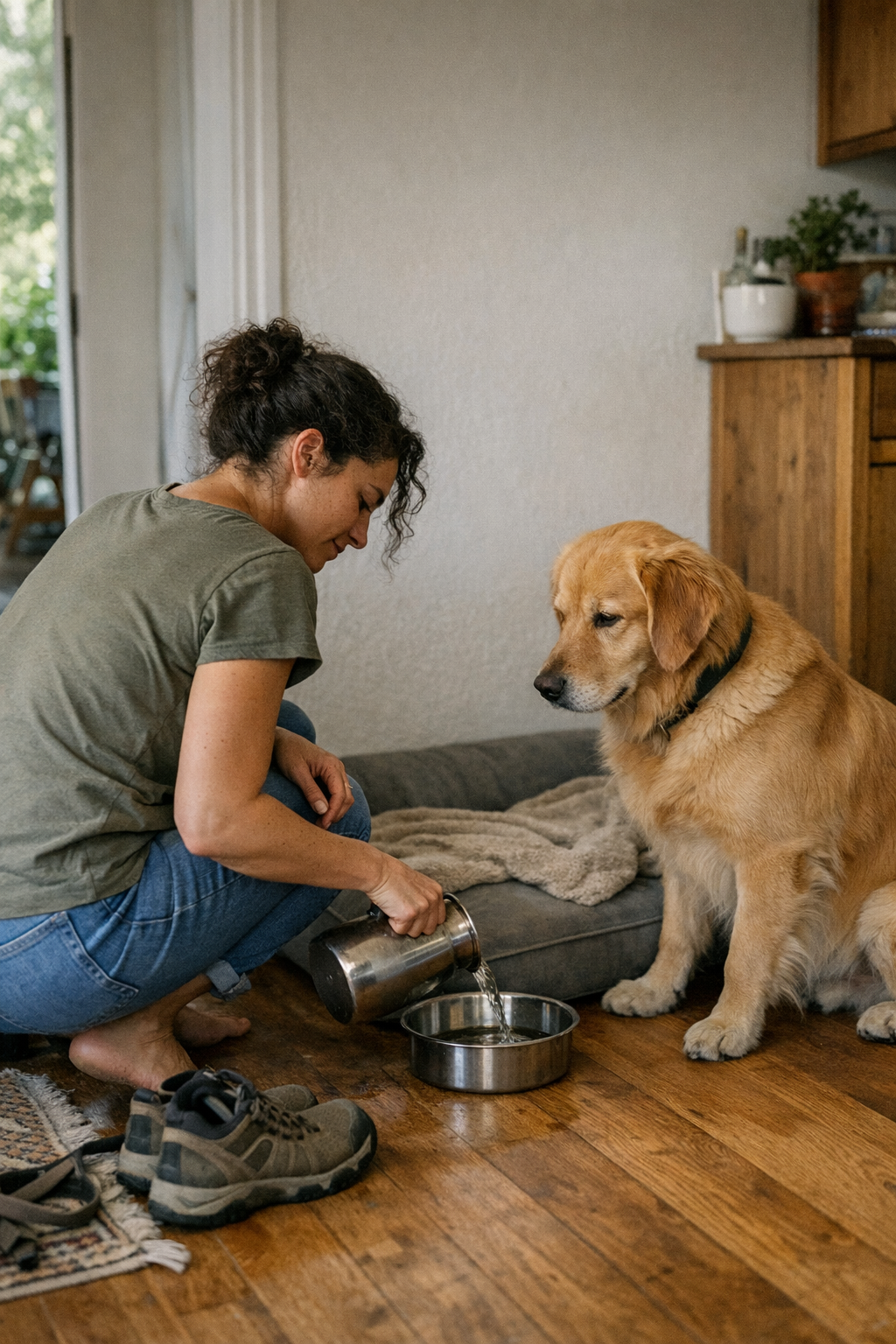
The reality of living with a dog is that “tidy” doesn’t always mean “easy.” That plush bed in the corner looks perfect the first night. Two days later, you’re sidestepping it as you carry in bowls, nudging it with your foot when your hands are full, or finding your dog awkwardly blocking the hallway just as you reach for the leash. The rest area that promised comfort now adds a minor detour to nearly every routine—reminding you, in small ways, that what looks organized on day one can turn into a low-grade obstacle after a week of real use. The solution usually starts with a shift in layout, not ordering more supplies.
Why a Tidy Rest Area Isn’t Always a Functional One
Pinning the dog bed to a “safe” quiet spot may feel organized, but it’s rarely friction-free. As days stack up, the bed drifts toward the bowl or pokes into the walkway. It isn’t dramatic—just an awkward angle here, a block for your foot there. Those small delays—dodging the edge with a filled water bowl, pausing so your dog can clear the entrance—don’t announce themselves, but they slowly turn routine steps into awkward pauses. Orderly corners are easy to admire, but it’s those invisible snags that keep routines from feeling smooth.
Hidden Slowdowns: When Small Obstacles Stack Up
Real friction shows up in micro-moments: the bed lines up too close to feeding, your dog hovers, uncertain if she can reach the bowl. Or she circles, confused about whether it’s time to eat or settle. You’re left shifting her bed with an elbow—never quite in the way, but never fully out of the flow. Each individual pause is easy to ignore, but over a week, repeated shuffles chip away at routine speed and make the simplest transitions feel heavier than they should.
Repeated Routine Friction in Real Life
The post-walk return is the pressure test: leash in one hand, towel awkwardly caught beneath an arm. You approach the corner to dry paws—except the bed blocks your path, again. Either you move the bed one more time, or you try to stretch over it and nearly miss your mark. Your dog waits, half in her spot and half out, neither comfortable nor truly out of your way. This is where “looks neat” collides with “doesn’t actually work.”
When Comfort Conflicts with Convenience
Most people design for comfort—thick bedding, soft blankets, close to some daily activity zone. But a plush bed creeping into a walkway, or overlapping the water bowl by just three inches, isn’t just a visual annoyance. It means extra adjustments for you and waiting hesitations for your dog, especially in busy moments: prepping food, heading out, or coming in after muddy walks. By midweek, you both reflexively work around the obstacle, accepting slowed movement as normal. Comfort and ease drift apart, and the setup never quite stops interrupting the flow.
The Cost of Static Order: Calm on the Surface, Chaos in Motion
Freezing the layout might look responsible, but it ignores how routines really unfold. Over time, a visually neat corner becomes a background irritant. Both you and your dog start hesitating in the same spots. She learns to pause at the bottleneck; you learn to preemptively nudge the setup, sometimes without even looking. More people or dogs in the home just multiply the impact—a space that seemed “put together” on Sunday turns into a slow collision course by Thursday evening.
The Difference Between Looking Neat and Feeling Smooth
Clean lines and tucked-away beds are satisfying, but a rest area that forces you to side-step, pause, or double-check is working against your day. When you realize you’re bracing for another slow shuffle after every walk, the illusion of order fades—routine performance, not visual neatness, reveals where the real bottleneck lives. The setup that tidied your floor now quietly taxes your patience.
Small Shifts, Big Changes: Testing and Observing Micro-Adjustments
The fix usually isn’t a full rework. Moving a bed twelve inches away from bowls or out of a walkway can dissolve the bump in routine almost instantly. Try shifting a corner just beyond the kitchen entry, or along a wall that doesn’t see direct foot traffic, and notice if water refills or towel grabs become automatic, without shoulder-squeezing detours. When routines—like drying paws, prepping meals, or letting your dog settle—start happening without pause, you know the adjustment worked. It’s not just about eliminating mess; it’s about removing micro-hurdles that make daily life drag.
What to Watch For in Your Own Setup
Start by tracking where you and your dog slow down. Do you find her stalling inside a doorway, waiting for clearance to move? Are you always shifting bedding with your hip, or carrying bowls high to avoid a plush corner? If the same friction repeats in the same spot, your layout’s not fitting your routine. It often takes a single busy rush—throwing down keys, wiping paws, or juggling dinner prep—to reveal the silent pull of a misaligned rest area.
Everyday Reset: When and Why to Move the Rest Area
Nothing about a dog’s home setup should be frozen. The purpose isn’t constant rearranging, but recognizing when friction recurs and letting layout evolve. Look for:
- Stacked hesitations: Dog pauses or spins before meals and bedtime.
- Blocked quick access: Bed positioning slows you from getting to a bowl or door.
- Routine detours: The same sidestep, shuffle, or mental brace every day.
- Cleanup drag: Wiping, sweeping, or picking up toys becomes a repeat hassle because the bed sits in the path.
If you spot these triggers in your rhythm, it’s time for an adjustment—no matter how tidy the corner looks.
The Relief of Fewer Pauses
After moving the rest zone just outside the main route, the difference shows up in the pace, not just the picture. Dinner prep runs straight—not in a zigzag. Grabbing wipes or drying paws becomes one step, not three. Your dog slips in and out without stalling, and you stop noticing the bed because you’re never bumping it. A “quiet” setup isn’t about how it photographs; it’s about how little attention it now demands.
When One Weak Point Keeps Returning
Even with smart adjustments, the same snag sometimes comes back. Maybe bowls move, or a shortcut you didn’t think would matter starts drawing traffic again. Routines change, dogs change, and what once worked gets clunky. The difference between “looks organized” and “stays easy” comes down to whether you stop thinking about the corner, or keep having to work around it. One repeated stumble is more telling than a week of neatness.
Perfection’s not the goal. Instead, aim for a rest, play, and feeding setup that gets easier—not harder—the more you repeat it.
Toward a Home That Moves With You (and Your Dog)
Order should work in motion, not just on display. Every micro-move—leash grab, food refill, towel pull, quick nap—needs space to happen without a thought. If a rest area keeps slowing you down, don’t wait for friction to pile up. Sometimes shifting a bed just six inches reroutes the whole week’s routine back to smooth.
Track which moments keep asking for another workaround, and don’t hesitate to let your setup adjust when the signal’s clear. Removing small slowdowns is how you reclaim real calm in a dog-filled home—one plain, daily task at a time.