
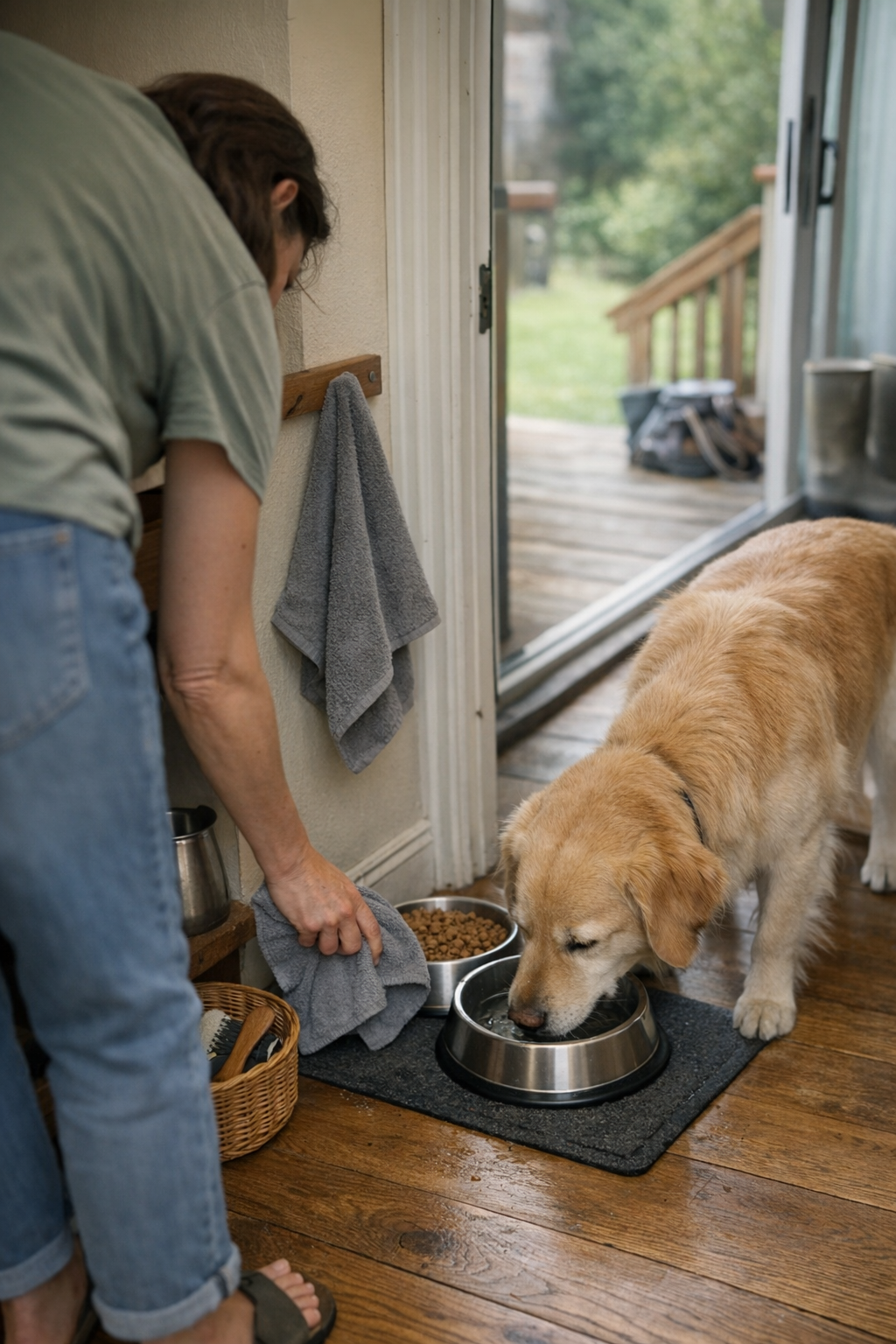
Where Daily Pet-Care Routines Break Down
Most pet owners think their setup is “organized”—bowls lined up, container nearby, towel within sight. But daily pet care rarely collapses from obvious mess. Instead, routines stall when a basic item isn’t where it needs to be: a water bowl that’s almost dry after work, a wipe stashed behind groceries, a brush tangled with unused leashes. Every small miss, every second spent hunting down the right thing, adds up to slower mornings, repeated double-backs, and cleanup tasks that get pushed off—until they’re no longer quick fixes. If your system looks fine but fails the daily reach test, you’re not alone. This is where CalmPetSupply’s practical setups start to matter.
Micro-Messes: Easy to Miss, Harder to Undo
It seems harmless to delay wiping the feeding area—until sticky bits dry before lunch, and “one swipe” turns into a full soak later. When wipes live on a top pantry shelf or behind a stack, cleanup gets skipped, then postponed. Multiply this across feeds, days, and pets, and you’re left correcting buildup that could have been handled in seconds earlier. Each missed moment—one soaked bowl edge, one abandoned towel drying somewhere unseen—drags out the reset. This isn’t about sloppiness; it’s how skipped steps, repeated, quietly turn into more work and visible clutter the next time you circle through.
When “Organized Enough” Isn’t Enough
Pet-care stations reveal their real gaps during busy weeks, not on setup day:
- You reach for the water bottle only to find pots blocking the way under the sink.
- The brush lives “in the drawer,” but now it’s wedged under dog toys and treats.
- The quick-clean towel vanished, leaving only kitchen towels you avoid using on fur or paws.
These aren’t one-time annoyances. They return—when you’re running late, have company coming, or just want to finish and move on. What started looking orderly turns into half-finished jobs, awkward reshuffles, and five-minute chores that sprawl into ten as you keep tracking down supplies that never actually stay ready.
Shared Spaces, Repeated Interruptions
Items migrate. Grooming tools left by the sofa block a cabinet later. Bowls inch into busy walkways, ready to trip someone in the hallway. Toys scatter into sightlines and land on kitchen counters simply for lack of a basket. These shifts force extra resets—bending to move bowls again, collecting misplaced towels, hunting for brushes that no longer live by the door. Even “neat” solutions can undermine routines: a lidded storage bin looks clean, but if it requires effort or is stored out of reach, the basics end up left out again, reintroducing friction and visible clutter.
Real Scenarios: Small Friction, Big Impact
It’s usually these moments that break the flow:
- Back from a walk: paw towel missing from the hook, so dirt tracks in and needs later sweeping.
- Dinnertime: scooping kibble means moving bags, crumbs end up scattered instead of contained.
- Night check: the water bowl has a sticky ring, but the cleaning cloth is in the laundry, not the drawer.
- Early morning: kibble container not refilled the night before, so now you’re juggling it between coffee and the door—more crumbs, less time.
“Clean setups” don’t always solve this. If any step adds time or blocks access, the friction surfaces—slowing routines, raising frustration, and making every task demand more attention than it should.
Smoother Routines Rely on Certain Details
The fix is rarely a total overhaul, but a handful of targeted tweaks: a washable towel always parked on its hook beside the bowls—no searching, no waiting for it to come out of the wash. Brushes in an open bin within easy reach, not hidden or mixed into unrelated drawers. The key is placement that favors use on the spot—where you already pause, not where you’ll forget. Put a refill bottle within arm’s reach of the feeding zone, and suddenly topping off water is just a flick, not an interruption that derails the routine.
True “easy access” isn’t just about visible order. It means resetting the area is so simple you’ll actually do it before small messes become big chores—or before skipped steps stack into next week’s work.
Closing the Gap Between “Looks Good” and “Works Well”
An area can look calm, but the difference shows when routines speed up or break down. Is the brush back in the bin or missing every other day? Is a towel dry and hanging—every time—or balled behind the door and useless until the next laundry? The real test for any setup is what survives busy mornings, evening fatigue, and unplanned interruptions. When you keep thinking, “I’ll get to it later,” the daily gap between order and upkeep steadily widens—and every delayed fix becomes that much harder to close.
Practical Changes, Better Flow
Watch yourself move through home routines: the pauses, repeat actions, things you touch twice. Supplies that get skipped or detoured are signals: hooks that go unused, bins that are always full but never convenient, water stations that demand a trip to the kitchen instead of a quick reach. Changing just the point of access or moving one tool puts you back in control—a towel where you wipe, not just where it “belongs”; an open tray instead of a hard-to-open bin; water refills waiting in the pet zone, not behind pantry doors.
These small shifts cut down on double-backs and delays. Over time, they add up to smoother, more reliable care routines—an everyday CalmPetSupply result that doesn’t need a glow-up, just a smarter layout.
See more practical fixes and tools that match real routines at CalmPetSupply.