
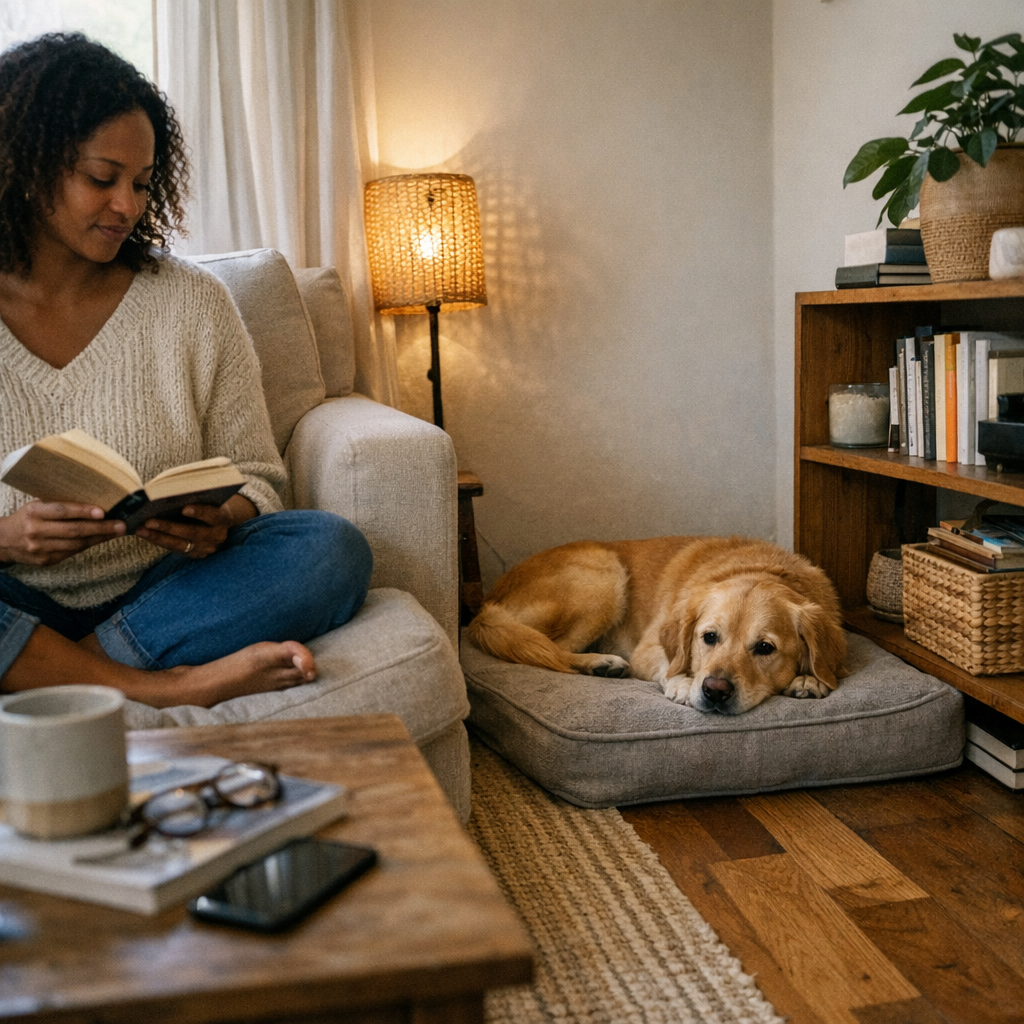
Most living rooms look calm after a quick tidy—but dog owners know appearances don’t last long. Downtime always hits the same invisible snag: just when you reach for a few quiet minutes, your dog is shifting, circling, or restlessly tracking every move. That’s not a coincidence, and it isn’t just boredom. It’s a setup problem that interrupts real rest and keeps everyone in a slow, silent loop of disruption: one seat away from comfort, one step short of easy flow. The right supplies may be spread out in plain sight, but the actual routine keeps stumbling.
The Quiet Living Room That Isn’t Really Calm
Take a common scene: late afternoon, the dishes are stacked and drying, and you finally sit down. Your dog settles nearby on their bed—except it only lasts five minutes. Door clicks, someone gets water, or a kitchen drawer rattles, and now your dog is alert, trailing you with their eyes or shuffling to a new spot. The room pretends at peace, but each “quiet” stretch gets clipped by small, repeated interruptions. Neither you nor your dog actually resets; you trade off between movement and restless watching, week after week.
This tension barely registers if you glance at the tidy floor. But the dog hovers half-up, reading foot traffic and listening for every fridge door. Ordinary moments—reading, cleaning, meals—get eaten by the little frictions. A delivery at the door means the dog paces; finishing a phone call means you step around both pet and their toys on your way out. The routine never fully settles, and it adds up more than most notice.
Surface Order Can Mask Daily Disruption
Many living rooms look set: beds just beside the wall, bowls tucked under a bench, toys pushed to one side. But if your dog’s rest spot lands even slightly in a traffic lane—say, within one stride of the kitchen—every pass sparks new tension. One person grabs a bag, the dog springs up. Someone comes in after a walk—with a muddy leash—and the only open space is your dog’s side of the floor. Suddenly, the setup that “looks organized” turns into a relay of people and dog crowding each other, never relaxing for more than a minute.
That so-called convenient bed placement is usually only “convenient” on paper. In real flow, any item even half-in the walkway throws the whole routine off: the bed slides, a water bowl gets jostled into arm’s reach, and both you and the dog start rerouting around each other. A neat surface only hides the repeated drag that fills an ordinary day.
Spotting the Real Signs of Routine Friction
Check the details. The dog who looks comfortable but never fully drops their head—eyes still tracking the door. The tail swaying the instant someone stands. A paw slides out over the bed’s edge as footsteps cross the room, or the dog’s ears twitch each time a drawer opens. The friction isn’t dramatic; it seeps in as a series of micro-adjustments. After days of this, downtime feels thinner because it’s chipped away by the same low-grade interference.
Small Frictions That Build Over Time
- The delayed dinner flow: You try to transition toward prep, but every unfamiliar sound from the kitchen has your dog on their feet, stretching the changeover long past the first cue.
- Reading that unravels: Your book is open, but you lift your head every few minutes—your dog re-positions to track movement down the hall or toward the back door, never fully relaxing.
- Routine clutter creep: Put away all the toys in the morning, yet by noon, a rope or ball sits right in the walking line; the bed has shifted into the path, and suddenly it’s a clumsy detour every time you move through.
These are not just behavior quirks—they are a map of how layout quietly breaks the rhythm of every day, over and over.
Why the “Right” Spot Can Still Undercut Real Rest
Well-meant setups often miss the point. A bed that seems cozy near a sofa or a water bowl ready at the edge of the room is no good if normal routines force the dog back into the action. Bed too close to the kitchen? Now every sandwich or snack keeps your dog alert. Too near the main door? Muddy paws require scrambling for cleaner towels halfway across the room as your dog waits, dripping. That “perfect” arrangement quickly exposes its flaws the moment routines actually repeat.
This is where real-life setups fail: The dog always lands in the “busy lane,” where rest is constantly chipped away by movements that looked harmless on a tidy day.
What Routine Disruption Really Looks Like
Zoom out across a week. Monday: the bed is flush against a wall but just inside the kitchen’s orbit. By breakfast, the dog rises at every pass. By midweek, you’re dodging dog and toys to avoid spilled water on the route to the fridge. Friday: prepping dinner means stopping five separate times—shooing your dog out of the way or nudging the bed aside so you can reach the pantry. The drag isn’t a one-off mess; it’s the grind of routines slowed and reset by a layout that keeps interfering at the same points, every single day.
This isn’t messy chaos; it’s the persistent loss of flow. Instead of a space that smooths life, your living room acts like an obstacle course that both you and your dog adapt to—never getting ahead, never fully unwinding.
Reset Friction: The Persistent Weak Point
These little interruptions don’t just fade—they multiply:
- Post-walk return: Dog comes in with muddy paws, but wipes or towels are still a reach away. By the time you find them, paw prints stretch onto the bed that now needs a full wash.
- Bowl blockages: Food and water bowls are present, but the water always sits right where you walk first thing in the morning, making you shuffle them barefoot or spill on the carpet.
- Bedtime resets: Chew toys are corralled to a basket nightly, but migrate back into the traffic flow by breakfast. Your “reset” means another round of picking up what routine keeps scattering back out.
It’s not for lack of supplies. It’s the repeated effort—extra steps, shuffles, or labor after every normal use—that drag down both neatness and actual routine speed. The space looks fine until real dog-life puts it to the test hour after hour.
Breaking the Cycle: Moving the Bed Just One Meter
Sometimes one meter changes everything. Slide the bed farther from the kitchen’s “splash zone” and outside the path of daily foot traffic—not hidden, just outside the frequent crossing. Suddenly, the dog rises less, spends more time down, and waits out door swings or phone calls rather than trying to anticipate your next movement. The rest area stays cleaner; the toys creep less into the main walkway. There’s no need to pause the routine for micro-resets after every meal.
This shift doesn’t make every distraction vanish, but it reduces almost-interruptions. The dog stays down while you grab a drink, instead of pacing with every sound. By the end of a week, you realize meal prep is less crowded, downtime is longer, and the after-walk cleanup is quicker. The improvement comes not from more products or stricter routines, but a layout that matches ordinary movement instead of blocking it.
How Small Tweaks Shift the Entire Day
No setup is perfect, but minor changes in placement—bed, bowls, toy basket, even towels—change the way routines feel much more than another layer of surface organization. The seemingly minor meter of distance quickly:
- Reduces noise triggers: The dog learns to ignore distant kitchen sounds, since they’re not directly in the highway of traffic.
- Makes transitions smoother: Walks, rest, and feeding slot into each other with fewer forced pauses and no need to dance around bowls or scattered toys.
- Lowers reset drag: After a muddy walk or a play session, supplies are within practical reach—so resets turn from small projects into quick checks.
What changed? Not just the look of the space, but how rarely daily routines now get interrupted by layout mistakes. This builds the strongest difference between a “tidy room” and a living room that finally stops fighting back.
A Setup That Looks Calm—But Finally Feels Right
You can buy more bins or baskets, arrange toys daily, or clean up after each meal, but most setups only disguise frictions long enough for the next awkward moment. The only real test is this: does your dog stop scanning the room, lying down entirely even when you move? Are toys and bowls positioned so you aren’t repeatedly stepping around them or resetting things after every walk or meal? If rest starts to come easily—not just for an hour, but across the entire routine—you’ve hit functional calm,