
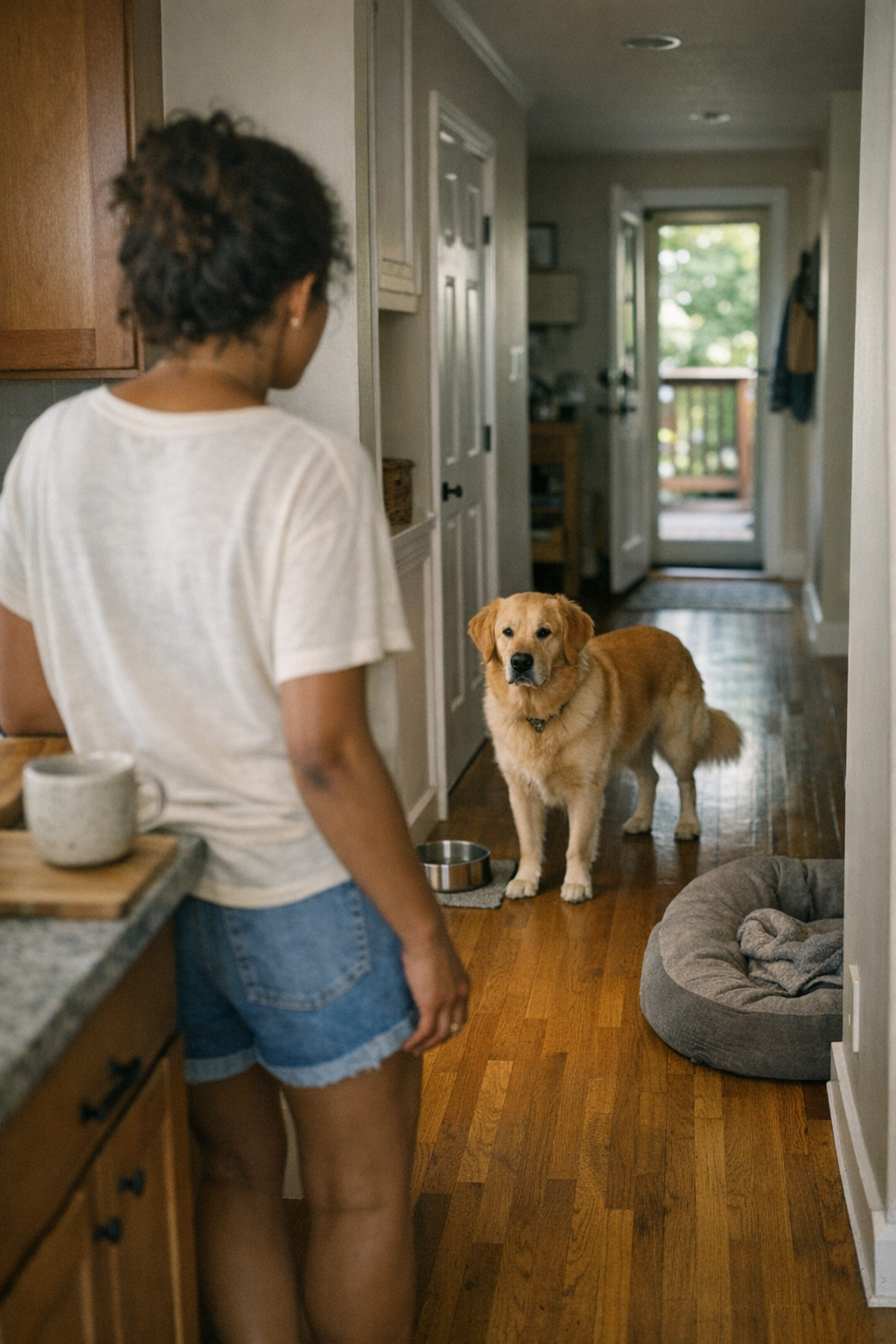
Your dog stands stranded between rooms. Not in the kitchen, not on their bed—just in the way, halfway to water, waiting for a signal you didn’t realize was missing. What starts as a routine afternoon—leash off, shoes kicked aside—spills into awkward pauses: blocked by bowls shoved near the cupboard, towel draped out of reach, toys tangled underfoot. That five-minute stall at the hallway threshold doesn’t just eat time; it ripples through every step: feeding, cleanup, even winding down at night.
A Common, Overlooked Slowdown in the Dog-Owner Day
The friction isn’t dramatic—it’s the slow drag of misalignment. Each day your dog stalls in the same spot; each time you hesitate, caught between nudging them to the mat or recalling if you prepped the water bowl. These everyday micro-pauses chase each other through the schedule: dinner lands later, walks feel rushed, and nothing resets fully before bedtime.
It’s a scene you start dreading in repeat: You try to slide smoothly from walk to water to rest, but instead, you find a leash hooked on a drawer blocked by a food bowl, your dog circling as if waiting for a new plan. While you debate between feeding now or toweling off first, the window for a calm transition closes. The next thing you know, pre-bed feels scrambled, your energy frays, and your dog’s cues get harder to read.
Why These Pauses Don’t Go Away on Their Own
The hesitation slides under the radar because it’s subtle. Day after day, you adjust: a little nudge here, a quick reshuffle there. But when the same slowdown shows up every evening—hallway circles, toy roadblocks, a water bowl “just out of the way” actually in the way—it starts costing you. The dog stakes out territory in high-traffic zones, bowls get left awkwardly placed for the next reset, and every handoff—walk to towel, food to rest—gets five minutes slower.
- Perpetual pacing before the dog truly settles
- Toy stashes where you least need them—under the path from door to bowl
- A dog locked in indecision, watching you for a cue you haven’t given
- Cleanup supplies visible but never actually reachable at the right second
The more you shuffle, the more the house drifts out of sync. That’s how you wind up cleaning up after feeding, only to find bowls in your walking path, towels somewhere inconvenient, and dinner sliding later into the evening—again. The cost isn’t obvious mess; it’s the steady drain of time and flow.
Spotting the Pattern: Small Pauses, Big Disruption
This is not “once in a while.” A pattern emerges: your dog stops just short of the kitchen, hovers at the water bowl, stares down the hallway instead of moving through it. The gear all looks right—leash, hooks, towels lined up, bowls at attention—but the routine snags at the same junction every night.
The routine exposes its weak point every single day: You reach for the leash to hang it up, but a food bowl is blocking the drawer. The hallway collects toys meant for play, now tripping hazards. The noise isn’t energy—it’s indecision: claws on the floor, bowls shifting, your own path bent around dog and gear that should have cleared five minutes ago. You clean, you arrange, but the friction remains.
The Impact on Routine: Pacing, Clutter, and Missed Cues
Once hesitation creeps in, every step jams up behind it. Instead of: walk, wipe paws, water, bed—each action gets tangled:
- You try to grab a towel but find it trapped behind a kitchen chair moved “to look neater.”
- Your dog hovers in limbo—not ready for bed, not asking to eat, just shifting uneasily between corners.
- Beds and mats migrate from resting zones to walkways, turning easy resets into sidesteps and obstacle dodging.
- You realize, too late, that looking organized hasn’t made the routine easier—because nothing is in reach at the right moment anyway.
By bedtime, a “put-together” setup has quietly spun into clutter, dog agitation, and you second-guessing what needs moving again tomorrow. What you thought was a small delay now loads up tomorrow’s routine with the same sticky friction, one misaligned piece at a time.
What’s Actually Causing This Routine Weak Point?
At its core, the problem hides under the surface: organized-looking setups that fail under real use. Water bowls are placed for aesthetic neatness, not flow; comfort mats are tucked away, blocking the dog’s path from door to rest; toys drift into high-traffic spots, just where you’ll want to stand while toweling muddy paws. Or it’s a timing miss—walk ends, but there’s no obvious first step back inside.
The frictions aren’t about tidy vs. messy—they’re about repeated-use breakdowns at actual pressure points. You catch yourself moving bowls a foot back, toys a foot over, bed a foot out—only to circle the problem a day later because the pause, and the uncertainty, just shift locations.
Looks Neat, but Still Feels Slow
There’s a stubborn frustration when the dog area “looks” good, but you still hit snags. Water sits ready, towel rolled just so, yet the transition from outside to true settle keeps dragging. The pain point isn’t storage or appearance—it’s whether actual access lines up with your real, repeated traffic and hesitation zones.
Everyday Home Scenes: Where the Routine Breaks Down
See if these feel familiar:
- Post-walk return: You come in juggling a muddy leash and a fidgety dog, but the towel you need is blocked by a chair moved for tidiness. You scramble; the pause stalls both you and the dog, slowing the entire reset.
- Evening feeding: Your dog shadows the water bowl but lingers—your reach for the food bin is blocked by a rogue toy. A five-minute meal becomes a drawn-out, back-and-forth shuffle.
- Transition to rest: Your dog circles the food area, unsure whether to stay or settle. The bed is in the corner, but it jams the space so neither you nor the dog can actually stretch out. Bedtime inches later, energy lingers long after lights-out.
None of this is accident—it’s the echo of an almost-right setup that looks fine but keeps kicking up friction where you move and need immediate, repeated access.
How a Small Adjustment Can Break the Cycle
You don’t need a design overhaul. A focused adjustment—paying attention to where the pause repeats—resets far more than you expect. If the water bowl moves two feet closer to the hallway stall point, or if the rest mat slides into direct line from door to kitchen, the routine changes immediately. The win isn’t about looks—it’s about flow.
Real fix, real shift: After three nights of hallway pacing, you test moving the water bowl to the edge of the pause zone. Next walk, your dog pauses, drinks, then takes your cue straight to their mat—no circling, no waiting, no toy detours. What took thirty agitated minutes collapses into three calm ones: walk in, towel off, settle. You see it again each night: less mess, less backtracking, more predictable, usable calm—even with the same gear, just in better reach.
Testing Changes: Don’t Ignore the New Weak Point
But no fix is forever. Adjust one sticking point, and another may reveal itself—a towel now blocks the drawer, or the toy bin slides into a new traffic path. The trick is watching for that next pause, adjusting again, and letting real-life feedback lead. A couple days spent noticing where routine resistance returns will show you the true sticky spots worth moving.
Week by week, the loop gets smoother: Once the stall point aligns with actual reach and dog traffic, you recover time and headspace. Cleanup resets easily; your dog finds flow. The rest of your evening, and the next morning after, move faster—with less gear-tidying and less dog-side confusion.
From Tidy Looking to Truly Usable: Guiding the Flow
Don’t get fooled by the appearance of organization. The only thing that matters: where the repeated friction hits and whether your setup actually clears it. Any setup—bowl placement, toy stash, towel hang, crate shift—that keeps you from smooth motion is worth rethinking. The difference is real: fewer mid-hallway stalls, faster reset after walks, easier reach for cleanup, and a dog who “gets” the routine cue from a setup that finally fits how both of you move.
That’s the real reward—not neatness, but less friction tugging at every