
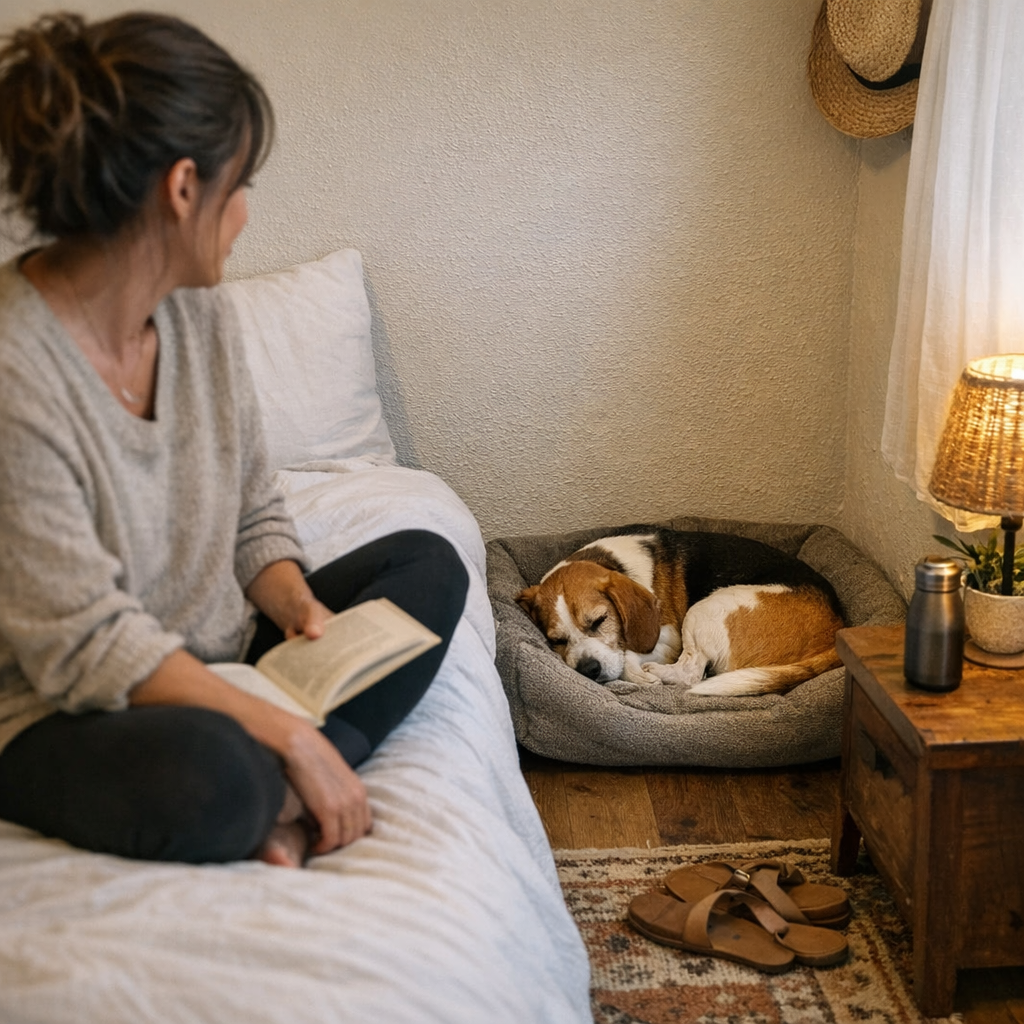
Night after night, the friction shows up the same way: your dog circles, pauses, abandons their bed, or camps by the hallway instead of settling down. What looks like a mild quirk or a brief delay isn’t just costing you minutes—it keeps replaying, quietly reshaping the whole evening’s rhythm. When the rest zone never quite fits, bedtime stops being a smooth handoff and turns into a pattern of interruptions, false starts, and small resets—for you and your dog.
The Hidden Snags of a “Pretty Good” Rest Zone
Most beds seem fine at first glance: soft surface, tucked away from the main walkway, maybe a quick wipe clean after walks. But friction lives in the details—especially when the rest area just barely works under real, repeated routines. If you notice your dog circling, getting up again, or ending up stretched out on the hard floor near the door, that’s not just stubbornness. It’s a signal the setup’s missing something critical. Rest-zone trouble rarely looks dramatic; it’s a series of minor breakdowns, resurfacing right at the edge of daily flow—pulling your evening off track every time the pattern repeats.
Unlike spilled bowls or visible toy sprawl, rest-area friction piles up as micro-delays and repeated owner interventions. You end up nudging the bed, shifting your own plans, and quietly accepting every small restart as part of the deal. The cost isn’t obvious at first, but soon the bedtime “reset” is so routine you forget how smooth it could be.
Scene in Motion: Calm, Then Stalled
The cycle is familiar: after a long day, you guide your dog toward their bed in the main room. At a glance, nothing’s wrong. But as you try to power down—book, phone, or just a moment to breathe—out comes the pacing: sniff, spin, unfinished rest. You reason it’s just a fluke, but three nights in a row, your dog ends up curled awkwardly in the hall or underfoot instead of using the actual bed. Next, you’re moving the bed, bringing over a blanket, or calling your dog back. Each tweak buys you a minute, but the reset cycle always returns. Bedtime isn’t calm—it’s an ongoing adjustment.
Why “Looks Comfortable” Can Still Fail
The most common mistake: mistaking softness or a tidy corner for true comfort. If a bed floats in the middle of traffic, camps under an air vent, or sits adrift in open space, it sends the wrong signal to your dog every time. Where you notice hesitations, fidgeting, or constant restarts, setup is usually the hidden culprit:
- Circling for ages before lying down
- Short-lived rests ending in pacing or floor flops
- Bed abandoned for cooler/warm/harder/closer ground
This isn’t just a cushion issue. When dogs don’t trust the setup—placement, coverage, safety edge—they’ll keep searching for a “right” spot. Instead of blaming the dog or the weather, look for the physical arrangement running counter to your actual routine.
Comfort vs. Routine Flow: Everyday Tradeoffs
Some setups seem practical because they’re out of the main walkway or make the room look neater. But if the bed blocks a quick path in the morning, needs to be pushed aside before coffee, or becomes an obstacle when you head for the leash, the tradeoff’s real. The dilemma keeps popping up: comfort for the dog versus smoother movement for everyone else. You sacrifice one for the other, and each shortcut—staging, tucking away, or constant shuffling—makes itself known the next time your routine is interrupted or slowed down.
The Overlooked Barriers: Exposure, Air, and Anchoring
A rest area that fails under pressure often comes down to what’s missing—subtle but crucial signals in the environment:
- Overly open: A bed in plain sight, with nothing to lean against, leaves most dogs on edge—too exposed to fully relax, especially at transition times.
- Drafty or variable temperature: Vents, doors, or window edges create invisible “cold spots” that drive dogs away, even from a favorite cushion.
- Lack of anchoring: Beds with no side against a wall or furniture deny dogs an instinctive safe edge. Most dogs press against something—they can’t do that if the bed floats solo.
Repeated use magnifies these misses. You start seeing a consistent drift—bed empty again, dog resting in the nearest nook, routine back to square one. Every failed reset is a signal that what looks logical in the daytime breaks down where friction lives: quick transitions, end-of-day fatigue, and any moment you need less hassle, not more.
Failed Fixes: Where Swapping Gear Misses the Point
People try blankets, treats, nicer covers—sometimes it works once, never twice. The real culprit? Placement and experience, not softness or price. Move the bed to clear a pathway and suddenly your dog ignores it. Place it by your chair and now drafts make the spot unusable. Each well-intentioned move solves one problem and creates another—if you’re constantly troubleshooting, the structure itself hasn’t lined up with daily reality.
If you’re nudging the bed for the third night this week, or switching between corners and still seeing restless routines, it isn’t a random quirk. It’s feedback from the living system—yours and your dog’s—asking for a better fit, not another soft layer.
Placement Tweaks That Stop the Back-and-Forth
The highest-leverage move is often the simplest: set a bed so one side anchors firmly against a wall—close but not isolated from real-life movement. This adjustment flips the experience: now the spot feels protected, not boxed in, and no longer sits in the “dead zone” of a room. Dogs settle sooner; owner routines stop stuttering. Instead of circling, the dog picks a spot, turns once, and stays. And instead of crossing the room at night and finding your path blocked or the bed empty, things just flow.
Small shifts like this work because they acknowledge how both species actually move: the dog’s need for enclosures, your need for clear walkways and fast resets. You aren’t hiding the bed or putting it in the way—you’re trading surface neatness for functional ease, and it shows up instantly in both of your routines.
Real Change: What a Week Looks Like After a Proper Move
After shifting a bed so it touched a support wall and didn’t block any main pathway, the restless cycle broke. Where pacing and hallway naps happened nightly, now the transition to bed happened without fuss. Ten minutes of nighttime circling disappeared. Owner-side? Less coaxing, less dragging the bed around, fewer detours or small frustration spikes. That tiny fix freed up the entire bedtime window—no hidden buildup, no leftover tension carrying into the morning reset.
Spotting the “Needs Fixing” Pattern
The clearest signal is behavior on repeat: bed-empty mornings, restless shifting, or the exact same “leave and circle” at the same time each night. Is the bed dragged to a new angle by breakfast? Does your dog avoid their bed after walks or late play? These real-life flags outrank appearance. If you keep requesting your dog to settle, keep repairing the setup, or quietly accept bedtime as a chore, it’s a sign the root issue hasn’t budged. Placement tweaks beat gear upgrades almost every time—a faster reset, easier flow, and a rest area that actually works when you need it.
Looking Good vs. Really Working: The Living Test
A rest setup that “looks right” only during the day doesn’t mean it passes the late-night test. Floors stay tidier, but if you’re dodging gear or watching your dog bail for a cold spot, the function isn’t matching the appearance. The real standard: fewer interruptions—not just cleaner surfaces. If you’re still reaching for a leash and hitting a stacked bowl, or detouring around a dog bed to grab the morning coffee, those are friction points you shouldn’t have to live with.
Smoother routines, less friction: When the rest area fits both the dog’s instincts and the home’s flow, your mind is freed for the next thing—upstairs for the night, wiping paws after a muddy walk, or getting through morning prep without dodging obstacles. Each winning setup trades a little neatness for a lot of daily sanity.
Troubleshoot the Routine—Reset the Setup
Don’t settle for a routine that always hiccups after walks, mealtimes, or lights-out. If the same delay keeps reappearing—circling, abandoned beds, or last-minute reshuffles—start with the basics. Is the rest space anchored, free of draft spots, out of traffic but not isolated? Start with these adjustments and work with the rhythm you live every day. If a setup works just once, it isn’t working. When it works every night without hidden resistance, both of you move smoother together.