
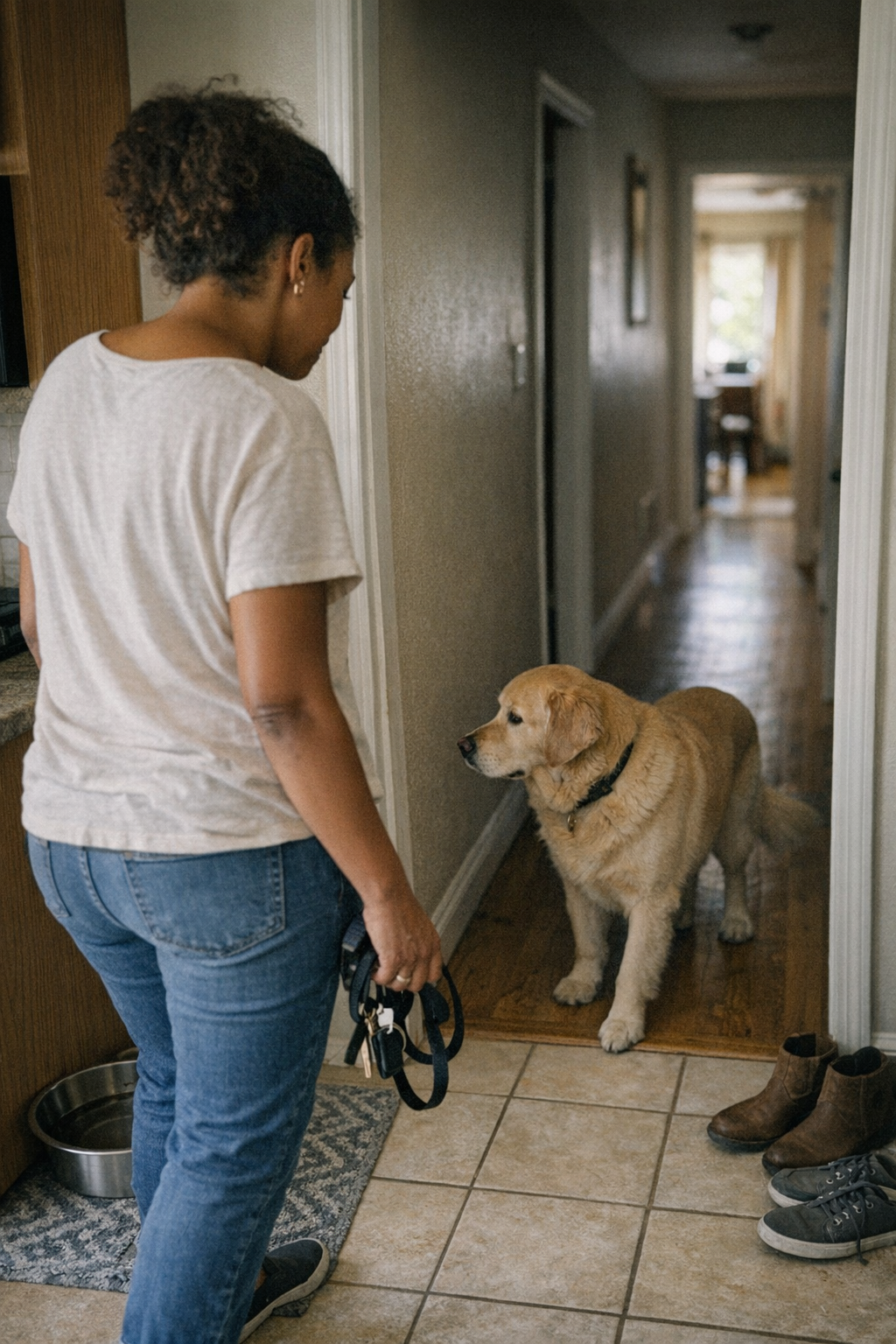
Most dog routines don’t collapse because of giant disasters. They grind down one small block at a time—the tipped-over bowl in the walkway, the towel you can never grab when you actually need it, the leash that somehow ends up under a chair just as you reach for the door. It’s this hidden, repeated inconvenience that keeps walk after walk feeling slower and a little more chaotic. If you’ve ever juggled keys, leash, and treat pouch only to find your dog planted at the doorway—waiting, hesitating, or circling in a blocked hall—then you’ve met the everyday friction that makes or breaks a dog-friendly setup.
The Hidden Cost of Everyday Thresholds
Think about your last ordinary morning. Breakfast ends, the water bowl sits in its usual spot, and you both head for the door—until the pause. Your dog stops with one paw forward and the rest of the body angled back, as if unsure about crossing into the next room. It isn’t dramatic, but the seconds stack up: three beats for a cautious look, a sidestep to avoid the bowl, maybe a loop back to check if you’re following. What looks like a minor stall starts dragging out the transition, making each step toward the walk feel heavier and less coordinated.
This kind of micro-delay isn’t an isolated quirk—it becomes its own routine. By the third or fourth day, you’re preemptively calling, reaching, nudging, or shifting things just to keep things moving. The smooth handoff from inside to outside is lost to repeated interruptions: slow steps, leash detours, adjusting the towel you don’t actually have in your hand yet. Day after day, routine friction compounds until even the simplest walk or cleanup feels off-schedule.
Micro-Frictions Multiply: Why Small Pauses Matter
One slow exit doesn’t change much. But when the same snag resurfaces every morning—hesitation at a threshold, a bowl blocking the exit, tangled leashes on the doorknob—it exposes a deeper issue: setup friction. These pauses are less about your dog’s quirks and more about what you’re bumping into, stepping over, or reaching past every day.
The cost isn’t just lost seconds. Owners start every outing by sidestepping a misplaced mat, bending around a pile of towels, or shifting a bowl that keeps sliding back into the same old spot. The small workarounds—nudge, step, repeat—bleed the energy out of your day before it even starts. Sometimes you cue your dog, sometimes you just grab whatever’s blocking the way too late, but the drag stays. The routine gets chunkier, less automatic, less calm for everyone involved.
The Cluttered Exit: When Setup Gets in the Way
Placing bowls and towels for easy cleaning seems practical, until it means reaching past your dog every morning or shuffling gear in the only open doorway. Hooks at the wrong height or tucked-away grab bags turn quick exits into a shuffle zone. Even a space that “looks” organized at a glance often hides physical blockers—mats that slide when paws hurry over them, or beds that spill into the path and require repeated straightening. The difference between theory and daily reality shows up right at the choke points: doors, thresholds, hallway bends.
How Small Adjustments Change the Whole Morning
The difference between a routine that looks tidy and one that actually flows is simple: routines fail or succeed in motion. The setup can be visually spotless and still force delay if it blocks or interrupts you at the busiest moments.
Picture it: your dog hovers in the doorway, uncertain, while you’re juggling keys and trying not to drop the leash that somehow migrated under yesterday’s mail again. The bowl’s edge is just far enough into the walkway that your dog detours. You reset, your dog stalls, momentum drops. Morning walks start edgier; your energy flags before you even leave the house. The real damage isn’t visual—it’s how the repeated stutter throws off everyone’s balance, day after day.
But fixing it often comes down to a single move. Slide the bowl a foot away from the high-traffic zone. Rehang the towel so it’s actually beside the door, not above or across the room. Clear the mat just after breakfast instead of letting it sit until noon. These tweaks don’t make the routine perfect—they just remove the speed bumps. Dogs cross thresholds without pausing, owners reach what they need in one try, and suddenly the whole morning moves faster. In practice, even shaving a minute off a repeated snag changes the rest of your day.
Recognizing Patterns: Is It Disobedience or a Setup Issue?
If your dog always pauses at the same spot, don’t just chalk it up to stubbornness. Watch what happens: does it follow every meal, post-walk return, or water break? Every time the dog changes rooms and hesitates, odds are strong there’s something physical in the way that only shows up during real movement—not during still moments when the space looks fine.
When routines repeat, setup problems reveal themselves. Owners often spend weeks stepping around a half-rolled mat or bumping the same bowl, treating the interruption as normal—but these micro-frictions aren’t random. Maybe the towel is always just out of reach after a muddy walk, or the spray sits too far away for real cleanup. The delay becomes a pattern, and the pattern points straight to what needs shifting.
Visual Order vs. Real Flow
Neatness in static space is not the same as daily function. You can hang every leash, tuck every bowl, and fold every bed, but if doing that blocks smooth movement, the price is paid in slower, jerkier transitions. A space can be perfectly staged for a photo and still force you into detours, bending, and last-minute reshuffling with every walk or cleaning routine.
Working Through Real Friction: Everyday Scenes
- Leash Hunt: You’re ready at the door, but every morning the leash is under a pile of toys, or caught around a bowl you have to move first. Instead of grabbing and going, you’re pausing and untangling—while your dog gears up to bolt.
- Post-Walk Wipe Delay: Muddy paws arrive, but the towel is across the room or buried under jackets. By the time you dig it out, there’s already a new trail to deal with.
- Bowl Blockade: For convenience, you leave the bowl where feeding’s easy—but in practice, it blocks the path to the door. The dog slows and side-eyes, you nudge and shuffle. Same awkward route every day.
- Looks Clean, Moves Messy: The room is tidy on Sunday, but by Wednesday, you’re repeatedly moving beds, shifting toys, and clearing mats just to cross the floor, especially when time is tight.
From Stagnant Setups to Smoother Mornings
Permanent change rarely means a big overhaul—it’s about noticing what keeps interrupting the day and fixing the real problem spots first. Instead of blaming the dog or hoping the next new organizer will fix everything, focus on what actually gets in the way at key points. Do you have to step over the same bed, reach behind the same stack of bowls, or unhook leashes from a spot that’s always just out of reach?
Direct resets work best:
- Relocate food/water bowls immediately after use. Even a small shift away from doorways or main walkways clears routine traffic jams.
- Hang leashes and cleanup bags at real grab height. If you have to move shoes or sift through a shelf to find them, the system isn’t working.
- Keep towels or wipes where muddy paws actually land, not in another room.
- Clear walking corridors of beds, toys, mats—every day, not just on organized weekends.
Refreshing the Routine Without Starting Over
You probably don’t need a total redesign. The right changes—a bowl moved out of the walkway, a bed relocated, a towel finally stored where it needs to be—show immediate payoff in daily use. Each friction point erased makes routines feel less strained and more intuitive. The “improvement” isn’t about perfection, but about matching the home to the actual pattern of daily resets, cleanups, and transitions between activities. In the long run, spaces that move with you—not just look good—win out, even if an outside observer doesn’t see the full difference on a tidy morning.
What to Watch For Going Forward
Fixing one choke point may uncover others. Take a critical look after every change: did a crate door just become the next new obstacle? Did moving a bowl clear the hall but crowd the feeding corner? Everyday dog life is a feedback loop, so expect new pinch points to crop up as routines flex and spaces shift. That’s normal. The real win is staying alert to these micro-frictions—and adjusting before small hurdles turn into daily slowdowns.
Don’t wait until things feel out of hand