
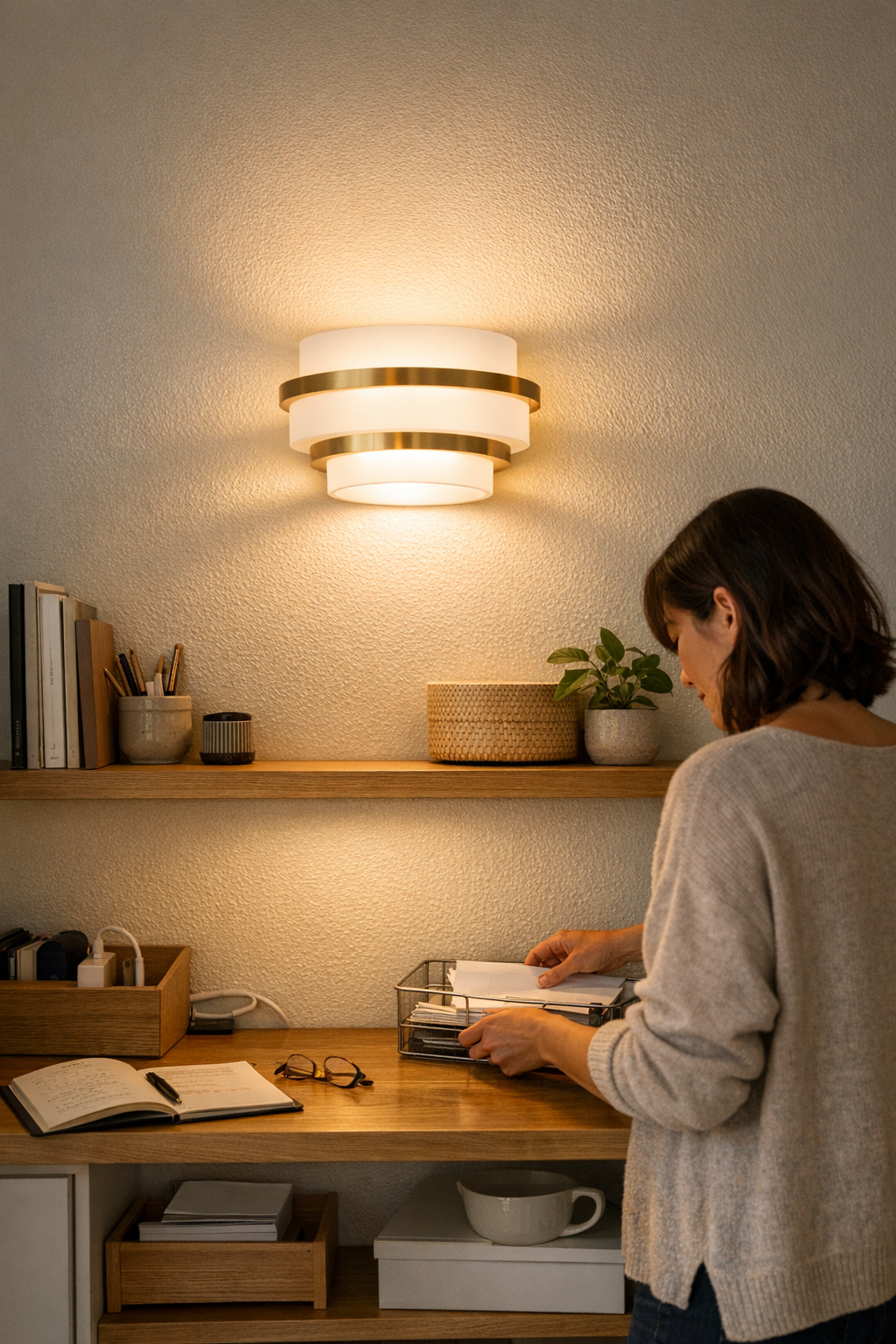
Swap out that oversized lamp or bulky wall fixture for a slim, low-profile light, and you’ll notice the surface clears—but what about the real upgrade? Suddenly, there’s more elbow room, and the visual clutter drops away. But if the corners stay dim, cables keep crossing your sightline, or a key surface turns awkward to use after dark, the entire “minimal” setup starts feeling like a daily compromise instead of a real solution.
The Promise of Slim Lighting: More Space, Less Distraction
Slim lighting—LED strips, minimal panels, under-shelf bars—promises to declutter your view and free up desk or counter space. The idea sells itself: you install a slim light, reclaim the work zone, and drop the tangled look of traditional lamps. In spaces where surfaces get crowded—think busy desktops or kitchen shelves—the initial appearance is a relief. But walk into that room after a few days, and new habits start: chasing the one bright spot with a notebook, squinting at a shadowy prep corner, or adjusting a thin cable that insists on sliding into view. The promise is visual clarity, but long-term comfort depends on whether your lighting actually covers the surface you use and keeps cable paths out of your way.
Living With Low-Profile Fixtures: The Edges Tell the Real Story
After a few days of real use, slim lighting setups begin to reveal what actually works—and what falls short:
- You nudge a slim lamp back and forth, never quite settling the shadow creeping over the edge of your workspace.
- The under-shelf strip brightens only the central strip of the counter, so chopping, reading, or searching for a tool means moving into that sunlit patch—awkward every time.
- A supposedly tidy cable starts acting like a dust magnet or gets bumped out of place, drawing your eye every time you return to the desk.
It doesn’t take much for “streamlined” lighting to start disrupting the routine. A brighter patch in the middle can leave the rest unusable at night; a cable crossing your desk edge starts to nag. These friction points—dull desk edges, stray wires, glare off a support bracket—become the real legacy of a quick minimal upgrade if actual use isn’t considered up front.
The Hidden Friction: Where Looks Don’t Match the Daily Routine
Low-profile lights aim for near-invisibility, but comfort depends on how well those lines meet your routine. In a kitchen, a slim under-shelf strip is tidy from across the room, but leave half the prep area in semi-shadow and you’re stuck working under your phone flashlight again. Place a cable so it sits at eye level—now it’s a distraction every time you pull up a chair. These small clashes break the illusion of a resolved setup: you start shifting habits, working around dim corners, or ignoring clutter just to match the look.
Routine exposes the compromise: you pause, reach, squint, or redirect lighting just to keep the surface usable. What was meant to eliminate clutter instead adds small, enduring distractions to every session.
Example: The Subtle Setup Compromise
Picture a compact desk: the old lamp is replaced with a slim bar, and on day one it looks perfect. By midweek, the lamp’s angle misses the right corner, notes half in shadow. The cable arches over the mouse mat and nags at your hand every time you scroll. The surface is “minimal”—but your workflow is sidestepping glare, awkward reach, and one cable that no longer seems invisible. The problem isn’t the fixture’s footprint, but how much of the surface it really serves and whether it stays out of your way, not just out of sight.
Small Decisions, Big Impact: Getting Support and Angles Right
Most lighting pain comes from a few setup gaps—angle, reach, or cable control.
Switching a wall-mounted strip for a smartly angled bracket often fixes both glare and dead corners. Suddenly, editing or meal prep doesn’t require repositioning yourself for light—every inch of the surface becomes usable again. And a cable guided with adhesive channeling instead of letting it dangle means you stop even noticing it. Real clarity follows practical setup: support mounts that hold steady, cable runs that hide or stay fixed, beam angles that serve the whole work zone.
One practical rule: slimness isn’t an answer on its own. Focus on where the light lands, not just how thin the form is. An extra few minutes checking bracket angle, mounting height, and cable path can eliminate weeks of desk drift, hand shadows, or nagging clutter. That’s what makes the minimal look last as a daily benefit instead of just a day-one reveal.
Edge Cases: Where Slim Lighting Needs Reinforcements
Slim fixtures hit their limits fast in wide or irregular zones. If your bench, desk, or shelf stretches beyond a single beam’s reach, the far end will always feel like an afterthought. Doubling up with a second light or mounting a bracket lower can clean up the shadows that slimness alone can’t reach. Even a cheap cable clip or secondary bracket can tip the experience back toward comfort—details that often matter more than the fixture’s silhouette in the long run.
Don’t treat setup as one and done. A week into real use, if a section always feels dim, a cable drifts loose, or the edge never looks right, adjust or add support—not just décor. It’s the difference between a space that works and one you just tolerate.
Persistent Problems and Real Solutions
- Dim edge? Extend the run, or angle the light differently—don’t accept a shadow over the spot you actually use.
- Loose cable? Anchor it behind brackets or along the wall where hands won’t brush it. Out of sight, out of routine.
- Surface still inconvenient? Check the aiming and support again—a couple of degrees can restore a week’s lost workflow.
Are Low-Profile Lights the Only Answer?
In tight studios, crowded counters, or mixed-use surfaces, slim fixtures hold clear value—but their real strength shows when paired with well-planned support and cable routes. Larger spaces or complex zones may need layered fills or a separate adjustable lamp. No slim light—however refined—compensates for a surface left uneven or connections left exposed. In real use, a “minimal” setup means the whole area works instinctively, not that it simply looks clean for photos. Comfort depends on what happens in the routine, not just what happens at install.
The Difference Between Looking Clean and Feeling Comfortable
Slim lighting looks organized the moment you finish the install, but lasting ease comes from the way support, angle, and cable management interact every day. A low-profile fixture won’t rescue a poorly planned beam or a loose cable—eventually, that shortfall shows up in your habits and in those spots you quietly avoid. In the end, the true upgrade isn’t losing visual bulk, but gaining a space that doesn’t have to be monitored, adjusted, or avoided every time you return.