
Your multitool is supposed to make jobs faster, not add new headaches. Yet if you’ve ever grabbed yours after weeks in “dry” storage—maybe from the cold garage or the back of a crowded van—then struggled to slot in a blade or felt a stubborn hitch changing a sanding pad, you already know the secret enemy: hidden rust. It’s rarely blatant. First comes a slight drag fitting a new accessory, then a sticky clamp that should snap, now fighting back. Pretty soon, a project that should flow starts leaking minutes and draining your patience. Tool performance fades not in a dramatic breakdown but through tiny setbacks—less speed, sloppier cuts, more fatigue by the hour.
Why “Dry Enough” Storage Fools You Every Time
It’s easy to think a cool, dry shelf will shield your kit. But real workshops don’t stick to neat rules. Even bone-dry air lets condensation form on cold steel after a night’s temperature drop. And tool metal loves to hold moisture—maybe sweat from last session’s quick grip, maybe summer humidity that lingers for hours between tasks.
The problem: you don’t see it until it matters. A paper-thin smear of corrosion on blade seats and clamps saps the “quick change” right out of your multitool. That extra force needed to seat a blade? It isn’t just nuisance—it translates directly to lost accuracy, awkward grip angles, and amplified hand fatigue every session. Sometimes, rust sets in less than a week if dust and sweat ride into storage. The tool looks fine but behaves all wrong when you need real control.
A Few Extra Seconds Change Everything: Wipe and Oil
The proof is easiest to spot in side-by-side use. Grab two multitools—one tossed onto the shelf after work, the other wiped and oiled before storage. The first time you swap a fine-tooth blade, the neglected tool seizes up, misaligns, or sends you searching for extra torque just to lock it in. The oiled tool feels instantly different—clamps close with a smooth snap, accessories drop into position, and you don’t burn energy wrestling tiny details on an already tight job.
Picture trimming a door casing flush against tile: if your blade mount grabs, your line slips or the multitool stalls just as you reach the edge. Or switch to detail sanding for cabinetry: every extra gram of resistance magnifies your error and roughs up your finish. Rust quietly trades away the very precision the multitool was meant for, multiplying correction work later. It isn’t dramatic failure; it’s relentless, creeping friction that chips quality and extends your to-do list.
Where It Really Hurts: Friction at Every Step
Resistance isn’t just psychological; it’s measurable. A sticking quick-change slot can chew up bits and blades, untighten mounts mid-use, and push your grip into unsafe wrist contortions. Miss one oiling, and you’ll find every accessory change takes longer, every pad eats more grit, and every failed line means sanding out mistakes you could have avoided. That half-minute fighting a stuck part while a drill or multitool runs at your heels adds up; so does the fatigue from every rougher hand motion forced by hidden corrosion.
Rust doesn’t limit itself to the showpiece tools, either. Drill chucks start to skip when mounting bits. Changing to a spade bit or countersink means jiggling through resistance instead of a snappy shift. Even adjusting clamping guides—anything with bare steel—becomes effort, especially under jobsite pressure where every second counts and a misaligned bit spells rework.
Not Just Surface Trouble: How Moisture Lingers
Sawdust, sweat, and stickiness are stealthy allies of rust. Woodchips from a humid cut, greasy fingerprints after a long install, dust packed into slot corners—every one traps moisture right where rust loves to start. Metal left bare, even after a quick cloth-off, gives corrosion a foothold before you notice a single brown fleck. By the time you feel resistance, blade tips may already be chipped, and accessory fit can drift just enough to force extra sanding or bad cuts, draining both accuracy and tempo.
If you move between locations—garage, basement shop, jobsite trailer—those temperature swings and bursts of damp air set up fast. One overnight reset, and accessory slots can transform from smooth to sticky before you ever see it coming.
The Three Second Habit: Quick Oiling, Lasting Results
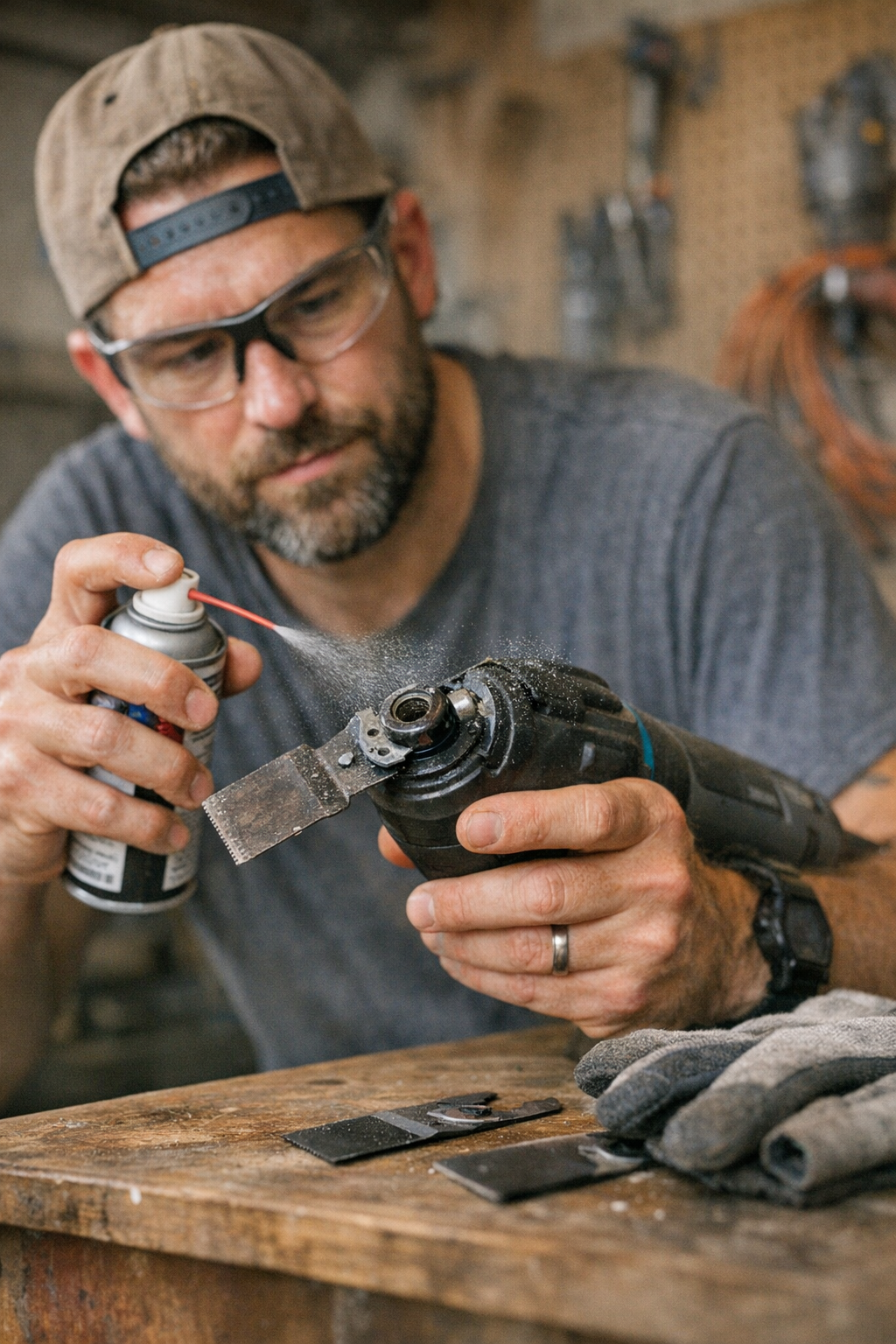
There’s no magic: just seconds of real prevention. After the usual dust-off, a light spray or dab of mineral oil on mounts and contact faces throws up a barrier, buying time against moisture. This isn’t fussy maintenance; it’s the difference between days of glide and days of grind. Across real shops, this step can drop the effort needed to seat attachments by half. Clamp force falls, swaps become easy, and by the next session, your multitool responds with the snap and surety you felt the first week you bought it.
It’s invaluable on big tasks—a full sheet install, a series of switch changes—but the payoff multiplies on small, late-night fixes and awkward angles where lost control means another late return to the shop. A few seconds of oil is simply a form of time-saving insurance that stacks up over project after project.
Keep It Doable: Oil Where It Counts, When It Counts
Focus on high-contact parts, not just surfaces. Skip the urge to polish every inch; prioritize slots, clamps, blade seats, and active fasteners. Build it into your post-work rhythm: brush, wipe, a few drops of oil, then close up. If your workspace is prone to condensation—garage, crawlspace, van—treat every use as a potential risk and oil each time. Climatic control, bone-dry air, or a light session? Maybe weekly is enough, but never skip after a sweaty or high-speed job.
When your tool “just feels off”—hesitation slotting a blade, shaky clamps, a hitch changing bits—a quick check for orange dust and a steel wool touch-up can buy back smooth performance. If you spot true pitting or ragged edges, call it time for replacement; that damage signals control you can’t recover mid-task.
Break the Friction Cycle—Project by Project
If smooth operation is fading, don’t just muscle through—look for rust. Slowdowns—wobbly blades, sticky clamps, pads that chew up scratch after scratch—almost always connect back to moisture and a skipped oil. Start cleaning and oiling and you’ll feel the reversal: effortless swaps, tight cuts, more stamina, and control that lasts the whole session.
Fast-paced shops, cramped garages, corners overflowing with last week’s scraps—they all tempt you to just “store and forget.” But every fix-up later, every repeat job to correct a botched edge, starts with a few seconds neglected when putting the tool away. Oil isn’t about being precious; it’s straight-up practical, and it pays for itself in smoother cuts, faster battery swaps, and less fatigue on every task.