
Why Pet Area Cleanliness Breaks Down
Pet feeding spots don’t fall apart after a major spill—they break down in the quiet, repeated misses: the water that drips when you refill, the crumbs that slide past the food mat, the sticky spot you promise to wipe later but forget. The kitchen floor under the bowls is always where mess accumulates fastest, even in homes that look tidy at first glance. Skip just one wipe, and the reset drags out next time—cleaning shifts from a 10-second swipe into a multi-step chore. The difference between a calm, workable pet area and an everyday hassle is almost never dramatic, but you feel it each round: bowls that stick, mats that slide crooked, dust tracked into shared space.
Over time, minor shortcuts backfire—one dried kibble, one patch of missed water, one reach for the bowl where your sleeve gets dirty. With every small delay, you’re forced to work through more buildup. The “clean” version of the area becomes harder to reach and even harder to keep.
Everyday Friction: What Actually Happens
Most cleaning friction hides in the daily basics: the floor under feeding bowls catches every drop and stray crunch, no matter how careful you are. Even a well-placed mat falls short—a few meals in, kibble bounces over the edge and water finds its way underneath. Moving the mat reveals a crust of residue and crumbs jammed against the baseboard.
Postponing the cleanup, telling yourself you’ll get to it after work, means the floor turns sticky, crumbs harden, and hair or litter clings before you even get to the main mess. The moment a quick reset becomes a project, the routine breaks pace. Suddenly, every feeding means moving supplies, sweeping aside clutter, or scrubbing more stubborn spots.
When Setup Hurts More Than it Helps
Some fixes seem clever but cause new headaches. The mat you chose for spill protection? It catches crumbs but demands lifting, shaking, and cleaning underneath in addition to around. The “easy” cleaning spray or towel is across the kitchen or buried behind other supplies. Each layer to protect the floor adds new steps to your evening routine—what was meant to control mess ends up making resets longer and less likely to happen in the moment.
Friction leaks in from every angle: the mat blocks the cabinet you need, the water bowl sticks against a mat edge and spills, cleanup supplies migrate into shared space for easier reach, and your kitchen now permanently hosts out-of-place tools and stray pet items. Instead of handling care faster, your setup crowds everyday movement and makes every part of the routine slightly less smooth.
The Ripple Effect: When Delays Take Over
Ignore one patch after breakfast, and by midweek, you’re chasing mess all over: crumbs trail past feeding spots, wet pawprints reach the sofa, rings of dried food form at corners, and stray hair piles up in new places. The failed reset doesn’t stay hidden—mess migrates, adding steps to your day and forcing late-night or early-morning catchup.
Suddenly, every small routine—letting the dog out, picking up toys, swapping water—requires clearing a trail or circling back to fix what you skipped. Delayed cleanup stops being background and starts shaping how—and when—you can move through your own space.
The Smallest Change: What Actually Solves It
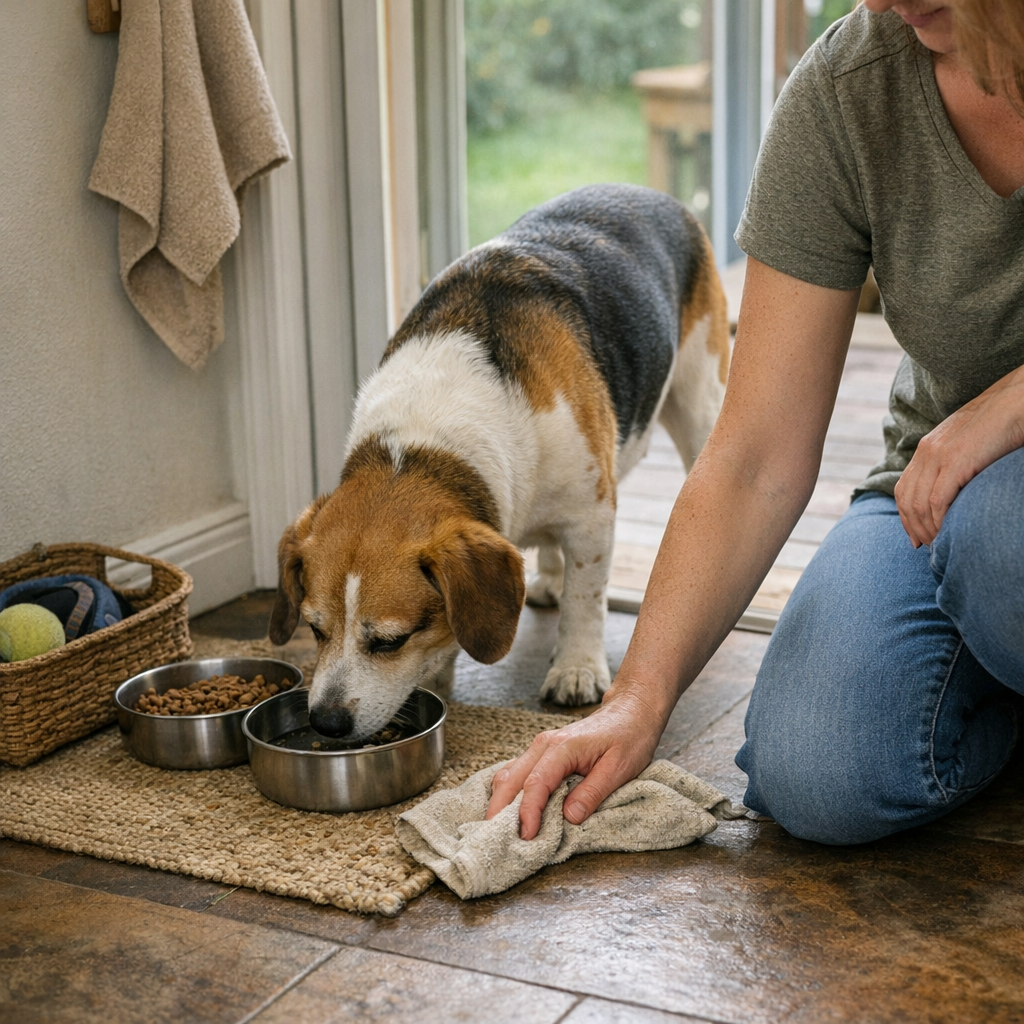
The most effective fix is never complicated: keep a basic, absorbent towel hanging within arm’s reach of the feeding area. Not hidden in a closet, not across the kitchen—right there, every time. After each feeding, a quick swipe catches spills before they harden or spread. No sprays, no scrubbing, just a single pass before mess becomes build-up. Reset feels part of feeding, not a dreaded chore.
This single step—done when you’re already at the bowls—saves minutes daily and keeps small problems from turning into full resets. Cleanup stops piling up. The area actually functions from one round to the next: not just neater, but easier to keep that way. The routine never drifts into project territory, and the floor is always ready for life to continue without repeated interruptions.
Practical Cleanup Guidance—FAQ
How do I prevent pet food mess from sticking to the floor?
Wipe under and around the bowls immediately after feeding—using a towel that’s always on hand, not stored away. The sooner you handle spills and crumbs, the less any mess lingers or becomes stubborn work later.
Is a mat enough to keep the feeding area clean?
No—every mat only helps partially. Kibble and water slide past the edges after a few uses, and what’s meant to protect ends up hiding mess until it’s worse. Plan to lift and wipe under mats often; don’t trust a single “solution” to do all the work.
Why does cleanup get harder over time?
Each missed or delayed wipe-down hardens crumbs and lets water marks set, making every reset after that take longer and feel heavier—especially once extra mess spreads into other rooms and routines.
From Looks to Function: What Actually Matters
A pet area that appears clean after a reset doesn’t mean the care routine is friction-free. Mess you can’t see—blending into corners or under mats—still drags on the next round, and small missed steps add up. If your towel or cleanup tool isn’t always within easy reach, you’ll keep pushing off that last swipe, and setup that once looked organized quickly slows down as real use exposes what’s missing.
Design your spot for actual daily use: hang a towel right by the bowls, cut the reset to a wipe, and keep cleanup basic and easy to put back. Whether it’s after meals, refills, walks, or bedtime checks, the right small step keeps everything running—no overhaul, no buildup, just daily flow you can count on.