
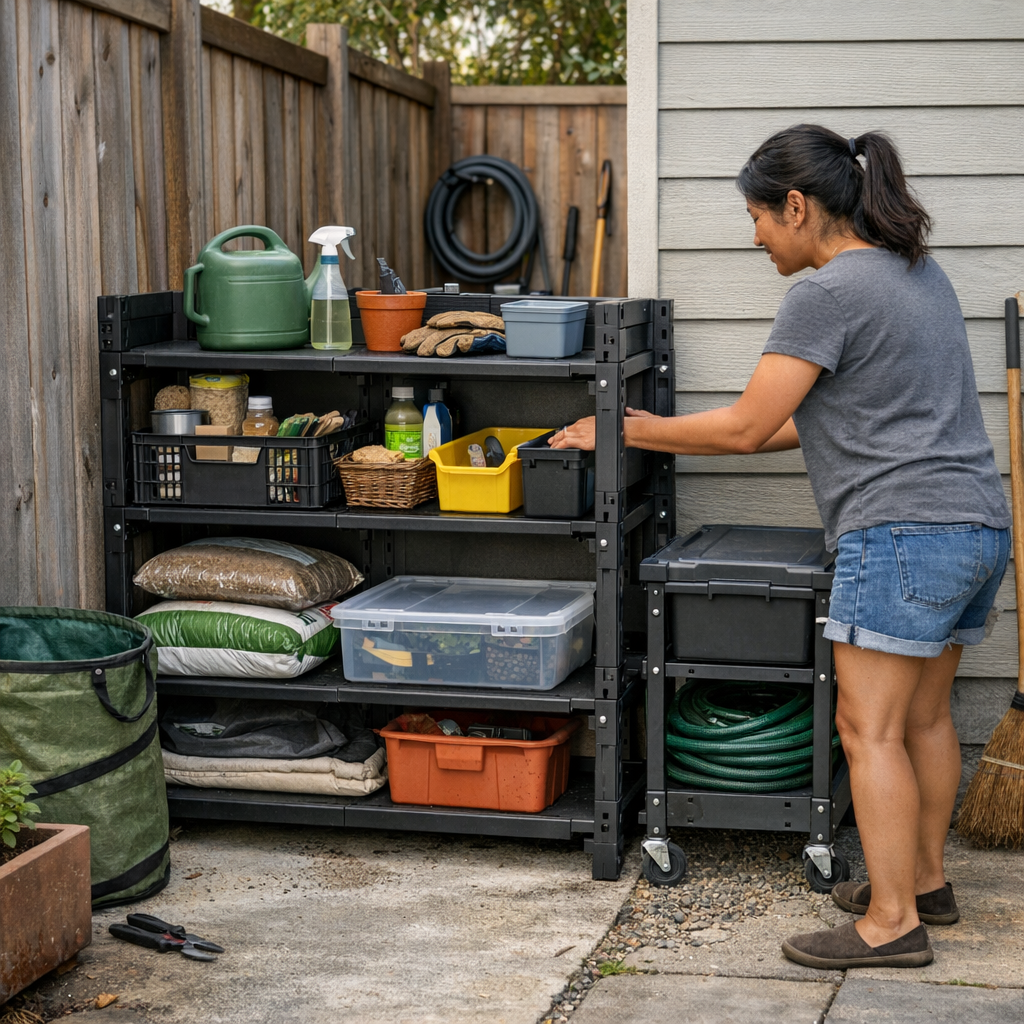
A shelf that looks “organized” from the hallway can quietly sabotage your daily routine. The lineup might appear efficient—books packed tight, baskets slotted in, every gap closed—but the real test comes at 7 p.m. when you try returning a library book or make room for incoming groceries. Suddenly, order breaks down: a line of books shoves back, pantry items balance on one another, the mail basket surges past its limit and starts swallowing car keys. The flaw isn’t always striking, but it’s constant: blocked return flows, awkward reshuffling, and edge spillover that slows everything from a quick exit to a tired evening reset. When “full” feels organized but actually jams daily use, you’re seeing a setup mistake that costs more time than visible mess ever does.
When Shelving Gets Too Full for Daily Life
A storage zone only works when it matches how things move in and out—not just how much it can display. The stress point appears when you try to put things back, not when you take them out. A jammed shelf means you’re wedging in folders, squeezing bowls behind jars, or hovering near a hallway stand debating whether it’s worth rearranging to fit a backpack. This isn’t dramatic, but it’s the reason a setup that seems sorted in the morning feels overloaded by night. Some clear examples:
- A bookshelf crammed end to end—returning a single novel means tugging out a row or leaning books at unstable angles.
- Pantry shelves packed to the edge—new groceries force you to juggle bags or push far-back containers deeper.
- Entryway benches lined with bins—coats, mail, and random odds pile up until your keys disappear beneath the surface clutter.
Each scenario is a repeated cost: the return flow stalls, every drop-off becomes a minor obstacle, and moments pile up as you move, wedge, or re-stack routine items. Shelving that’s technically organized transforms into a friction point that makes every reset feel like work.
The Cost of Seeming Order: When Categories Blur and Routines Stall
Visually neat shelves promise easy retrieval—but overfilled setups lose that edge quickly. The push to maximize space creates hidden choke points. Add a single oversized bowl or an extra batch of towels, and suddenly you’re shifting piles or shuffling stacks, sometimes just to make room for the next item. Over time, overflows creep to the front: pens land in key trays, socks drift onto linen shelves, and the “sorted” look slips as categories unravel.
Category drift rarely explodes—it seeps in. The kitchen’s art drawer fills with paper scraps; “temporary” laundry ends up as a semi-permanent mound on a hallway bench. Sifting through random things to find what you actually need is the clearest sign that the system supports stuff, not you. The more categories blend, the more every grab-and-go turns into slow-motion rearranging.
Active Zones, Repeated Tests: Why Shelf Breathing Room Makes a Difference
You’ll spot the true cost of a packed shelf fastest in the busiest zones—where items cycle in and out multiple times daily:
- Hallway bookshelves: Library books and mail compete for space; a single out-of-place binder sends the whole line drifting off axis, and the key dish slowly disappears beneath stray paper.
- Kitchen storage: New groceries force quick Tetris—stacking, shifting, pushing containers out of easy reach—until food is forgotten at the back or jars tip when browsed.
- Laundry setups: Detergent, baskets, cleaning supplies vie for shelf inches; laundry day begins with moving everything just to reach the basics—a routine that always adds steps.
Each “reset” reveals whether a storage setup can handle a surge or if a single busy afternoon starts the domino effect of cleanup, rearrangement, and category drift. The more often you repeat the cycle, the more a shelf either supports or interrupts your real routine.
Turning “Full” Into “Functional”: The Open Hand’s Width Rule
The step from overstuffed to working shelving isn’t about becoming minimalist—it’s about creating buffer space. Clearing out just enough that every shelf has an open hand’s width toward the front transforms returns: items slide in without nudging neighbors, bags settle on pantry racks, mail slips easily into its tray on a busy morning. Usually, this means removing a third of densely packed contents—a reduction that feels almost wasteful but quickly proves its worth.
Try this: pull out two platters you rarely use from a kitchen shelf. Suddenly, you can lift a pot on and off without causing a chain reaction of shifting pans. Whittle a hallway stand to just current school folders, and placing today’s mail no longer jams the space or knocks keys out of reach. The difference is tangible in every reset: you don’t need both hands free, extra balancing, or a “for now” pile that becomes next week’s clutter spot.
Real-World Reset: Seeing the Benefits Over Time
A shelf with visible breathing room might feel too bare on Monday. By Friday, it’s the setup that actually absorbs the week’s mess—books get moved, groceries cycle through, yet nothing requires major rearranging. Resetting—pushing items in line, shelving a pan after dinner—happens almost as a side effect, not a chore, because the structure allows recovery without making emptying or restacking a daily task. Category lines hold up longer, habits don’t slide, and minor disorder never turns into stalled routines.
Buffer Space Isn’t Wasted—It’s What Makes Storage Work
That open margin on a shelf feels wrong at first—especially if space is at a premium or you’re used to filling every inch. In use, though, that hand’s width is what rescues your routine on a busy morning, catches overflow before it blocks a path, and keeps the shelf from becoming a static storage trophy. Buffer space absorbs the unscheduled: sudden grocery runs, surprise stacks of paperwork, laundry that doesn’t happen until tomorrow. Rather than wasted territory, the margin is the flex point that allows repeated access without slowdowns, spillover, or reset fatigue.
If you notice clutter seeping back, it’s rarely because the shelf is underused—it’s the cue that forgotten, misplaced, or out-of-category items have landed in the zone. The repair isn’t a full reset; it’s a rotation—pull a stray stack, send drifted items home, and reestablish the buffer. Storage works best when it mirrors how you actually use—and return—things in cycles, not how it looks during a one-time sort.
Practical Tips for Reclaiming Shelf Performance
- Remove items that don’t align with the shelf’s main job—the tray that never leaves the hallway, seasonal gear clogging a kitchen rack.
- Each week, scan for items that have drifted in under “just for now” and move them out before they settle in permanently.
- See open shelf space as functional, not wasted—a margin for tomorrow’s rush or next week’s unknown.
- Spot places where you routinely stash things in transit; tweak the setup so those items have a better return point, or the layout naturally blocks long-term pile-up.
The aim isn’t to make your shelves look empty, but to make them work—under pressure, across busy stretches, and through real-life cycles. It’s the shelf that stays easy to use, not just easy to photograph, that transforms daily order from a brief win into a lasting advantage.
Explore practical storage that fits real routines at Gridry.