
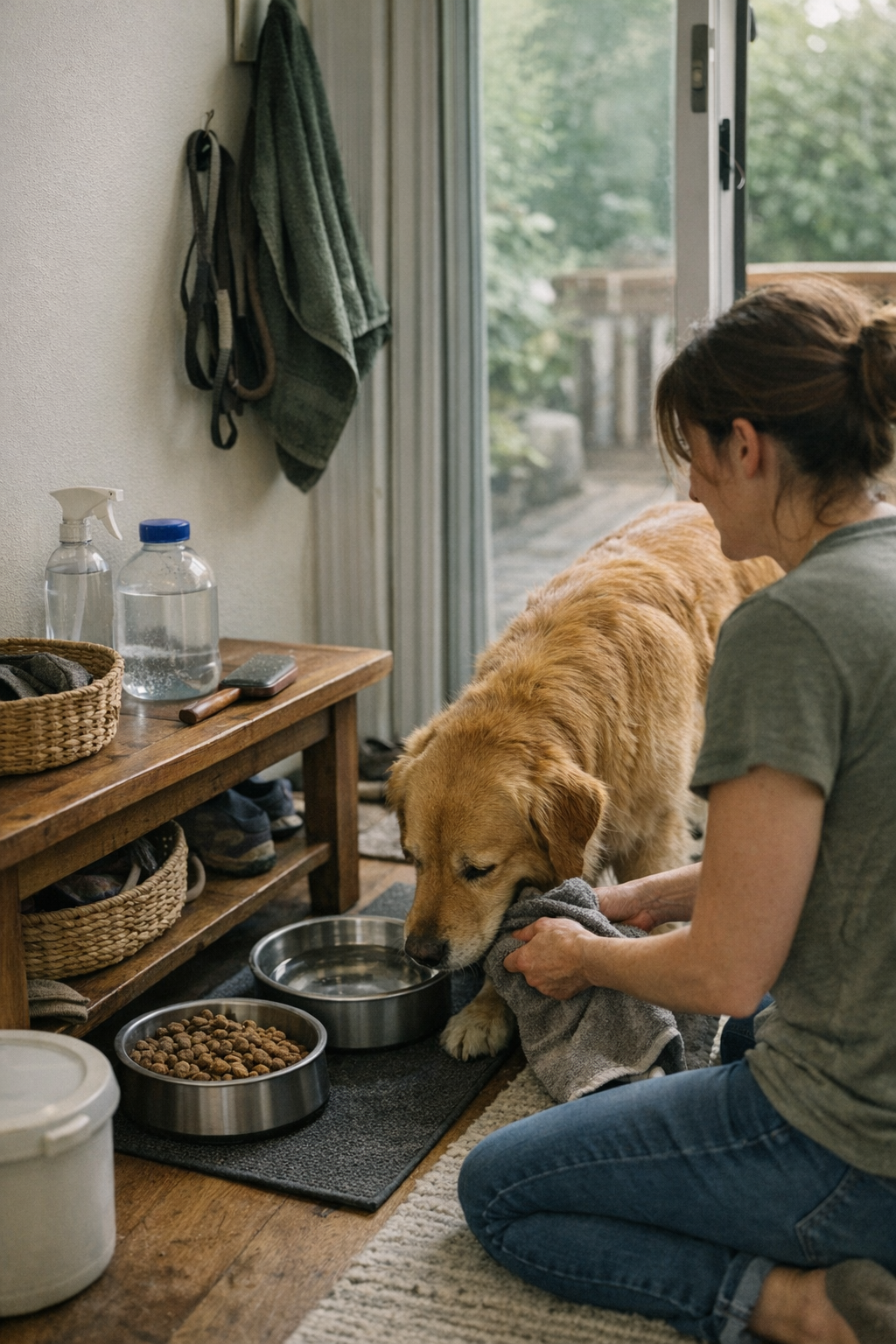
The Hidden Gaps in Daily Pet-Care Setups
That feeling of control—lined-up bowls, brushes at hand, fresh towel hooked by the door—rarely survives past the second feeding or first muddy walk. It looks set for easy care, but by lunchtime, the “organized” area is already fighting back: a wet bowl crowds the counter, the brush is gone, and you’re reaching past clutter to find even the basics. The illusion of order fades fast under repeat routines, and pet care slows as you reshuffle supplies or double back for missing items. What worked at the start of the week unravels by Wednesday, turning ordinary feeding and cleanup into a series of avoidable stalls.
Where Pet-Care Routines Get Stuck
That so-called organized corner breaks down the minute you try to use it under pressure. Reach for a water bowl and find a food bin shoved in the way—or yesterday’s rinsed bowl is still damp, awkwardly perched where a quick scoop should be. After a rushed grooming session, the brush is abandoned on the table, leaving you hunting for it with damp hands when you come back for the next round.
Every small slip means another slow-down. The refill bottle’s empty and not where it should be; retrieving it means doubling back to the other room. That towel you rely on for after-walk paws is gone, so dirt travels farther into the house. Each “just a second” pause adds up, breaking the feeling of routine and pushing simple care into friction-heavy territory.
Real Use Scenes: Interruptions That Sneak In
Come in from an evening walk—leash in one hand, drippy toy in the other—expecting a towel at arm’s reach. Instead, it’s balled up on the sofa or vanished to the laundry pile. The jug you use to refill water dishes is empty, hiding behind unfolded laundry. You end up tracking messes through the space as you try to hunt down one missing supply after another, turning what should be a two-minute reset into a minor scavenger hunt.
And during a busy week, the cat’s grooming brush never lands in the same spot twice—used by the kitchen sink, left on the coffee table, then migrated to the feeding zone. What saves a step in one moment adds to the search later, and you burn time chasing after items meant to be ready for quick routines. Even a feeding spot that started out “tidy” by evening is blocked off by scattered toys or abandoned breakfast bowls.
Looks Tidy, Works Slower: The Practical Difference
Visual order and daily function don’t always align. It’s easy to reset everything each night—align the supplies, wipe bald spots, hang that missing towel—but cracks show during high-traffic hours. The friction isn’t from visible mess; it’s from essentials going missing or getting harder to grab, so each basic care step slows or stalls. If you skip even one small reset, next time you’re left staring at a missing wipe or an empty water jug right when you need it.
Focusing on appearances means you might beat back surface clutter, but routines pile up underneath. The towel isn’t ready for a muddy dog, the scoop’s gone missing, storage bins block the counter, and daily pauses multiply. The space designed for convenience keeps interrupting your real flow, and regular care starts to feel heavier, less automatic.
Why Fast Resets Matter—And What Actually Helps
A reliable pet-care area isn’t about perfect order, but about how quickly the basics land back in place after use. Immediate resets—refilling that bottle before it’s empty, hanging the towel as you finish, returning the brush right away—shorten the chain of slow-downs. Skip the reset and the next routine runs into a snag; build the habit and those missing-item interruptions mostly disappear.
Fast resets work because every action counts: refilling a bowl right after feeding, stashing the brush as soon as you’re done grooming, and returning containers before stray items pile up. Supplies stop drifting out of reach, and routines start to run as intended—with care tasks handled before they turn into time-wasters.
Troublesome Patterns & Easy Fixes
Pay attention to the repeat offenders: the scoop always outside the litter area, the towel never on its hook, or a refill bottle that roams the house with no fixed base. These are the small leaks that drain your pet-care flow—even when the area tricks you into thinking it’s organized. Letting these patterns build up makes daily care feel like a string of micro-interruptions and forced resets.
The solution isn’t a big once-a-day overhaul—it’s those simple, automatic resets baked into each routine. A quick return, a refill, a wipe-down in the moment keeps clutter from invading shared space and prevents pet-care basics from breaking down right when you need them.
Function Over Appearance, Routine Over Reset
A setup that works isn’t defined by how neat it looks, but by how smoothly it keeps you moving—feeding, cleaning, resetting, and repeating without slow-downs. Every small habit of putting things back saves time the next round, and your space quietly shifts from hidden obstacle to silent support. You don’t need a perfect corner—just a setup that keeps basic pet care from becoming a drain on your day.