
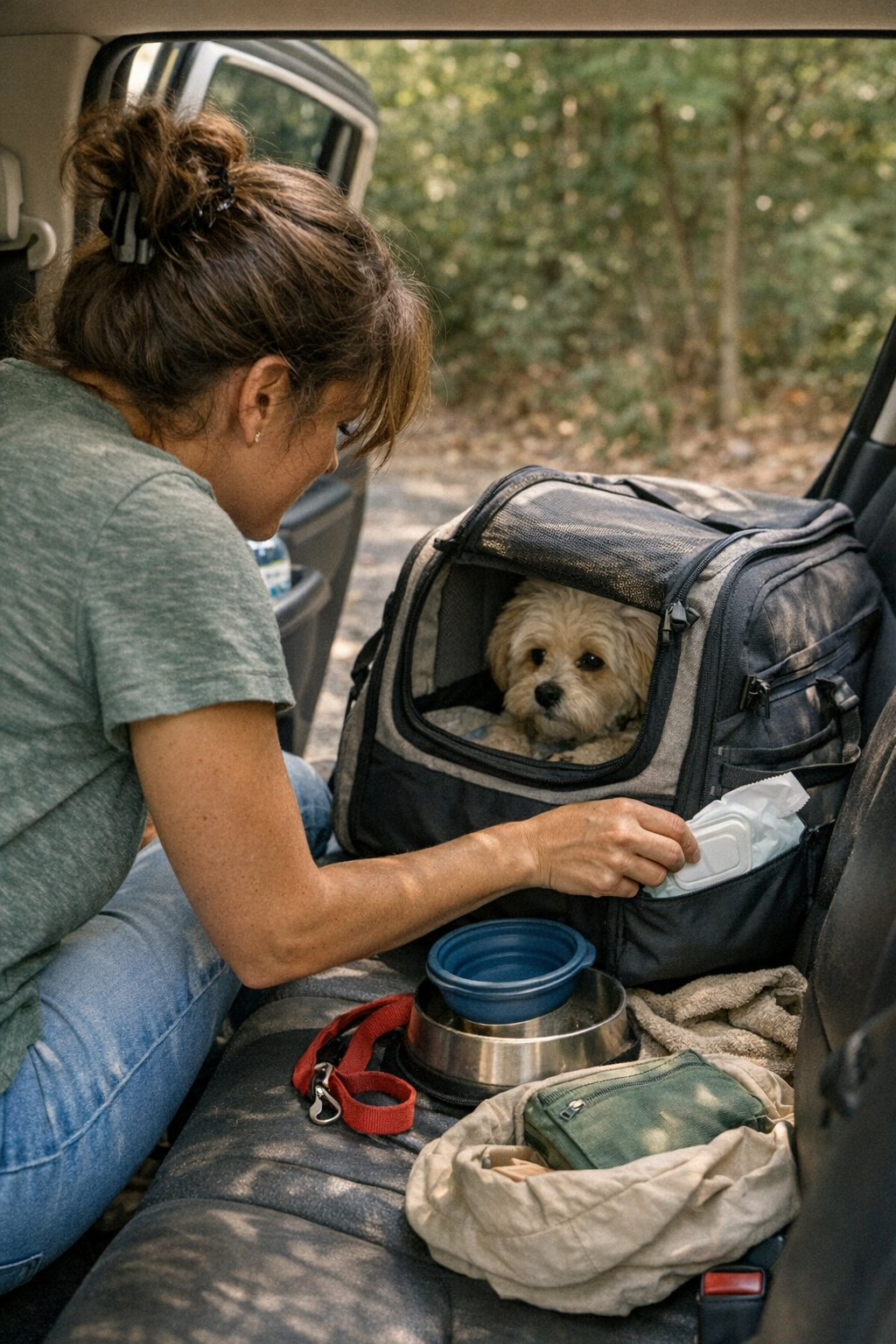
The illusion of a “ready to go” pet carrier collapses the first time you fumble for wipes after a bathroom break—with your dog getting restless and the cleanup kit buried at the bottom. What feels organized at home can turn clumsy in the car or at a rest stop: bowls that disappear under a seat, leashes clipped awkwardly out of reach, or essentials wedged beneath a pile of comfort toys. Each stop, each shuffle, and each attempt to grab the right item on the first try exposes friction points that a tidy setup can’t hide once you’re actually moving. If you’ve ever reloaded a pet carrier in a parking lot and wondered why it feels messier than it looks, you’re already living the PawGoTravel problem.
Where “Organized” Looks Can’t Keep Up: Real Travel, Real Friction
Tidy means nothing if it’s not workable under pressure. You leave the driveway with every zip closed and every item stacked, but that neatness unravels during real movement—pulling the bag out quickly for a leash, or grabbing wipes without waking your pet. It’s always the same flaws: gear sliding, pockets blocked, the item you want trapped by the ones you don’t need yet. What starts as orderly becomes a scramble with every fast exit or seat-side reach—a setup that defies its own design once real stops begin.
Repeated Stops Expose the Same Weak Points
Pet travel isn’t a single stretch. It’s a pattern of short drives, quick breaks, rushed errands, and pauses that stack up. The same snags keep coming back: digging for a snack under tangled straps, flipping the carrier for wipes that migrated to the bottom, or fighting with a clasp that gets caught at an angle—again. Each pause turns into a mini obstacle course instead of a quick “grab and go,” and the routine never gets easier until the friction point is finally fixed.
Reaching That One Item—Again and Again
If the cleanup gear takes two hands and a full bag shuffle every single time, “being prepared” just means repeating the same drag. Wipes deep in the corner always cost you time and patience; a bowl wedged under a layer of toys means your pet waits while you dig—and the sense of having “just what you need” doesn’t survive more than one stop. Repetition reveals real usability, not first-glance order.
Seat-Side Moments: When Access Matters Most
Your pet’s calm travels with your flow—or breaks with your fumbling. A smooth rhythm is undone when you have to dig under owner wallets or shift a tight compartment for basic gear. These small, silent frictions—gear that blocks instead of helps; a storage trick that seems clever until it slows you down—add up. Restarting motion after a pause is when good setups prove themselves, and cluttered ones make you start over, each time less smoothly.
Cleanup Gear: Present but Out of Reach
No one forgets wipes or bags. The real problem is when everyday solutions vanish behind layers: wipes sunken behind soft gear, cleanup pouches wedged just out of reach. Instead of saving the day, your “well-packed” kit becomes a tangle—forcing you into awkward stretching, upending half the carrier just to fix a minor mess. A setup aimed at less visible clutter can still trade speed for neatness, and the cost shows during every routine stop.
Comfort Items: Help and Hindrance
Travel blankets, chews, or favorite plushies offer comfort—and instantly block access when stacked on top. That item calming your pet for the drive can slow your every reach, as you carefully move it off seat-side essentials. The same soft touch that keeps a pet settled often becomes your next hurdle, repeating with every stop-and-go and quietly interrupting what should be a quick restart.
Why Small Setup Tweaks Change the Trip
Switching from “most organized” to “most reachable” is where pet travel feels different in real use. Move a wipes pouch out of a deep pocket and into a zippered side slot, and every cleanup turns into a barely-noticed motion—three seconds, no searching, no reshuffling. The gear didn’t change. The placement and access pattern did—and that’s what cuts repeat friction. The ugliest bag can outperform a “showroom” carrier if you can actually reach what you want on the first try, at every pause.
Experience Teaches What Looks Don’t Show
Any setup that survives the first trip can still fall apart on the second and third. Treats end up under heavy items, the leash toggles in a spot that made sense only when you weren’t in a rush, and essential wipes wind up buried again. Noticing a single repeat snag—then fixing it—has a bigger impact than buying a flashier carrier. Real travel rewards those tiny, practical changes that pay off after multiple stops, not just on launch day.
Repeated Movement, Less Disruption: Seeking the Right Balance
There’s no perfect setup, but small, friction-cutting improvements save minutes and headaches. Better travel gear isn’t about max storage—it’s about smart splits: stable storage for what you won’t need until arrival; easy-access slots for the things you’ll reach for again and again. You know it’s working when you stop pausing, sighing, or shuffling gear mid-trip—and your pet feels that steadier, calmer transition too.
The difference is blunt: Less fiddling, more moving. The calm comes from setups that shrink repeated tension, not ones that just hide clutter for one photo. Every tweak—moving a pouch, untangling a section, or choosing a layout that matches real stops—converts daily travel from “nearly works” to “actually fits.”
Get more practical solutions for real-world pet travel at PawGoTravel.