
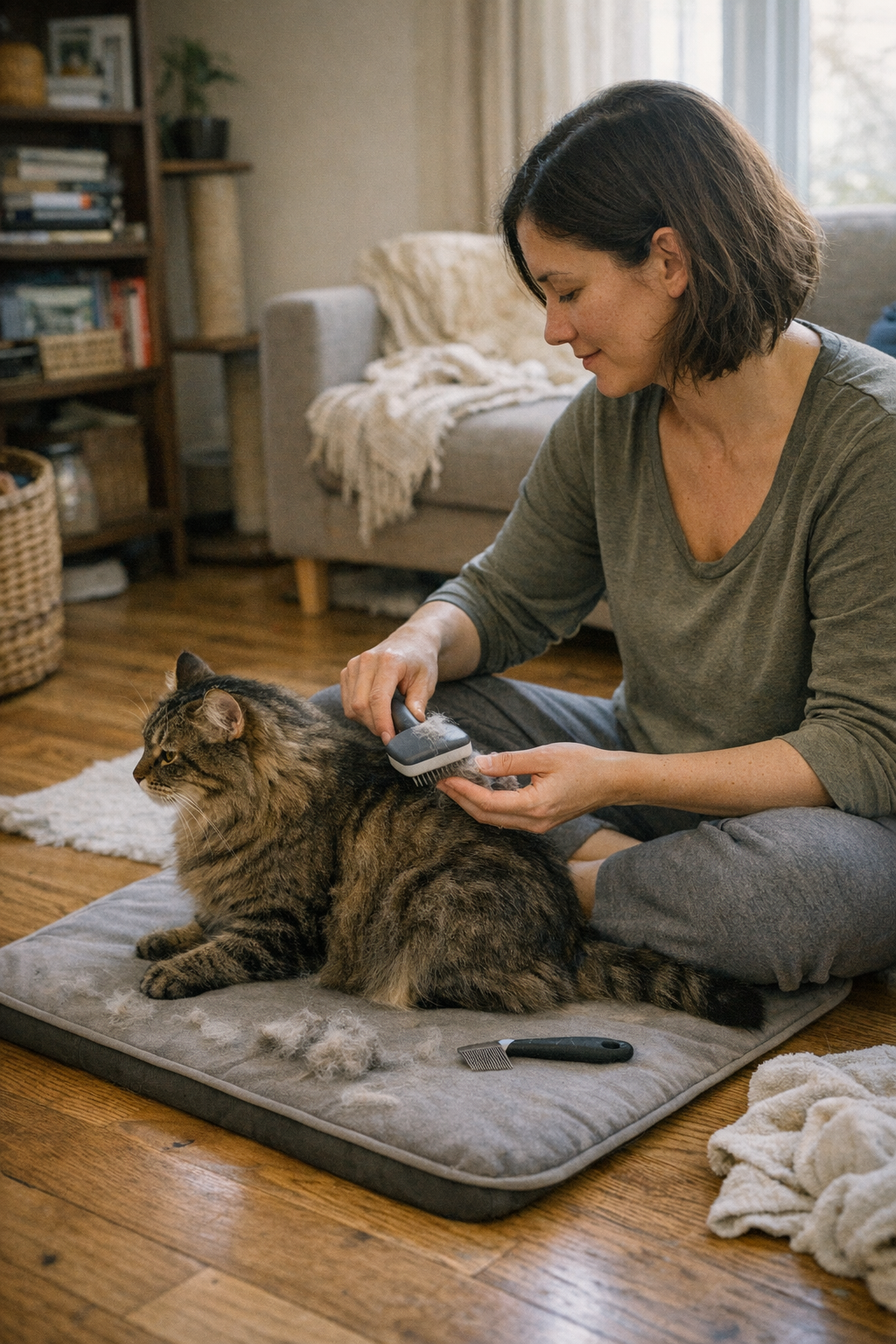
Indoor-cat grooming setups often look “good enough” on day one—until the small, repeat frustrations start stacking up. Brush in hand, you clear space for your cat, aiming for a smooth routine. But after a few sessions, the process feels heavier: fur clumps keep escaping the mat, your cleanup towel is somehow never within reach when you need it, and your cat starts ducking away at the first sight of the brush. The area still looks set, but hidden friction grows: more mess leaking into shared spaces, more bending and reshuffling between steps, and a creeping resistance to even start the next round. The difference between a grooming zone that works in daily life and one that just looks settled shows up fast—especially in a home shaped by StillWhisker-level routines, where gear needs to hold up under real, repeated use, not just “good intentions.”
When Grooming Turns From Routine To Hassle
The basics seem straightforward: brush, mat, cat, done. But it never stays that simple. One week in, you’re noticing: tufts of fur stuck along the mat’s edge, loose hair already drifting toward the sofa, and tools that migrate away from “right at hand” to “lost under a blanket or behind a cushion.” Your cat flinches sooner, tail flicking with each pass, and the session slows as you pause to untangle small messes. Suddenly, what once fit into a spare 10 minutes pulls out into a sequence of starts, stops, and post-session cleanups—often with your cat leaving after the first flurry or, worse, skipping the spot altogether the next time.
Little Signals: Friction Comes From The Setup, Not Just The Cat
It isn’t always a full rebellion. You see:
- The same front paw yanks back each time you reach a certain angle.
- Hair crowding the mat’s seam, resisting quick cleanup.
- Finding more fur trailing away than collected on the actual brush.
- You delay the session, knowing it means an extra room pass with the lint roller after.
Repeated-use headaches add up quietly—often camouflaged by a setup that looks “pulled together” until it collapses under the strain of actual routines.
What Really Drives Cat Tension During Grooming?
Some tension is cat-driven—overstimulation from too many strokes at once or no escape route when nerves spike. But much of it is structural. Brushing straight through, or pausing only after your cat squirms, can leave both of you tense. Staging the session at the edge of a crowded chair or in a corner makes every pause feel forced: your cat gets boxed in, you reach awkwardly, and tension rebounds into every new gesture across the week.
The Trap: Tidy On The Surface, Stressful Under Pressure
That grooming nook with the matching mat and organized tools? It starts strong. But repeat friction sneaks in:
- Mats fill up faster than you clear them, flinging hair into the hallway with every reset.
- Your cat marks the spot as somewhere to avoid for naps—a low-level signal that “tidy” is too close to “stressful.”
- Stray tufts wind up in resting corners or tracked beneath the dining table.
Your grooming area may still look arranged. But the structure quietly fails: resets multiply, and fur shows up in new places that were never meant for the mess.
Breaking The Cycle: Why Pausing Is More Than Nice
Pausing isn’t decorative—it’s your only real tool for regaining control in a runaway session. That break resets tension in both you and your cat, especially if you use those few seconds to:
- Let your hand rest, giving your cat a visible breather. Shrugging shoulders, relaxed ears: your cat often stays longer with you.
- Clear fur from the brush and mat edge instead of waiting until the mess is overwhelming—so flyaway hair doesn’t spread into places you don’t notice until laundry day.
- Allow your cat to step away and circle back, distinguishing overstimulation from disinterest. Sometimes, a short step aside means the session isn’t over—your cat just needed a break, not a total retreat.
Slowdown now saves triple the hassle later: resistant cats ease up, piles of fur get managed mid-session, and cleanup doesn’t balloon into a whole-room project every weekend. The “pause, reset, repeat” pattern is invisible at first—but it’s what keeps a grooming setup from quietly collapsing into a high-maintenance job.
Setup Friction Shows Up In Unexpected Ways
Perfectly staged grooming areas break down once routine use grinds in. Typical pressure points:
- Corner setups corral everything… but squeeze your cat (and you), ramping up resistance after two brushes.
- Mats stashed behind furniture keep clutter off main paths—until each cleanup is a hunt for lost fur, making resets less likely until stray bits surface everywhere else.
- Shared armchairs or daily throws blend comfort with crisis: once the cat dreads that spot for grooming, the “rest area” becomes another place you chase fur and avoid interruptions.
- Cleanup supplies on stand-by are never quite reachable mid-session—so you lean, disturb the cat, or skip the step that could have saved time (and effort) later.
The missing ingredient: a setup you can pause and reset, right when things start to go sideways—without needing to move half the living room or juggle everything within arm’s reach every single time.
How Small Tweaks Change The Daily Flow
The test isn’t how clean or cute your setup looks when new—it’s how it performs on session seven, or session thirty. Cat fur migrates. Habits bend. The slickest organization gets exposed the moment you skip a cleanup or can’t grab what you need mid-session.
Pacing with Intention: Control > Appearance
If you’re used to blitzing through, try this sequence:
- 3–5 gentle strokes with the brush.
- Pause: rest your hand, sweep stray tufts from the edge, let your cat shift or simply settle.
- Repeat—watching for visible changes in your cat’s tension and for drift of fur beyond the mat.
The result isn’t just a calmer cat. The surrounding floor and furniture stay cleaner. You spend less time searching for escaped fur and more time actually finishing the routine.
Contain Mess At The Margin
Mid-session, a quick drag with a lint roller or damp cloth around the mat edge stops flyaways from colonizing the nearby rug. Wipe as you reset, not after everything’s done and the room’s already lost the war to tumblefur.
Location: Open Access Beats Hidden Corners
Choose a mat or setup with at least one clear edge—reachable without bending or shuffling other supplies. Avoid setups that force you to squeeze next to tables or move water bowls, which interrupts you and unsettles the cat. Open, flexible zones make mid-session pauses usable instead of disruptive.
Grooming Setup: Beyond The Brush And Mat
The first days are deceptive. Organizing is easy; living with it gets harder. Questions to track:
- Are grooming sessions skipped because you dread wrangling all the pieces back into place?
- Is fur sneaking under bowls or into feeding setups anyway, even if the mat seemed well-placed?
- Do you find yourself reaching around side tables or crouching for wipes, realizing mid-session that “at hand” is never actually “right here”?
Often, the telltale weak point is a supply that lives close by—but never quite where you need it in the actual flow. Every shuffle or reach is another invitation for your cat to bail—or for cleanup to multiply in new, slow-to-reach angles.
Spotting When To Refresh Your Grooming Routine
Rising friction—longer resets, stickier mess, cats who treat grooming spots like enemy territory—means your setup isn’t keeping up. Watch for:
- Your cat slipping away the moment the grooming mat comes out, not just after a few strokes.
- Visible build-up: fur rings along mat seams, piles wedged under resting cushions, or tools scattering to far corners between sessions.
- You putting off sessions because cleaning takes longer than the grooming itself—or because the extra squat and reach required makes you avoid the task entirely.
The main sign: you’re working harder than you should for a routine meant to be simple.