
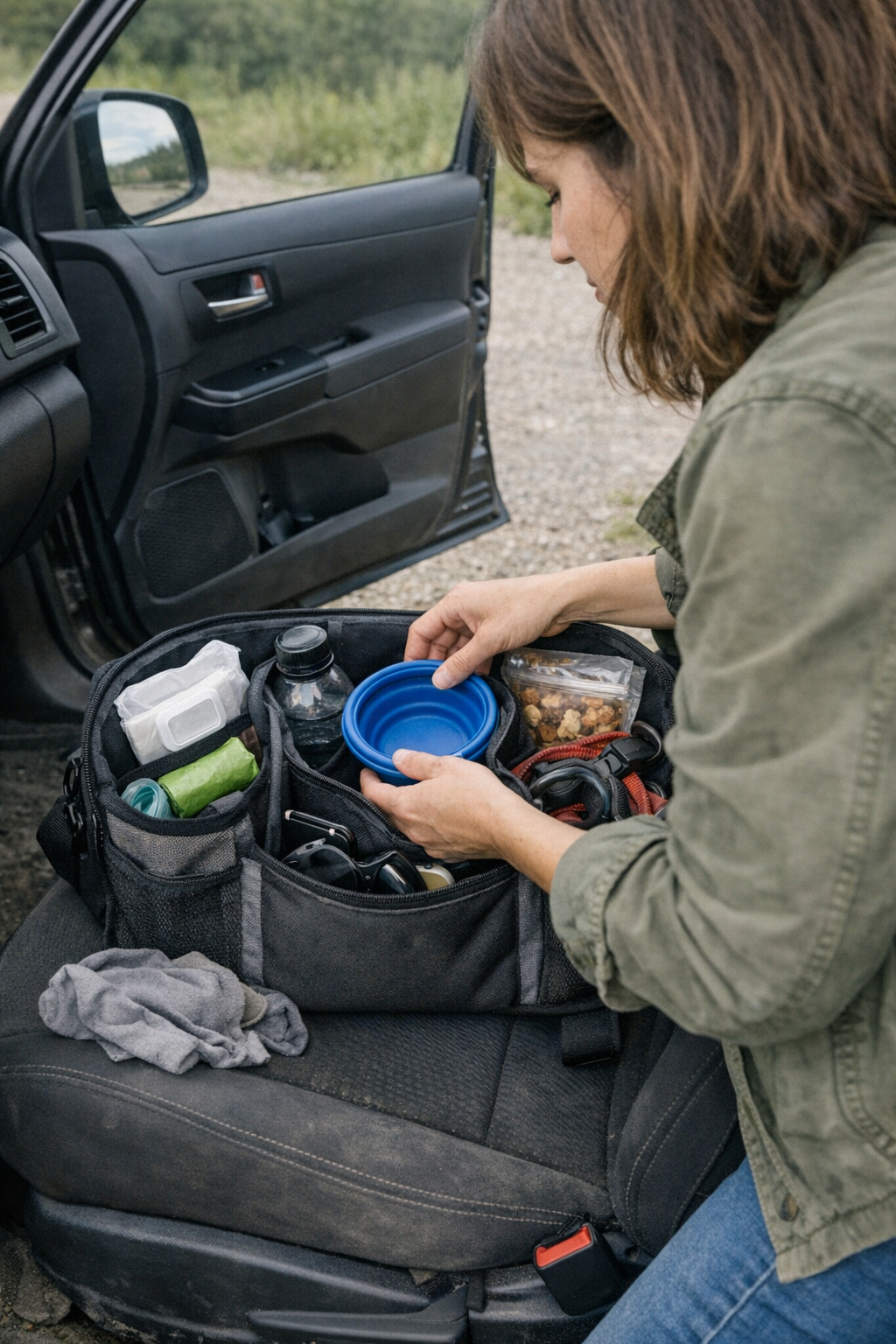
A pet-travel bag that looks organized in the driveway often collapses into chaos by the second or third real stop. The first time you reach for wipes or treats, everything is where you placed it. But once the bag hits the daily loop—seat to sidewalk, drive to curb, repeat—preparation starts losing to awkward overlap, tangled essentials, and that creeping sense of not knowing where anything actually is. Anyone who’s rushed to grab cleanup supplies while a leash knots around their arm or who has dug past their own keys to find a snack for a restless dog at stop four knows: “packed” doesn’t always mean “ready.” The real test of your setup isn’t at launch—it’s how it resets after your third interruption, your fifth reach, your seventh little mess.
Prepared—but Only Until Real Movement Begins
Carry a pet bag that seems sorted—carrier in one hand, wipes tucked, treats zipped away—and it lasts until real-world repetition hits. One smooth grab for a leash is all it takes to begin unraveling that early neatness. By midday, wipes are twisted in leash clips, your keys have joined the treat packet, and what started as compartmentalized dissolves into a muddle that blocks every quick seat-side reach. Each stop multiplies small setbacks, turning basic transitions—exit, re-load, next errand—into hesitation and scramble.
What looks tidy isn’t always built for continual movement. A bag that shines in a pre-trip checklist rarely holds up to seat-side use, especially once your stops run back-to-back.
The Hidden Cost of “All-in-One” Packing
Most pet-travel bags capture buyers with a deep center space and a few loose pockets. But movement throws everything off balance. Bowls crowd comfort blankets, wipes vanish under hardware, and treat pouches run loose. With each ride, you lose a little more structure. By the third or fourth stop, every grab is a guess—one extra reach here, a handful of items shoved aside there, wipes suddenly buried just when you spot a puddle on the sidewalk. It’s rarely a meltdown, just a low-level scavenger hunt that slows down every pet-handling reset.
This friction isn’t dramatic, but it sticks: sliding a harness aside again, nudging a comfort toy out of your reach, or fumbling for owner items under dog gear. The afternoon’s errands start to drag. It’s not about disaster, but about the slow drag in every repeated motion—a bag that looks like it could save you time actually steals it, stop after stop.
Overlap: The Repeated Weak Point
The hidden flaw isn’t a messy bag; it’s the silent overlap at critical access points. Put wipes and comfort toys together just once and you’ll chase both at every stop. Share space between pet and owner items and keys migrate to the wrong corner. Those overlaps create jams—not just in big moments, but in every reach when you want a quick cleanup, a leash swap, or a treat for a bored dog at the curb. Packing “together” guarantees distraction and delay, multiplying interruptions the longer your trip lasts.
Real-World Scenes: When Repeated Use Exposes Every Flaw
- Stop one: The leash is exactly where you stashed it. You’re in control, for now.
- Stop two: Wipes, now twined around your water bottle, make one-handed cleanup clumsy. Your keys drop into the wrong pocket chasing a snack.
- By stop four: Comfort toys have slipped under owner gear. The treats have drifted—soothing your restless pet means emptying half the bag just to dig them out. Momentum stalls at every access point; you shuffle, reshuffle, and reset on the fly.
The issue isn’t a single mix-up, but the feedback loop—each lost second on cleanup or comfort starts compounding, making every restart less smooth. Overlap and slide turn a bag that looked “prepared” into a fumble zone, especially when every reach is a fresh interruption and new friction stacks onto the last one.
Dividing by Function: Where Real Travel Improvement Happens
Organizing by checklist fails under pressure. The breakthrough? Separate what you use, not just what you own. Dividing by real travel moments means:
- Cleanup: Wipes and waste bags each in a side pocket, always ready at the car door—never competing with bowls or leashes.
- Comfort, hydration, and treats: Grouped together, not buried or floating next to your wallet or phone. Water bowls stop sliding, chew toys are held in place and remain accessible.
- Owner essentials: Wallet, phone, keys—isolated, never stranded under pet supplies. No more accidental pet hair stuck to your money or delays with your hands full and no key in sight.
On paper, it’s a minor change. In practice, it works: each item’s job fits its pocket, every stop gets easier. The bag resets after each use, not against you but with you. Your most-used travel essentials sit at the edge, not buried. Cleanups happen on time. No more hunt-for-treats while your dog pulls at the leash or wipes lost the moment you actually need them. The tempo of pet travel—quick stops, seat returns, leash transitions—finally flows with less interruption.
Repeated Reach, Real Relief
The payoff isn’t some magical “never messy again” promise. It’s small, real advantages: fewer repeated grabs to get essentials, less time spent digging for wipes at curbside, steadier handoffs between errands. The pet stays calmer. Restarting the trip feels less like hitting reset on a puzzle and more like picking up exactly where you left off. Structure, not just storage, lifts the friction out of daily movement rhythms—and you notice the difference with every reach that just… works.
Recognizing the Difference: Looking Organized Vs. Moving Smoothly
Initial neatness fools almost everyone. The difference between a “showroom-ready” pet-travel setup and one that survives a busy afternoon boils down to this: does it keep friction away after your fifth repetitive seat-side stop? The real value of a bag shows up in how little it interrupts the flow, not just in tidy packing layers. Visual order is great for a single photo—but only a structure built for repeated movement lets you make stops, quick pivots, and cleanup without dragging out every restart.
Packing for pet travel isn’t about assembling a perfect-looking kit. It’s about a setup that resists mess, spillover, and overlap—even after repeated reaches, pit stops, and in-motion resets. If you’re tired of a bag that gets heavier, messier, or slower with each use, it’s time to rethink what “prepared” actually means. Sometimes, what you need isn’t more gear—but a better structure behind every stop.
Visit PawGoTravel for practical, real-world pet travel solutions: http://www.pawgotravel.myshopify.com