
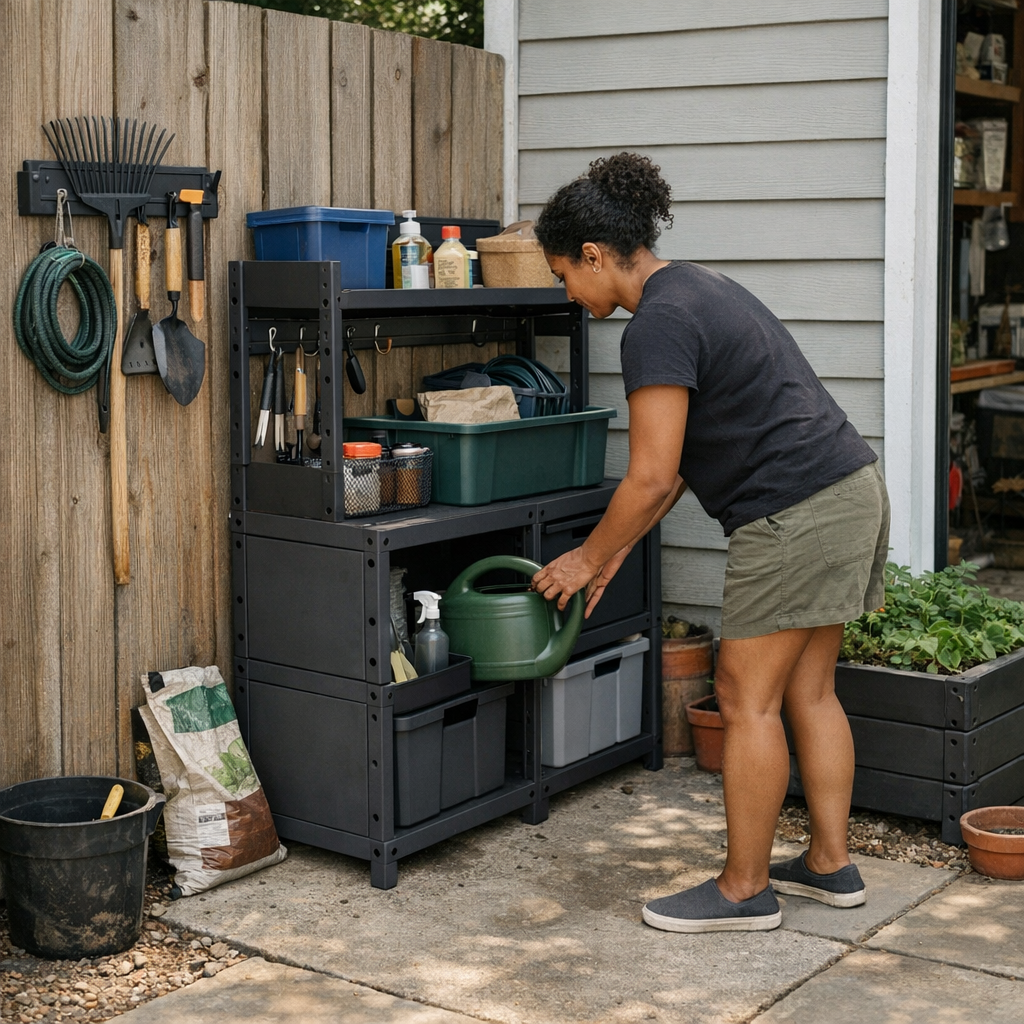
Try walking a straight line from your back door to the garden. Most days, you can’t—not without shifting a hose with your foot, sidestepping a rake that’s balanced against the fence, scooping up a ball so you don’t kick it by mistake. The real drag isn’t one piece of clutter; it’s an outdoor setup that takes over the very paths you use. Every slight detour and each stop to nudge something aside is friction you feel, even if you don’t talk about it. That “quick tidy-up” you promise yourself becomes just another ritual, because the system silently resets itself to disarray every few days.
Where Good Intentions Get Undone By the Week
An organized look doesn’t guarantee easy movement. You start with a tidy bin by the patio or a new rack near the shed, imagining hassle-free access. But the real test hits midweek. Tools lean across the walkway, sports gear trickles past its zone, and that reusable bag you meant to bring in three days ago becomes a trip hazard. A system built for appearances doesn’t hold under real routine; you’re stuck doing the same shuffle, the same mental inventory every time you cross the yard.
When Returns Create a Bottleneck
By Wednesday, the “just for now” pile has become a real obstacle course. You drop the gardening fork near the gate—then move it again so someone can wheel the bike out. Someone leaves a soccer ball behind the trash bin, then you nudge both just to swing the door open. The setup isn’t failing because you’re careless, but because there’s no true return path. Instead of designated parking spots, you have temporary drop zones, which keep filling up and spilling over into your walkways.
Open Storage: Why it Slips, and How Structure Holds
Open bins, big buckets, and rack shelves look flexible but bleed into each other too easily. You return something half-focused and it nudges other things out of their lanes. A hose snakes under the folding chair, the trowel disappears behind a pile, the fertilizer mixes with stray toys. One misplaced item sets off a small cascade—turning a tidy patio edge or garage threshold into a catchall that dampens your pace and buries what you actually need.
Closed or defined storage isn’t about hiding mess—it’s about ending the endless shuffle. When a rack has distinct hooks or a wall rail has only as much length as you need, the setup draws a line: in or out, here or not. This clarity isn’t wallpaper; it’s a living boundary, pressuring quick resets before things can pile up. You’re not fighting overflow so much as preventing it from gaining ground in the first place.
Vertical Space: More Than Just Wall Decor
Small yards and busy side zones don’t just hold stuff—they move people. A few wall-mounted rails, placed at shoulder height, clear the floor in spots that see the most foot traffic. Where the rake used to block the side gate, now nothing touches your ankles. Where you once fished for trimmers beneath a bench, you grab them from their hooks and keep walking. The difference is immediate and practical: clear ground is never just about the look; it’s about not breaking your rhythm every time you pass through.
The Return Flow Test: Real Use, Real Clutter
You can do a Saturday reset and admire how things fit—until by Tuesday, everything’s shifted again. The trouble isn’t laziness, it’s the setup’s lack of true friction for misplaced returns. Stack a trowel on the edge of an open bin “just for a second,” and days later you’re moving an entire pile to get to a bag of soil. The system invites “temporary” returns that always last too long, and the cost is time lost relocating gear on every lap through the space.
Structured systems enforce “return discipline” that outlasts any cleaning spree. Racks with set purposes, wall rails that match the actual number and size of your tools, and weather-resistant units placed where returns naturally happen—all these shrink the time spent hunting, shifting, and reshuffling. The question is never “where does this go?”—it’s “why isn’t this already back on the wall?” The overhead to put things away fades against the bigger hassle of the pileups you never have to clear.
Overflow Pockets and Dead Zones
There are always corners that act like gravity wells for spare gear. A bin at the patio edge turns into the graveyard for gloves, broken pots, and soccer balls. Without a hard stop—some kind of boundary or closure—these dead zones swallow anything you’re not sure about, making every “cleanup” a round of rearranging rather than true organization. Overflow starts as a trickle and quickly becomes a block, defeating the point of sorting in the first place.
What Actually Changes With Modular, Hybrid Systems
The shift isn’t buying more storage, but making the footprint smarter. Picture taking your highest-use tools out of ground-level bins and up onto a short rail along the garage wall. That one move reclaims the space at your feet and instantly shows what’s out or missing, no pileup required. Add a weatherproof closed box only for backup bags and bulky items—suddenly, your overflow falls back to size, and your walkway regains its freedom. There’s no tangle of half-returned items, no shuffling just to close the gate or pass the mower. The system does the sorting for you, and evening resets stop feeling like a whole project.
Flexibility Without Fuss—Or Reset Fatigue
Perfect resets aren’t the goal. Routines change; some weeks are all muddy boots and ball returns, others fill up on garden tool traffic. But those boundaries stay visible: pass-throughs stay clear, storage zones actually contain, and you can adjust parts of the system without tearing everything up. The best setups resist looking full or cluttered after a long week—they invite quick tweaks, not grueling overhauls, and every returned item falls back in line without heroic effort.
Boundaries That Change Behavior—Not Just Appearances
The strongest cue isn’t a tidy appearance but storage that physically blocks clutter from bleeding into circulation paths. A system that works by Thursday, not just Sunday night, has proven its worth. You’re not stopping every five feet to nudge a rake or reroute around a pile of boots—the yard flexes for you, not the other way around.
Small tweaks matter: color-coded rails or tactile markers on closed bins make it obvious—without a word—what belongs where. A green sticker on the tool hook, a rough strip on the sports section, a bright tag on the gardening side. These tiny boundaries speak to guests, kids, and tired end-of-day you, ensuring even the quickest returns hit their mark.
Ease That Stays in the Background
The payoff isn’t an empty yard, but a path you barely think about. When your garage edge, side yard, or patio utility zone keeps you moving without stops and sidesteps, the storage starts doing its job. You feel it not in the absence of clutter, but in routines that stop breaking your stride. Small frictions fade; movement just works. That’s how practical organization proves itself—by making life outside one step easier all season long.
Find practical outdoor storage that matches real use at TidyYard.