
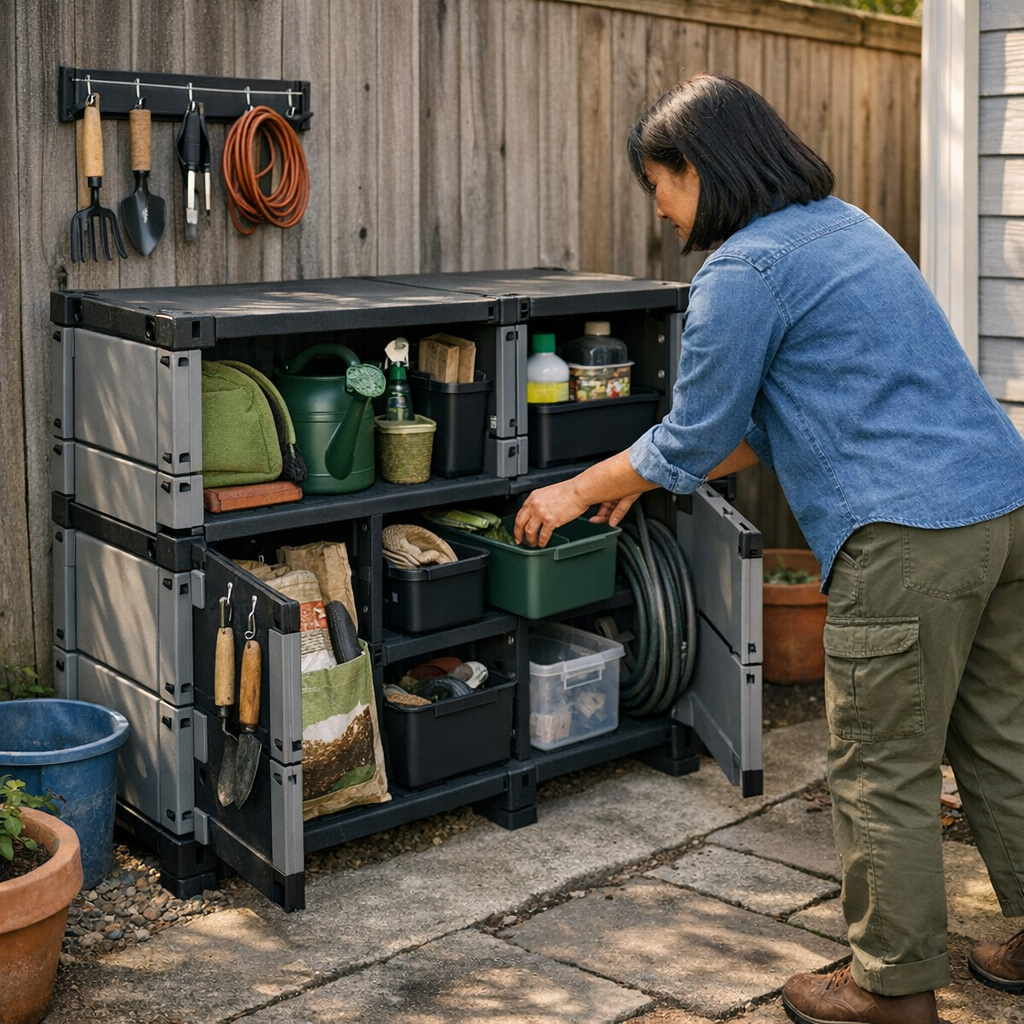
The true test of any living room storage cabinet isn’t how it looks after a perfect setup, but how it holds up when people actually start using it—grabbing remotes, tossing in chargers, stuffing shelves when company’s on the way out the door. By the end of just one week, the surface calm starts to slip: drawers swallow things whole, “put away” zones turn into catchalls, and the cabinet’s tidy face hides a scramble of mismatched categories. The cabinet that felt like a fix on day one can quietly become a source of lost items, slower resets, and creeping disarray that interrupts daily routines instead of smoothing them. If your storage hides clutter but keeps you hunting, sorting, and making up new spots on the fly, the cabinet’s looks just set an expectation it can’t deliver.
When “Just Put It Away” Stops Working
Cabinets promise order—close the doors, hide the mess, display just enough to look calm. But real use exposes weak points quickly. Each day brings small but costly mix-ups and shortcuts:
- Someone pulls a charger from a drawer and it never finds its way back to the right bin.
- The TV remote disappears into the craft supply drawer, meaning the next movie night starts with a slow search.
- Open shelves become emergency drop-zones—mail, remotes, random odds and ends all flooding one edge before guests arrive.
- From five feet back, it all looks “organized”—but look inside, and categories bleed together, piling up behind closed doors.
By Friday, “resetting” the room isn’t a two-minute pick-up. It’s sorting through tangled tech, paper piles, and cross-wired categories. This isn’t just mess; it’s slow accumulation of tiny mismatches and reset delays that drag every shared routine.
Why Internal Structure Matters More Than a Tidy Front
Even the most organized-looking storage can unravel under daily pressure. If the inside doesn’t keep real boundaries, everything steadily drifts—until the only system left is “find it if you can”:
- Open shelving looks clean, but the line between display and dumping ground disappears fast. Books, chargers, remotes—everything squeezes onto one shelf when time runs out.
- Deep drawers hide clutter but swallow what matters. Remotes slide under paperwork, temporary storage becomes “lost for days,” and you end up opening three sections just to get one thing out.
- Closed fronts disguise disorder until you crack a door and everything needs breaking apart again—surface calm, but hidden reset struggle.
Real storage weak spots show up at the worst time: in the rush, when you hand off to family or guests, or when a “quick return” turns into a ten-minute hunt. Without enforced boundaries inside—bins, dividers, or clear shelf lines—each use nudges the whole system further off track.
Shared Living: Where Storage Logic Gets Stress-Tested
Consider three people, one living room, and everyone’s stuff in rotation: one’s settling in with the TV, another hauls out craft supplies, the third plugs in a laptop and chargers after hours. The cabinet has to flex, but weak structure means:
- Remotes, mail, and keys all land in the most visible tray—until the pile blocks access altogether.
- Chargers get pushed into the puzzle bin, making tech retrieval a two-room operation.
- Game controllers float from shelf to inside drawer with no clear home, slowing every reset.
Instead of a quick swap for next use, resets stretch three or four times longer. Every hand in the house has their method, but the cabinet can’t enforce a lasting routine. The real cost isn’t just misplaced items—it’s lost time, extra steps, and routines that break when categories quietly collapse behind closed doors.
Small Upgrades That Change Everything: Dividers and Defined Zones
What actually turns the tide? Adding firm, well-chosen dividers and bins. Assigning a clearly marked slot for remotes, a side bin fitted exactly for chargers, another for crafts or media. Each category claims a real spot, not just an open space—but a signal for where things must return.
This changes the rhythm: the stray remote stands out instantly, bins aren’t just catchalls, and resets return to a quick, visible check rather than a drawn-out shuffle every night. Even when routines overlap, clear boundaries keep the system from unraveling. Organization doesn’t evaporate by Wednesday—it holds up through the week because misplacement becomes obvious, not quietly buried.
Tip: Let Obvious Boundaries Make Misplacement Visible
Choose dividers and bins to match real item sizes, not an idealized layout. Make it explicit—remotes go here, chargers there—and don’t let “good enough” hide slow drift. The moment something ends up adrift, it stands out, and reset effort shrinks to a two-minute check, not an overdue overhaul.
Closed-Front Cabinets: Why Calm Looks Only Hold Up With Internal Order
Shutting doors over a muddled layout only hides new resets. A closed front looks quiet, but unless compartments inside actually sort and defend each category, the resets just happen later—and slower. The closed cabinets that work aren’t just boxes—they’re mapped with slots, dividers, and clear shelf roles so that inside order survives daily pressure.
Open shelves and deep drawers tempt with quick access, but without category cues, almost everyone—especially guests, visitors, or kids—defaults to the nearest opening. The surface stays tidy for a day, but reset pressure quietly mounts and logic erodes out of sight. The result? Storage that technically holds everything, but still slows daily life.
Spotting Drift: The Telltale Signs Your Setup Is Slowing You Down
Look for these recurring signals:
- You reach automatically—but hesitate: is the remote actually there?
- One drawer or basket is always overflowing, while the rest remain mostly empty—storage that’s crowded, not organized.
- Reset and cleaning time creeps up instead of down, week by week.
- The whole zone looks fine at a glance, but routines stall—items are in the cabinet, but the logic that put them there has disappeared.
- One person winds up doing most of the fixing. The reset burden isn’t shared; it’s inherited, night after night.
These aren’t tidiness failures—they’re structural signals that your storage setup loses clarity with every use. Surface fixes can’t solve an invisible drift of categories and growing return friction.
Making Living Room Storage Work for Real Life, Not Just Appearances
The right cabinet doesn’t just hide items or blend in. It forces storage routines to last—protecting visible lines between categories, matching actual routines, and resisting quiet drift after the first few days. Sharp boundaries, correctly matched bins, and clear zones allow storage to keep pace with real, repeated use—even when everyone’s return flow is slightly different.
Setups that succeed in real-life, high-traffic, mixed-use rooms block category creep at the entry point, keep resets short, and protect access without requiring military precision. The result isn’t perfect order—it’s a layout that supports actual living, with storage logic that lets Wednesday night feel as workable as the day after a deep clean.
Find inside-storage setups designed for real, repeated use at Gridry.