
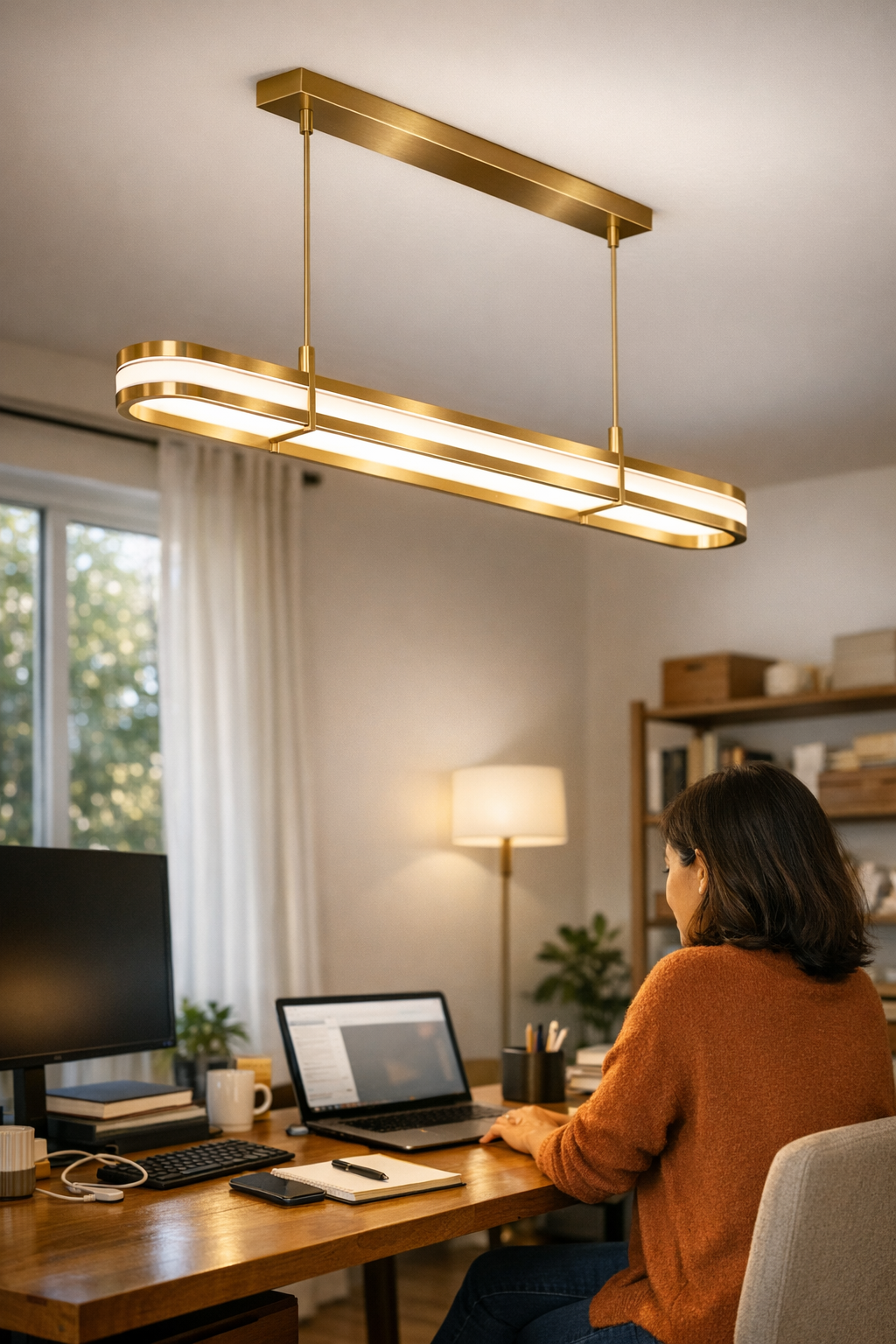
The real cost of poor lighting isn’t the first thing you see—it’s the friction that nags at you hour after hour: a bright desk with a blind spot at your dominant hand, cables jutting out along the floor but disappearing into shadow just when you need them, and surfaces that look clear at first but always seem to hide a stray pen or connector in low, unusable light. The problem isn’t just how the room looks. It’s how your routine keeps stalling: glare catches your screen at the wrong angle, corners swallow objects while you hunt for them, and every shift in your workday exposes another spot your lighting just doesn’t reach. That sense of a “finished” room? It fades fast when you’re still squinting, dodging shadows, and tracing cable runs that felt tidy until you actually needed to use them. If light doesn’t land where you need it—at the working edge, under the shelf, next to the cables—not just how the space looks, but how it actually works, gets interrupted again and again.
When Overhead Lights Leave You Dodging Shadows
Most standard ceiling lights—centered fixtures, general-purpose pendants, or single-source flush mounts—create presentable symmetry. But as soon as you sit down with your laptop, stack up files along a shared table, or reach for a wall outlet, the setup shows its limits. Shadows snake out along the far side of your desk, the edges of a shelf blur into half-dark, and any device cable left plugged in seems designed to vanish at exactly the worst moment. You end up shifting your chair, tipping screens to dodge a burst of glare, or brushing your hand blindly along the floor for something you dropped—again. Even with visually “clean” cable runs and organized surfaces, too many spaces end up half-lit, constantly forcing micro-adjustments and workarounds: nudging a lamp, shifting your working position, and unconsciously planning your movements to avoid the worst lighting patches.
Linear and Panel Lights: Flattening Out the “Dead Spots”
The difference with a linear or panel light is rarely dramatic at first glance, but impossible to ignore over time. Instead of pouring most of the brightness into the center and leaving work edges and room margins to dim, linear and panel fixtures run parallel to the actual surface zones you use. When aligned with your main working run—across a long desk, along a wall-mounted shelf, or tracing the edge of a conference table—they deliver steady, even coverage that matches real movement paths, not just architectural designs. You stop having to tilt or pivot for clean visibility. Paperwork doesn’t slip into patchy shadow. Cables, pens, and devices stay fully visible, without “pockets” of gloom or repetitive glare striking your screen.
The shift is practical: less searching for missing objects, fewer mental interruptions to adapt your posture, and a drop in the low-grade tension that builds up with mismatched lighting. This clarity isn’t just about brighter bulbs or smoother panels—it’s about fit. The right fixture shape and alignment chase away the need for constant small corrections, cutting down wasted movements in your everyday routine.
Setup Matters: Matching Lighting to Your Real Routine
No fixture is one-size-fits-all—especially with linear or panel lights. Their coverage power depends on your actual surfaces, ceiling height, room shape, and how you set up desk or shelving runs. Miss the alignment, or mismatch the fixture’s line to the way your furniture breaks up the space, and the old issues stay: a dead strip along the wall, bands of shadow along your main work zone, or a persistent glare spot just outside your direct view. Choose for the room on paper, and you risk trading one inconvenience for another. Look at how you move, reach, and use each zone—then orient your lighting so every key surface lands in the target coverage, not the leftover dark.
Everyday Scene: A Shared Workspace Transformed
Picture a group table that parallels a window, chairs drifting from end to end. Centered ceiling lights cast the classic cycle: move to the far chair, and your own shadow falls across your notes; screens sparkle with glare that follows every seat change; cables disappear at the perimeter beneath the usual dim drop-off. Swap in a panel or linear fixture running the long axis of the desk, and the difference comes into focus as you use the room: no sudden brightness shifts from one seat to another, every surface and cable path clear regardless of angle, and no drawn-out search for a charger in a murky corner. Instead of constant posture tweaks and workarounds, the room settles into the background—letting the day run on its own momentum. Most people can’t name exactly what changed; what’s clear is the absence of interruption. The room stops reminding you of its blind spots, and you spend less time compensating for the setup.
Small Adjustments, Big Results
The change is often one move: replace that single central flush mount with a slim linear panel, lining it up above the real working zone. The difference shows up where it counts—no more invisible cable tangle at the edge, no more pens vanishing off the desk, and no more awkward seat-tweaking just to kill a screen glare or chase comfortable light. The quick, repeated frictions—seeking a better angle, retracing the floor twice to pick up a dropped adapter—fade out first. You feel less worn-out at the end of the day not because the room got brighter, but because you stopped fighting against it with every small adjustment.
Limitations: When Even Coverage Isn’t Automatic
No setup solves everything by itself. Even the best panel or linear arrangement will leave gaps in rooms crammed with divides, deep shelves, or odd-angled walls. A linear run that lights the desk can’t reach behind a blocking bookshelf. A corner gets lost when part of the room is separated by a door or bulky partition. These are the signals to bring in targeted help—a plug-in under-cabinet bar for shelves, a small task lamp for a persistent dark spot, or cable management that keeps connections visible, not buried in shadow. Evenness is strategy, not just fixture shape: look at the awkward zones your hands, eyes, and devices reach most, then supplement just enough to keep those edges from sabotaging the flow.
Real Improvements: The Difference Between Looking Done and Feeling Right
On paper, a space can be impressively neat—flush panels, pristine shelves, cables clipped just so—but if you keep shifting to see your notes, or repeat the same annoying cable search at the edge, the setup failed the one test that matters: is it easier now, or just prettier? Linear and panel fixtures win not because they decorate, but because they reduce interruption in the movements you make every hour—less cable hunting, fewer surface blind spots, fewer jolts of glare or uneven shadow as you shift from task to task. The work rhythm smooths out. Tasks blur from one to the next, not because you try harder, but because you’re no longer disrupted by the structure of the room itself. The real test is quiet and clear: the old urge to reach for a lamp, scoot a chair, or hunt through the dark vanishes—and the space finally starts to feel finished where it matters most.
For more practical solutions to lighting and support friction, visit LightSupport.