
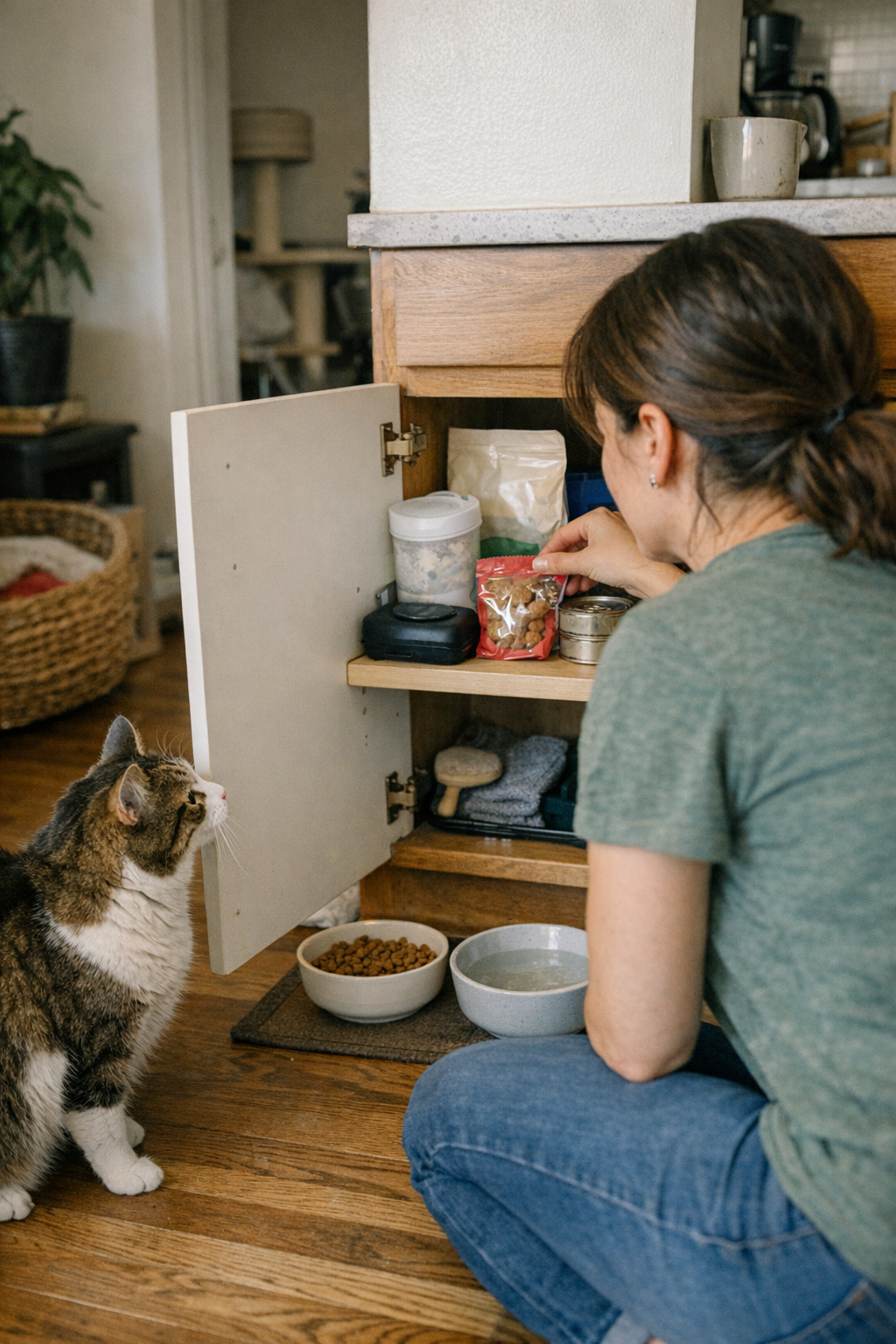
It’s easy to think your cat supplies are under control—until you actually move through your weekday. The shelf looks calm, the wipes upright, even the grooming comb perched where you left it. But try to grab the open food bag before work, and you’re stuck moving bulk supplies just to reach today’s basics. Dig for the wipes and they’re jammed behind snacks, blocked by backup litter, or missing until the mess has already spread. If you’ve suddenly restocked wipes only to discover the old (still sealed) pack, you’ve seen firsthand: what looks organized in the morning can break down under real cat care by the afternoon. Surface order never stands up to the churn of actual feeding resets, litter cleanup, or shared-household routines—and every week, this hidden friction eats up time, money, and patience.
The Repeated Headache of the “Organized” Shelf
Setup that looks under control almost never stays that way after a few rushed routines. You start with a shelf that’s technically neat: supplies lined up, no loose trash, a sense that anyone could step in and help. Fast-forward to a real weekday fluorescent-lit morning or a distracted evening reset, and the logic cracks. Supplies migrate out of sight. Only the backup food is easy to grab; the in-use bag gets buried. Wipes multiply in hidden corners, or the new pack blocks the half-finished one. The toy you fished out last night is back behind canned soup, ready to throw you off next feeding. Visual order turns out to mean little against the pressure of repeated, mixed-use routines.
- Food reach stalls: Bulk bags drift forward, blocking what you actually need during daily feeding.
- Wipe search eats up time: Old and new packs shuffle around, leaving you cleaning up with whatever’s least hidden—even if it’s not the right one.
- Toy randomness: Last evening’s play toy winds up behind groceries, stalled for days until the next deep clean.
Over days, the shelf becomes less a supply zone, more a reset trap: duplicates, partials, clutter hiding urgent messes, routines that start slower and finish less finished. The more the area “looks” okay, the likelier it is that something essential will be out of reach right when you don’t have extra time to spare.
Why Supply Overlap Quietly Raises the Upkeep Load
Mixing all cat supplies—daily, backup, specialty—onto a single shared shelf feels logical at first. In practice, overlapping categories quietly sabotage every quick grab and daily reset. The clutter is silent for a few days, then friction returns: food runs low without warning, wipes are always in the wrong spot, and every step involves moving something just to get what you need now.
- Expiration confusion: It’s impossible to track which bag or treat is fresh versus nearly empty; reordering happens only when you’re already out.
- Blocked movement: One misplaced can or seltzer ends up in front of cat grooming supplies mid-spill—slowing every cleanup.
- Hidden money waste: Supplies get duplicated; you keep buying before you actually need to replace anything, just because nothing is clearly visible.
The more you try to “stock ahead,” the more every refill, cleaning, or supply handoff takes twice as long—and the less any system holds up under the strain of repeated, real-life cat routines.
Spotting the Weak Point: Not Just About Looks
The real test isn’t whether you can make a corner look tidy. It’s whether your feeding resets, litter-area wipe-downs, or shared hand-offs run without hiccups. The breakdown always announces itself: the one item you need is hidden, blocked, or missing. The difference feels small at first, but repeat it during a change of schedule, a rushed morning, or a sitter’s visit, and you’ll see how quickly “organized” becomes “interrupted.”
- Missed basics: No one can find what they need in ten seconds.
- Extra time for handoffs: Anyone stepping in to help hesitates, checks twice, asks questions—or skips replacing an item because the right one isn’t obvious.
- Routine slowdown: Even solo, you feel the drag: which bag? which pouch? where are wipes this time?
Every attempted reset pulls up the same root flaw: a setup that looks neat falls apart under real, unscripted use—slowing everything and inviting clutter to rebuild.
The Real Shift: One Precise, Labeled Daily Supply Shelf
After too many sets of lost minutes (and wasted supplies), only a focused, labeled shelf made a practical difference. Label one shelf “daily cat only”—and mean it. Not a general pet zone, not another multi-use bin. Restrict this shelf to today’s open bag of dry food, active wipes pack, single-use grooming tool. No backups, no unopened packs, no “for next month,” no half-used extras drifting in during the week. Reset equals return to this shelf—never stash in a nearby drawer or blend with backups. Clarity is built in, not a hopeful result of a fresh reorganization.
How a Label Changes the Routine Flow
The shelf lands at waist height, directly above bowls or beside the feeding area. The label—bold, black marker or clear tape—serves as a stop sign for everything not in rotation today. Everyday use becomes a scan, not a search. If it’s not visible here, it’s not in play. Anyone in the house will know instantly: this is the zone for immediate use, not overflow. Decisions and handoffs shrink to seconds, not pauses or follow-up questions. Even under stress, the routine doesn’t unravel.
What Actually Improves with a Labeled Shelf?
- No more lost duplicates: The chance of a new pack obscuring an active one drops—waste and confusion fade with it.
- Instant handoff clarity: A sitter, family, or guest sees exactly what’s meant for today. No more rooting through surplus or lining up packs “just in case.”
- Inventory at a glance: If it isn’t present on the shelf, refill isn’t due. No more mystery restocks or last-minute panics.
- Cleanup syncs to real room use: Essentials return here automatically. You’re not wandering the house during time-sensitive resets.
The payoff is hidden at first. But in a week, you’ll notice less delay, fewer repeat purchases, and reset friction dropping—especially when routines stack or unexpected supply swaps become necessary midweek.
Limiting Daily-Use Cat Supplies: The Tension and the Payoff
Temptation never stops: a new treat pouch, backup wipes, bulk bags “just for now.” By Monday, two backups might be drifting back within reach—especially after a weekend mess or spontaneous cleaning burst. The shelf will always try to turn back into a catch-all unless you hold the line. But the daily payoff holds—so long as you keep those backups above or below, out of everyday reach.
- Reserve labeled-shelf space for what is physically used today—if it’s not part of the feeding, cleaning, or grooming routine in the next 24 hours, it doesn’t make the cut.
- The label is both a rule and a reminder, blocking “just for later” creep.
- No more double-takes: A glance says what’s due for refill, what’s left, and what needs to go away—instantly, and without a mental shuffle or hallway dash.
The trick isn’t perfection—it’s rebound. The shelf will get challenged, drift, or clutter again during long weeks. But every reset is faster and less guesswork, because the border is unmistakable. Costs—time, waste, hassle—reliably shrink when used as intended.
Scenes from the Real Routine: Supply Drift and Reset Friction
- Water bowl clear at daybreak, but a misplaced treat bag blocks it after the first refill sprint, stalling the next pass-through.
- Wipes urgent after a messy litter cleanup, only now buried behind unrelated snacks or backup cans—one more step for every cleanup job.
- Toys blend with bags and bowls, nudging into hallways or underfoot—until someone has to pause, reshuffle, or rescue the area just to keep moving.
- Surface neatness collapses as almost-empty packs bury the main item, turning resets into scavenger hunts.
Building just one daily-use shelf makes every reset, refill, and supply return line up with the real habit, not last month’s hopes. The rule is stubbornly simple: if you didn’t use it today, it doesn’t get a spot. The payoff is a quick scan, not a