
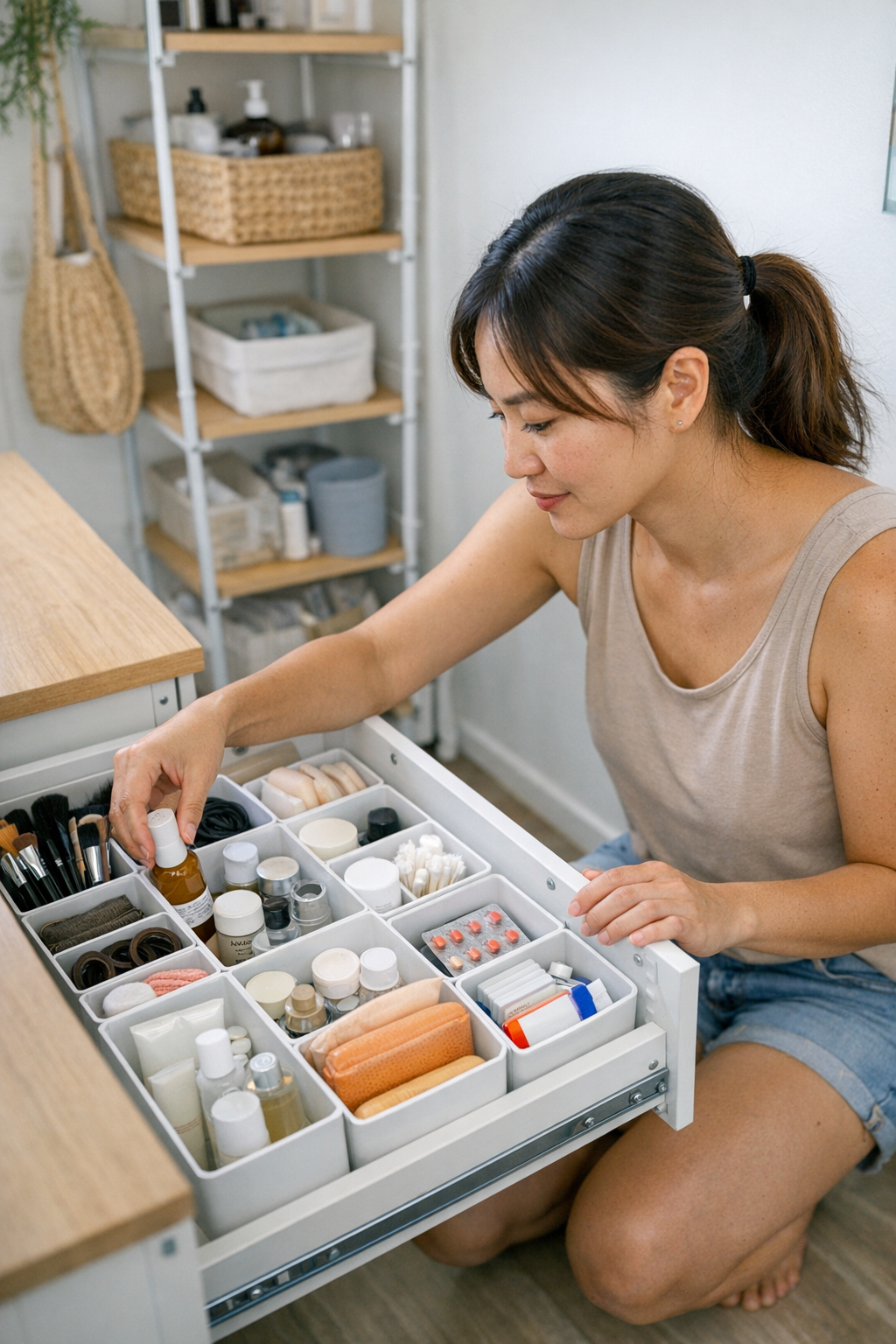
The Calm Drawer Illusion: When Setup-Day Order Disappears
The first day you set up new drawer dividers, everything looks like a photo shoot. Socks perfectly folded, utensils lined up, hair ties in their own spot. But the real truth comes later—when you’re scrambling on a Wednesday morning or tossing things into drawers after a late night. That’s when you hit the same old friction: stacks losing shape, categories bleeding together, and those organizers that felt so crisp at first now quietly failing the test of real life. The illusion isn’t what you see right after setup. It’s believing that look will stick without changing how things move and shift when you actually live with them.
The Friction That Sneaks Up—And Spreads Fast
Drawers don’t shout when your system slips—they quietly let things unravel. That’s how you wind up moving three things to get what you need. A sock slithers over a flimsy divider. Hair ties end up tangled around a comb. Utensils bunch together until the slim spatula goes missing under a pile. You don’t always notice it the first time, but after a few rushed days, those clean lines are history. Suddenly, grabbing one thing means sifting through clutter that barely even looks like a system anymore.
When Organized Stops Saving You Time
It’s usually not the messiest drawers that slow you down. It’s the “pretty organized” ones where categories keep slipping. An open tray looks fine at first, but by Thursday makeup brushes are mixed with floss and earrings, and getting one thing means shuffling four. The more a drawer gets used—bathrooms, kitchen tools, a catchall drop-zone—the more obvious the weak points become. If you catch yourself dreading a reset or spending those extra seconds fixing the dividers “just so,” your system is mostly for show, not for speed.
The Daily Test: Where Your Setup Really Breaks Down
Picture your bathroom during the real morning scramble. You reach for toothpaste and instead dig through lip balm, moisturizer, travel shampoo, and a rogue bracelet. By bedtime, the situation repeats—brushes and bottles have drifted into each other’s lanes, and anything small is lost under something bulky. Those little misplacements add up, making every grab slower and every reset less satisfying.
By the end of the week, it’s not outright chaos, but the promise of easy access is gone. Suddenly you’re pausing to readjust stacks, rescue items buried at the back, or just shove things aside. It’s not that you don’t have organizers—it’s that your organizers don’t hold the line when real life pushes back.
Entryways and Utility Drawers: Where Order Collapses Fast
Take the entryway. Keys, sunglasses, mail, earbuds—they have designated spots, but only in theory. The first few days with a new tray feel structured until mail covers the keys, sunglasses bury under a scarf, and soon it’s a catch-all. Busy areas demand boundaries that hold, or you end up searching for essentials every single time you leave the house.
The Silent Workload of Weak Storage
Every time you hunt for something lost, or restack piles just to find a basic item, your storage is working against you. If one quick hand, or one child’s grab, is all it takes for categories to collapse, the daily friction multiplies. Kitchen drawers are classic here: a place for ladles and tongs on paper, but by the weekend you’re wading through loose chip clips and random corkscrews. You might reset it all Sunday afternoon, but after three rushed meals, it’s the same old shuffle.
Closets and dressers have their own version: tall stacks that crumble after two days, deep bins where socks, shirts, and underwear blur together, and sections meant for “just pants” that quietly collect extra odds and ends. If you’re moving piles just to get to the item you wear most, you know your organization is all surface and no backbone.
Strong Boundaries, Fewer Resets: Storage That Stays Useful
The solution isn’t buying more containers—it’s picking the right ones for the job. Choose shallow, dedicated bins or trays that match what you actually use and how you reach for it. In the bathroom, a tray for hair ties that’s too narrow for brushes will keep them separate by default. Assign each daily-use bottle or tube its own defined space—no piles, no ambiguity.
Utility drawers shape up with bins sized for the task: a snug container for batteries, a divided tray for rubber bands, a box for screwdrivers (not tools and tape and loose lightbulbs all in one). In the closet, pick bins just tall enough for T-shirts, not so deep you lose the bottom row. The goal: you return things without thinking about it, and the system quietly resets itself through everyday use, not just a big once-a-week effort.
Practical Rule: Don’t Let Bins Become Black Holes
Deep bins tempt you to toss in anything extra. Resist. When bins have a real physical boundary for each category—and they aren’t overloaded—the inevitable mess can’t sneak in and take over. Leave a little space between bins, so things can’t hop boundaries with one clumsy reach. With smaller, clearer zones, it takes only a five-second sweep to keep things in check instead of an exhausting overhaul every weekend.
Does Your System Hold Up—Or Just Look Good?
A real storage system stands up to your busiest days, not just your motivation to tidy. Ask yourself with every drawer or shelf:
- After several days of use, can you still find and grab each item instantly?
- Are quick returns truly quick—or do you have to rearrange, re-stack, or push things aside?
- Is “resetting” getting faster over time, or do you keep fighting the same small mess?
- When you’re in a rush, do boundaries hold—or does chaos always creep back in?
If your answer is “sometimes, but not really,” you don’t have a failing system—you just have the wrong boundaries in place.
The Subtle Payoff: Calm That Spreads Room by Room
Real calm isn’t about a flawless showpiece drawer—it’s about a setup that shrugs off the blur of normal life. Choosing bins and organizers that hold clear, realistic category lines shrinks the invisible work of organization. It means less time spent reshuffling, and more time just using your stuff. When your drawer resets itself almost by accident, you notice other things get easier, too—the entryway doesn’t bottleneck, the kitchen drawer stays friendly, and last-minute searches simply vanish.