
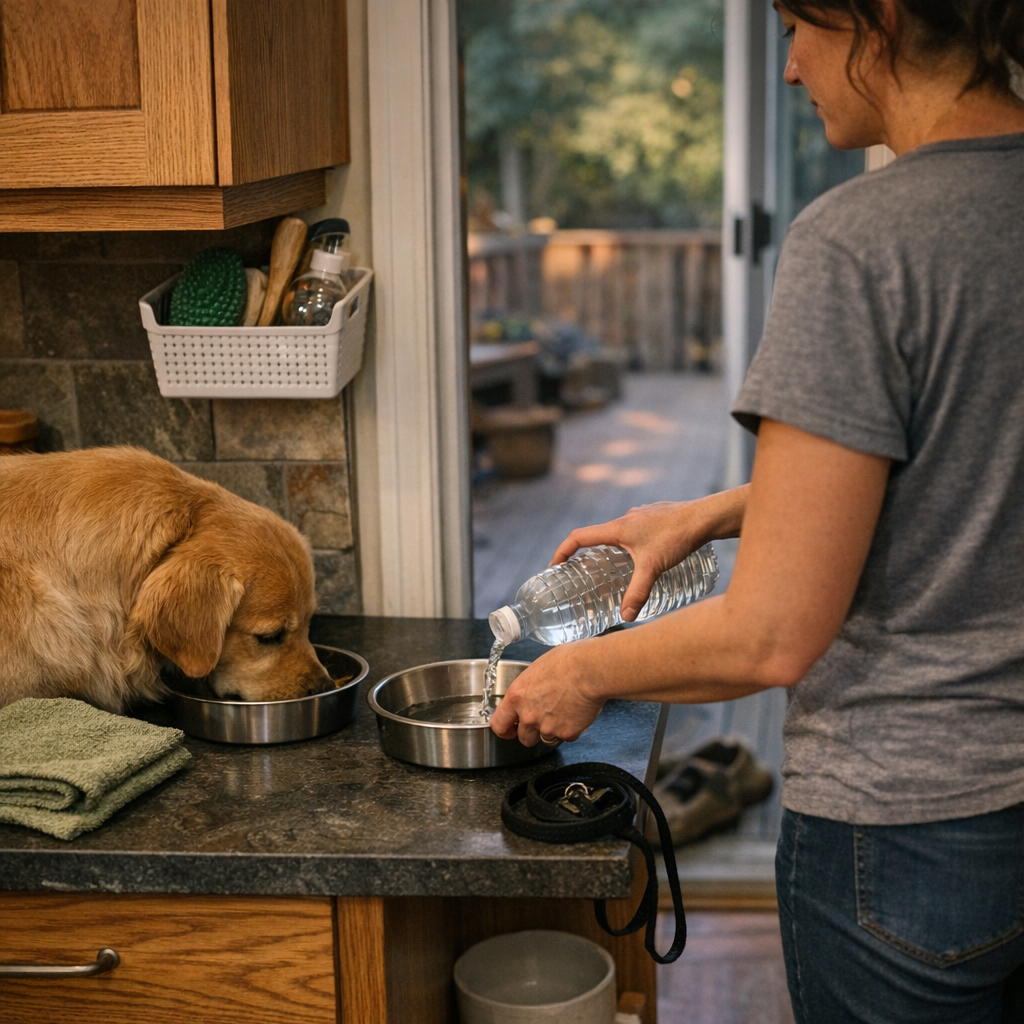
The real test of a daily pet-care setup isn’t whether everything looks tidy after a Saturday reset—it’s whether you can actually feed, refill, or wipe down without dodging yesterday’s clutter, blocked access, or stray tools after any ordinary use. In small homes, it takes just one round of feeding or grooming for pet gear to start invading shared counters and kitchen zones. Even with a fair effort, supplies barely land where you left them, and the “quick reset” quietly turns into a series of interrupted motions: shifting a water bowl for the coffee pot, pushing a grooming brush away from dinner prep, or returning a damp towel to its supposed spot before someone else needs the sink. You don’t need another organizer. You need a system that is easy to keep up with once the daily cycle repeats—something the CalmPetSupply world has learned by seeing care routines break down even in the neatest looking spaces.
When Pet Care Routines Quietly Slip
Resetting feels simple: refill, wipe, toss the brush back, hang the towel. But in daily reality, the steps that seem invisible upfront start to stack as the week moves on. What’s a five-second delay on Monday turns into a bowl left drying by Thursday, or that same brush “just for now” sliding into meal prep territory.
One missed water-bowl put-away is fine, but three nights in, that same bowl sits just close enough to the counter’s edge to cause a H2O spill during someone’s late coffee fix. The grooming brush gradually claims a semi-permanent spot next to the knife block. A half-damp pet towel crawls toward the laundry pile, half-folded, never quite making it there. The mental notes to “reset later” never feel urgent—until every single surface becomes a half-pet-zone, and your shared space is full of reminders that pet care routines have quietly slipped.
It’s not about big chores. These are stacks of micro-misses that nudge your space off course—and every skipped check-in makes tomorrow’s basic care slower, less smooth, and more frustrating.
The Cost of “Almost Ready” Setups
Many pet routines limp along in a state of “good enough.” The cleanup sponge is theoretically handy, but you have to move two treat bags and a food scoop to get to it. The bottle meant for water refills is clean but never actually back in reach when you need it. The grooming brush, if not returned instantly, ends up in the traffic lane, so when the next shed-hair moment hits, you search or reshuffle—again.
Over the week, this friction builds. Five seconds here, thirty there, and suddenly pet care means digging for basics instead of just acting. Leave wiping to the next day and you’ll confront crusted rings around the water bowl; skip returning the towel to its actual home and you’ll watch it crawl right back into the busiest spot by dinnertime.
Spaces that “look clean” often just disguise the migration of tools. If your towel doesn’t always go back on the same hook, or the brush’s storage spot competes with pantry items, clutter doesn’t vanish—it just keeps circumnavigating into prime real estate. It’s a cycle: the prettier the setup, the easier it is for one weak link to restore clutter and slow down your routines.
How Small Misses Stack Up in Shared Spaces
Shared spaces magnify every missed reset. Leave a water jug near the coffee pot once, and morning prep becomes a game of shifting items until you have actual surface to work on. Skip just one after-walk supply return, and a leash coils itself into the evening laundry scramble.
Each out-of-place pet item isn’t just visual—it’s friction. The food bowl drifts out from its wall spot. The grooming brush floats onto the dining table. Suddenly, every quick routine diverts into cleanup, and the after-walk unwind gets rerouted by a hunt for that brush or a scramble to clear the feeding space before guests arrive.
The outcome: care steps slow down, pleasant spaces feel hijacked, and the supposed “simple” routine is never a one-step reset. The effort shifts from helping your pet to battling lingering, shifting pet gear.
Making the End-of-Day Reset Automatic
The only real change comes when late-night resets aren’t skipped. Designate unmissable drop zones—a lidded bin under the counter, a compact hook behind the door, a storage caddy within arm’s reach of the bowl’s spot. These spots aren’t about decoration. They make it more likely that everything returns to where you’ll actually grab it again, not just where it “should” go.
Station a low-profile towel or sponge right where you feed or refill. Wipe, put away, done—eliminate the pause that leads to “I’ll deal with it in the morning.” The difference isn’t one big clean; it’s dozens of micro-motions that now fit in flow instead of stacking up. This is how CalmPetSupply setups make the repeat work disappear, so your night counter resets aren’t undone by morning.
When every piece returns to its real home, tomorrow’s care actually gets easier. No silent messes, no new chores, no “missing one basic” crisis when the pet’s water runs unexpectedly low at 11pm.
Balancing Comfort and Consistency
Plenty of setups get an initial win: the counter looks better, the mess is corralled. But move feeding gear to a closed shelf and it takes one extra step to refill, so gear drifts back; use a decorative bin for brushes and toys, and the distance from daily reach means the brush never really migrates back to its “home.”
If you spot towels stacked but not put away, scoops flip-flopping between surfaces, or refill bottles just out of quick reach, recognize these as symptoms that your system is slowly adding extra work with each pass. Small delays become routine drags. The baseline should be smooth, not another pause before care actually happens.
The Difference: Looks Tidy vs. Works Smoothly
Tidy spaces feel satisfying for an hour. But a setup that works for daily pet care means you find every basic—bowl, towel, scoop, brush—where you need it, even after several messy rounds. The best systems are nearly invisible in action: the counter is clear at night and still clear after morning feeding, with no leftover gear sneaking into your flow.
A smooth home pet-care setup doesn’t pretend the friction isn’t real; it just stops giving clutter a second chance. The right drop zone, return habit, or wipe-down anchor flips the day from “prepping around the pet mess” to “reset and done.” In the CalmPetSupply world, function wins over decorative “order”—and the best setups are the ones you barely have to think about, even when you’re wiped out from a long day.
See how a real-world, keep-up-with-it setup looks at CalmPetSupply.