
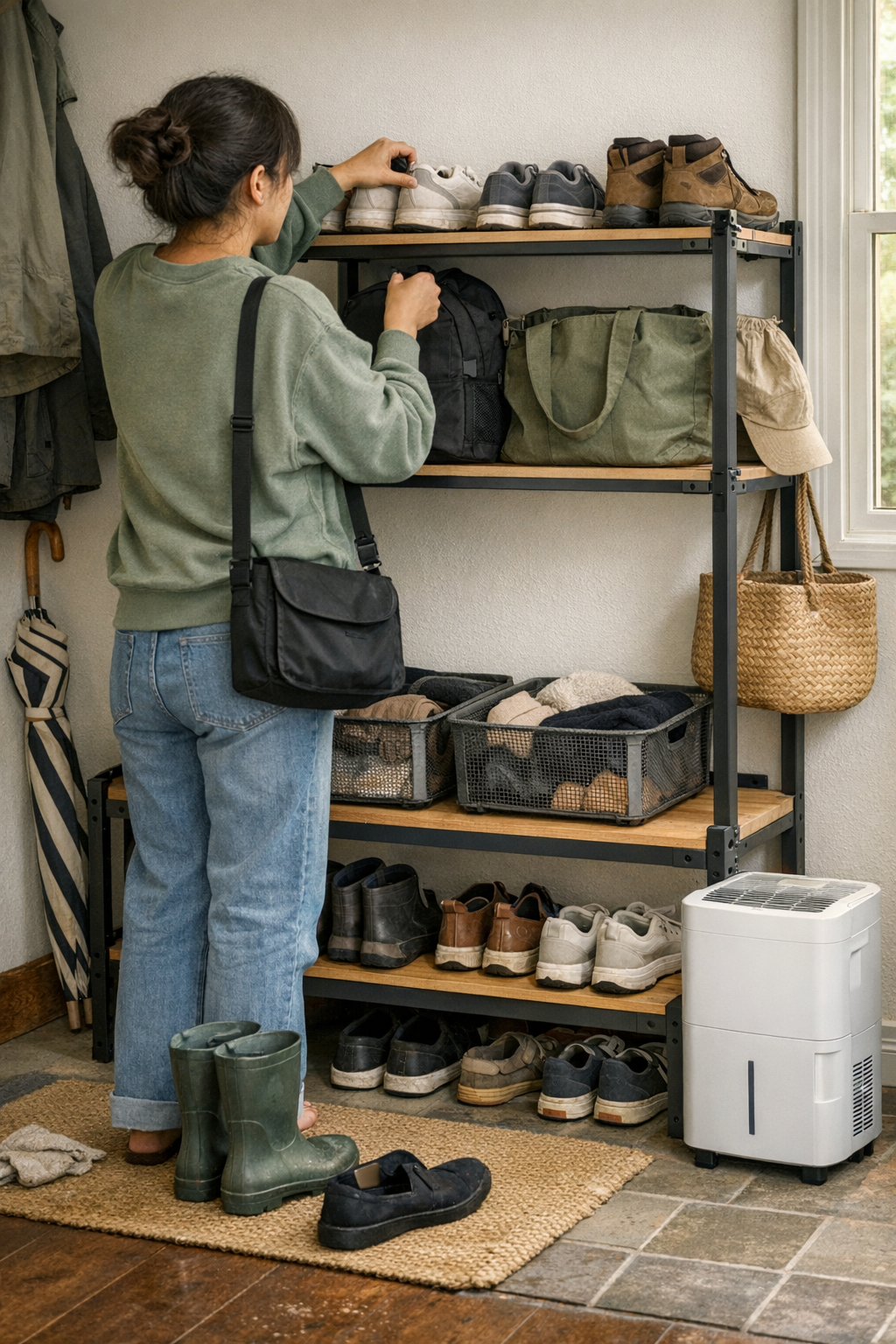
Humidity is the hidden sabotage in every entryway and laundry drop zone, quietly wrecking routines long before you notice a mess. Shoes that never quite dry, bags going musty overnight, towels clinging to dampness—these small failures pile up until every return trip across your threshold means pausing, rearranging, and settling for gear that feels halfway reset. Order on the surface hides a slow, sticky traffic jam underneath. One rainy week, and you realize: even when everything looks lined up—bins in place, bags stacked, floors swept—the zone still works against you. The difference between an entryway that helps and one that hinders usually begins here, in the buildup you can’t see but can feel every morning with a pair of clammy shoes or a bench that never quite loses its burden.
Where Humidity Hides in Transition Spaces
Most transition spaces—especially narrow entryways or those bordering laundry—become moisture traps, no matter how tidy they appear. Air stagnates just at bag-drop level, keeping shoes damp and slow-cooking the reset process. The real friction points? Open shoe racks hugging the floor soak up run-off from shoes and boots. Deep bins promise containment but gather every drop that drips off jackets and umbrellas. Under-bench stashes, though out of sight, trade clutter for a slow-cycling damp cycle, leaving shoes on the threshold between “almost dry” and “not quite ready.”
Each night’s reset ends up half-finished. Morning means toeing into last week’s moisture and shuffling bags that seem to collect a humid undercurrent no matter how often you rotate them. The signals show up quietly—the swampy edge that never clears, or shoes that seem to trade places in search of real airflow. The things you set down keep a record, and the price is paid in daily inconvenience.
Why Neat Isn’t Always Functional: The Clutter Lag
Your entryway may look under control at first glance. But once humidity stakes its claim, small problems multiply:
- Bags “dropped for a second” on the bench end up parked there for days, blocking both seat and reset path.
- Shoes aligned neatly at night have migrated by morning, each pair chasing a drier corner along the floor or crowding the one spot that almost dries out.
- Temporary drying racks inch outward, tightening the main walkway and demanding extra navigation for every trip in or out.
Hidden friction always outlasts visible clutter. What looks organized in a photo feels stalled in use: each “grab and go” becomes a slow search for something not too wet to wear, with overflow starting to pulse out from under the bench or crowd the sides. True function is measured not by appearance, but by how little you have to think about resets or sidestep yesterday’s mistakes.
Small Shifts, Noticeable Change: Elevation and Airflow
Anyone who’s slogged through a stormy stretch knows how fast a neat entry slips into recovery mode—coats and shoes multiply, every reset takes longer, and what worked on a dry day starts falling apart. The fix isn’t aspirational—it’s practical: work with airflow, not against it.
What shifts the daily tide: Lift your storage. Raising shoe racks or bag cubbies at least 6-8 inches above the floor lets air reach the problem zones. Wall-mounted open-back units installed just above bench height multiply airflow, letting thick-soled shoes dry by morning instead of next week. Leave a two-inch gap between items, and suddenly, the dehumidifier can circulate air around everything—no more wet pockets building up behind the last row of boots.
The results show up in small, repeatable wins:
- Overnight resets actually complete—the morning check stops revealing “almost dry” excuses
- Odors and mildew get cut off before they spread
- Return routes clear up, and the threshold stops accumulating semi-permanent overflow
This isn’t about an “organized” look, but a real shift: your entry stops being a workaround and starts supporting a routine that moves, dries, and resets on time—even when the forecast refuses to cooperate.
Facing Real-World Constraints: When Space or Layout Won’t Cooperate
But plenty of transition areas simply can’t fit deep shelving or a wide bench. In narrow halls or shared utility passageways, every inch counts, and compromise is constant. Clutter moves from visible piles into the tightest corners, and the real battle is against crowding your walking path, not just your storage plan.
For these compressed scenarios, work with the space:
- Slim, vertical racks—mobile or wall-mounted—lift gear off the ground without stealing floor space and can be shifted at night to chase dry air
- Shelves set back from direct entry splashes or out of the cross-breeze prevent gear from languishing in a drip zone or permanent draft
- A little extra space between pairs—even just a hand-width—beats stuffing every inch and guarantees dry outs actually happen between uses
In these setups, blocked paths and collision points multiply fast. The more your storage lets gear breathe, the less time you’ll spend untangling a slow-motion jam at the doorway. Every step you don’t have to repeat is one that gives your entryway back some breathing room—literally.
What About Storage Cabinets and Hidden Moisture?
Cabinets can trick you: they hide visual clutter but trap every bit of humidity unless they vent or remain propped open. Even a dehumidifier can’t reach inside a sealed cabinet, turning those perfect-looking shelves into low-level swamps for shoes and gear. That’s why semi-open wall units, vented cubbies, or modular shelves always outperform closed boxes when the real test is daily drying, not just keeping up appearances.
Quick Q&A: Entryway Dryness Essentials
How do I keep shoe storage dry in a humid entryway?
Lift racks or cubbies at least 6-8 inches above the floor, leave a small space between each item, and run a dehumidifier right where gear lands. Placement and spacing matter just as much—sometimes more—than the machine itself.
Does a dehumidifier help closed cabinets?
Not unless those cabinets can vent or stay partially open; otherwise, moisture just settles in, hidden until the next reset fails.
What’s the best move if space is extra tight?
Go vertical: use a skinny wall-mounted shelf or a small rolling rack you can pull out of the way at night. Even a little elevation buys hours of drying you otherwise lose to ground-level gloom.
The Real Test: Reset Speed and Daily Movement
Transition spaces fail quietly—not because they’re messy, but because the setup can’t keep up with real flow. If you’re moving yesterday’s bag to reach the bench, nudging wet shoes sideways, or starting every morning with a check for leftover damp, the zone is stalling. Raise, space, and ventilate your storage, and resets get easier, not just less cluttered or “prettier.”
The entryway that works isn’t one frozen in order; it’s the one where your routine moves freely—shoes and bags dry overnight, paths stay clear, and each return doesn’t spark another rearrangement. That’s the threshold worth trusting, no matter the weather outside.