
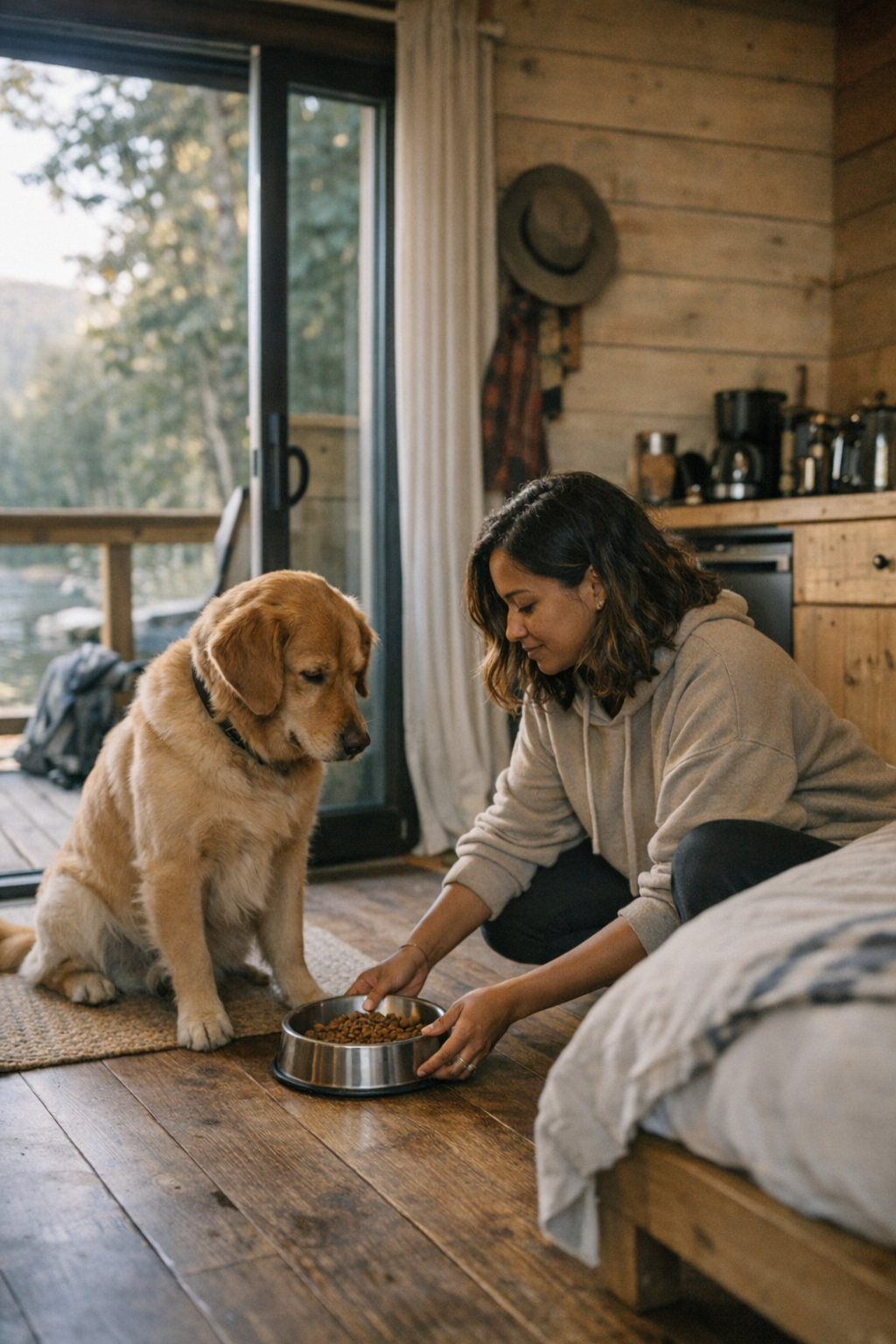
Some dog routines look perfect—everything arranged and seemingly out of the way—yet daily use keeps exposing the same weak spots. The leash is easy to find until you need it fast and find a bag in the way. The bowl sits in its tidy corner, but your dog stalls, caught between a misplaced mat and a slightly blocked path. What sounded like ‘good setup’ in theory starts to drag: small delays, awkward pauses, one more fumble right when you need a smooth step. In dog life, a routine that only looks right but doesn’t move right keeps slowing you down—and your dog rarely waits quietly for you to catch up. This is the real gap DogPile exists to close: setups that actually match what happens when routines repeat—not just how things look after you tidy.
When the Routine Looks Right But Feels Wrong
You set up a neat feeding zone, map out a rest spot, and hang the leash by the door. Yet, every feed, walk, and rest keeps exposing micro-delays: the dog paces the bowl but doesn’t start eating, hesitates at the entrance while your arm snakes past dropped mail, or refuses to settle in a spot where a stray laundry pile keeps intruding. Quickly, the pattern shows—meals stretch longer, walks start slower, and rest becomes another round of nudging and shifting. It’s a routine designed on paper that starts grinding once it hits the real pace of daily life.
Most of the drag comes not from chaos but from mismatched timing and awkward reach. Move the food bowl slightly to mop up after breakfast and don’t return it exactly; watch eagerness drop in small ways. Hang the leash in a convenient spot, but then one busy morning a bag spreads over the hook, and you’re untangling handles while your dog’s excitement curdles into restless waiting. Each glitch isn’t a crisis, but the sum of these friction points pulls the whole routine out of alignment, making everything feel just a little bit more work than it should be.
The Compounding Cost of Missed Signals
Dogs don’t need perfection, but they do build habits from cues you give—timing, placement, repeatability. When signals go ignored or setups change slightly, pace shifts: the dog circles before eating, pauses at the door, or tries to rest only to find comfort blocked by toys or random piles. Often, owners don’t see the human-side friction piling up—unexpectedly late walks, calling the dog back to a bowl moved just an inch off the usual spot, or re-inviting the dog to settle after resetting the rest spot three times in 20 minutes.
These interruptions rarely announce themselves loudly, but their effect is concrete. The wipes meant for post-walk cleanup? Present, but stacked behind shoes—so you chase a muddy dog across clean tile. The bed positioned perfectly at noon? By bedtime, it’s boxed in by two extra baskets and last night’s sneakers. Every “almost ready” routine means another subtle, steady drain—the setup appears organized but keeps making room for new tiny obstacles.
Everyday Scenes That Reveal Weak Points
- Feeding stalls: Bowl is down, but your dog hesitates—waiting for your signal or a clear space that never quite feels ready.
- Doorway block: The leash is visible but tangled beneath a jacket or caught behind a grocery bag, slowing both you and your dog’s exit.
- Rest interrupted: Nighttime rest turns into circling and pausing, dodging a toy basket or moving a laundry pile before finally settling.
- Muddy entrance: Fresh from a walk, you reach for wipes only to realize they’re across the room, so wet paws plant prints on the clean floor you thought was already handled.
It’s not about missing big steps; it’s about how much constant “just fixing” sneaks in when the setup needs invisible corrections every time. That quiet, repeated drag is the hidden enemy of smooth routines.
Consistent Structure: Quiet Fixes with Big Effects
You don’t have to accept routines that constantly ask for another adjustment. The real fix isn’t fancier gear or stricter timing—it’s a structure that anticipates repeated use. Line up cues, keep items reliably accessible, and pay attention to which behaviors your dog repeats just before something goes wrong. When the bowl returns to the same spot every meal, and supplies stay truly within reach, the dog’s approach shifts: steadier walks to the bowl, less stalling, and a clear transition when you pause and actually notice your dog’s readiness before acting.
The difference isn’t in how neat the setup looks at 11 a.m., but in how little rearranging you need to do after every routine runs its course. When comfort isn’t blocked by clutter, and cleaning gear lives at the entry instead of somewhere “tidy,” your routine finally starts to flow on its own momentum.
Walk and Doorway Flow: Fewer Blocks, Quicker Moves
The leash scenario says it all. An obvious hook or bowl works until your next rushed morning or hurried return. The moment gloves or bags fill the entry zone, leash retrieval slows to a shuffle—your dog stuck between anticipation and confusion. It takes one unblocked, visible leash to remove the stall and get straight from cue to action. Add wipes or a towel in the same easy-snag spot, and you’re no longer choosing between muddy floors and ten extra steps while your dog bounces or stalls waiting.
Rest Spots and Self-Resetting Corners
Dogs will find the same rest area if it’s open—but “open” shrinks fast under normal home drift. A resting place that requires clearing out toys, lifting boxes, or moving shoes each time isn’t a rest area; it’s an obstacle course. The setups that last are built to reset automatically: nothing to shove aside, nothing to move back, nothing that creeps into the dog’s landing space. If you find yourself silently reshuffling the spot more than once, the fix isn’t another round of tidying, but a layout that stays clear by design.
How Small Mismatches Create Big Interruptions
It’s not the huge mistakes—it’s the ongoing, small mismatches between the expected setup and the lived routine. That slightly shifted bowl means the dog waits, then hesitates, then finally starts eating with less enthusiasm. A tangled leash means three steps of fumbling instead of one clean click and go. A bed pinched by laundry means more circling, less rest, and a routine that keeps asking for do-overs. When this happens every meal, every walk, and every bedtime, the cumulative interruption becomes the new routine—one that always feels just out of sync.
Often, owners misread these moments as random or assume, “He’ll just settle when he’s really tired.” But dogs repeating the same standing point, circling gesture, or pacing behavior are making a clear ask: notice me here, now, with this setup. Structures that match those cues make routines easier for both sides; setups that miss those signals require more fixing and more patience, every time.
Building Better Routines: Observable Shifts That Really Stick
Practical changes come from watching where your routine stalls, then making that fix stick:
- Set one dependable bowl spot. Feed at the same place, every meal. Your dog’s approach firms up, hesitation drops, and meals start and end on time.
- Time your response to behavior, not the clock. See your dog waiting by the crate, food, or door—pause for their signal, then act. This syncs the routine and uncovers points where you’ve been rushing (or lagging) without realizing it.
- Keep transition gear within arm’s reach. Wipes, leash, towels—tucked in the entry, not the hall or the closet. Each item you can grab without shifting other things helps avoid the repeated reset loop that creeps into every “neat” setup.
The biggest upgrades aren’t visible in a photo. They’re found in how much less you scramble and how few times you correct the same spot in a single day. DogPile’s focus is the small, lived breakpoints—turning “just fixed” areas into friction-proof ones that actually feel easier with every repeat.
Recognizing Your Dog’s Real Signals: Pattern, Not Guesswork
Dogs repeat their moves for a reason—pacing, hovering, or camping out just before walks or meals is a kind of request, not just passing time. The more consistently you notice these patterns, the easier it is to diagnose misfires. If you see your dog always doing a last-minute lap or waiting at a certain point, something about the setup isn’t quite matching their expected flow. Each time you dismiss these small signals, the pace of your whole day slows—and you end up working around from behind instead of letting the pattern run forward on its own.
From Tidy Looks to Smooth Routines: How to Tell When Structure Works
A truly functional setup stops making you fix the same spot again and again. The layout that seemed “good enough” at first—bowl near the rug, leash hung on a shared hook