
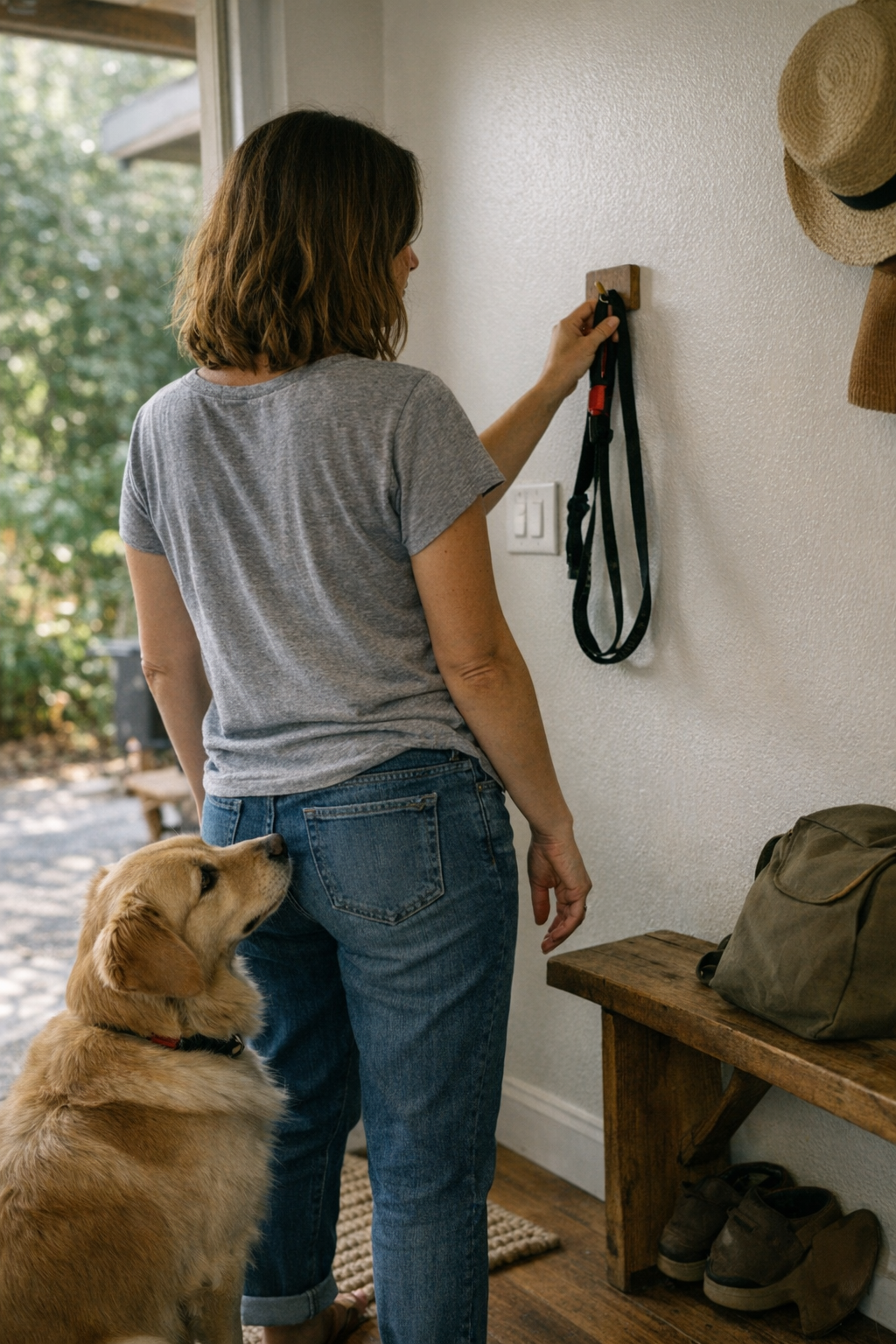
The restart after every dog walk rarely breaks down in one big moment. It’s the daily details—the leash landing in the wrong spot, the missing towel, the reach blocked by shopping bags—that actually slow you down, clog movement, or throw the whole “back inside” routine out of sync. You may think it looks organized enough because nothing’s on the floor, or the nearest hook is used. But these “almost-right” choices set up the same mini-stumbles: you’re stepping around a damp leash, wiping paws too late because the towel’s not where you need it, or your dog is waiting for a signal that keeps changing. Over time, these repeated snags decide whether your entryway works with you—or quietly drags your routine down.
The Doorway Bottleneck: Where Routines Get Stuck
If you live with a dog, the rhythm is automatic: leash on, out the door, walk, then home again. But the breakdown creeps in right at the threshold. You come in juggling bags, keys, a dripping leash, maybe even a muddy dog. If the leash spot isn’t fixed—sometimes a hook, sometimes the nearest chair or heap by your shoes—you both stall. Your dog stands alert, eyes darting from you to the not-quite-done pileup, waiting for a cue that should close the walk but now lingers in the air. You sigh, shuffling bags, searching for wipes buried under mail, nudged by the same slow obstacle that hit yesterday. This “in-between” keeps punishing you until the weak link gets fixed.
Signal Lost: Why Consistency at the Door Matters
Dogs read patterns before commands. When the leash always lands in the same spot, it’s not about obedience—it’s a closing signal, marking the jump from outside energy to indoor calm. If you nudge the pattern even once—stash the leash somewhere new, forget the towel, improvise with the closest available hook—the signal fails. Your dog stalls, wanders, circles, unsure what to do. That hesitation builds: restless waiting by the mat, circling, a dog half-settled and half-on-alert. You may not connect the drag to a changed leash spot, but every fumbled move adds confusion for you both.
When “Tidy Enough” Still Interrupts the Flow
Anything—hook, knob, shelf—that keeps the leash off the ground can seem “good enough.” But actual use reveals the friction:
- The leash buried behind a shopping bag—so you hunt for it while your dog paces, energy leaking into the next task.
- Hooks crowded with keys and wipes, triggering a balancing act just to put things back where they belong.
- A bad spot forcing you to reach across a dog or drag a wet leash past shoes, delaying the clear reset.
Looks neat, but if grabbing or stowing the leash triggers a shuffle—leaning, swirling, rebalancing—the system wears down fast. A “tidy” entryway that makes you rearrange things every day isn’t actually working.
The Repeated Weak Point: One Detail, Many Ripples
When an area appears organized but keeps slowing you down, it becomes the weak point you hit again and again. Extra seconds pile up every morning: searching for a towel swallowed under yesterday’s leash, the dog hesitating at the mat, muddy paws tracking farther because the setup forces delays. These aren’t rare slip-ups—they’re small, daily drags that chip at your routine’s confidence and clarity. For your dog, that repeated pause by the threshold tells them nothing is settled. For you, it’s easy to miss until the “workaround” becomes an annoying pattern out of habit, not design.
One Spot, Every Time: Making Expectations Clear
The simplest fix—choose one true home for the leash—rescues the flow immediately. Pick a peg or hook right by the door. Use it every single time, regardless of weather, mood, or what you’re carrying. Don’t improvise. This isn’t about tidiness on a checklist—it’s about a visible, reliable routine that both you and your dog can count on.
Settle into the pattern, and you’ll see it: your dog sees the leash hung the same way, and relaxes, turning toward the next step (water, rest, food) without the old, uncertain circling. For you, the hunt for the leash vanishes. The start of the next walk is smooth—no detours around bags, no digging under clutter, no “just this once” exceptions resetting the routine. With every return, the handoff between outdoors and in tightens up, not because of added tasks but because the one repeated move stays solid.
What Happens When the Pattern Breaks?
Play out a real reset interruption: late afternoon, rain on your jacket, groceries in one hand, dog in the other. You ditch the leash on a chair, skip a step, thinking you’ll fix it later. Ten minutes later, your dog is pacing by the door, uncertain, checking the hook. The expected sign that the outing is “over” just isn’t there. It’s a small breach, but the next time it happens, the awkward pause grows: more circling, delayed water break, tension sneaking into what should be routine. The door bottleneck doesn’t blow up—it just creeps into your next few hours, never quite letting you both reset together.
Spotting Friction Where You Didn’t Expect It
Most people don’t notice until the friction repeats. By the third time you’re bending to fish the leash from under shoes, or headed for a walk only to trip on yesterday’s damp tangle, it lands: your “fine” setup is slowing you down. Or maybe it’s your dog, pausing by the doormat, unsure if it’s time to settle or keep waiting. These aren’t chaos moments—they’re signals that the daily pattern isn’t holding up under real pressure. Even if the entryway looks neat to guests, if every reach or return triggers extra movement, the shape of the routine is fighting itself.
When the Setup Finally Clicks: Real-World Reset
Stay strict for a week—one peg, every leash, no exceptions. You’ll see the pause at the door shrink; your dog stops hovering, and the handoff from walk to home happens without a second thought. Routine friction drops fast: towels stay where they’re wiped, the leash is never hunting you, and the next walk starts on time. Under repeated use, the right small fix unclogs everything—less mess, more confidence, fewer awkward trade-offs competing for your attention at the threshold. In daily flow, the best “tidy” is what you can ignore because it just works.
Small Fix, Big Relief: Why This Detail Lasts
Perfect looks don’t matter if the routine keeps fighting you. In real dog life, what sticks is what cuts friction: a reach that’s automatic, transitions that don’t stall, a dog shifting inside without uncertainty, and your own stress sliding off as the reset melts into the background. The leash spot isn’t about decor—it’s about ending the small, repeated grind so the rest of your day with your dog actually flows. For the spots that keep tripping you up, DogPile’s setups are made to hold the line—so you can walk in, reset, and move on without the same old stumble.