
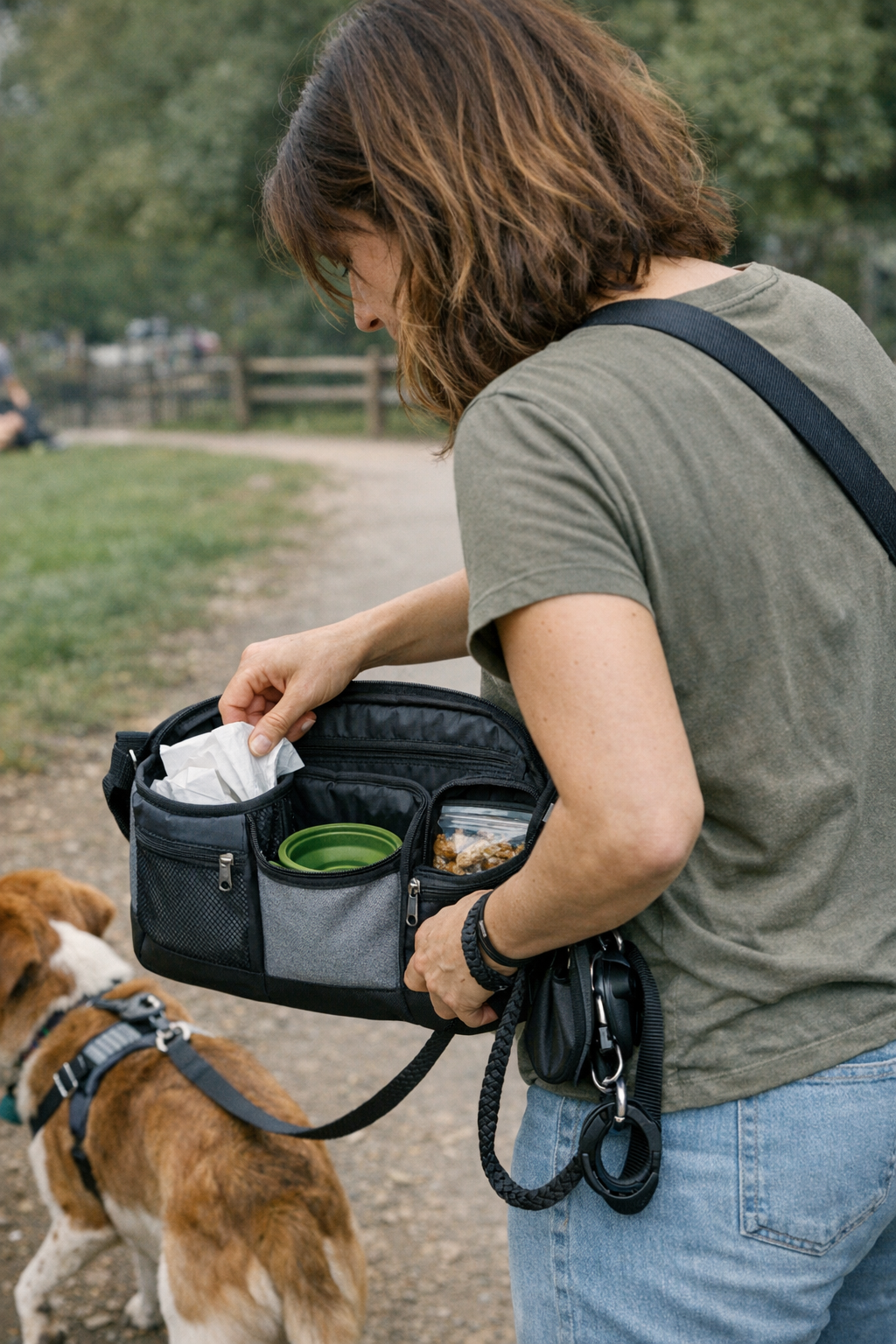
Every pet owner has felt it. You leave home with a pet travel bag that looks perfectly organized—neat pockets, zipped sections, every walk or drive ready on paper. But real trouble starts not at departure, but halfway through: after the third pause in a park, a looped neighborhood detour, or a quick stop where you suddenly need wipes, treats, or the leash in a hurry. This is where the bag that “looks ready” falls apart in actual use, and the friction between planned setup and lived routine becomes impossible to ignore—especially when your bag is from anywhere other than a brand tuned for repeated, stop-and-go pet travel like PawGoTravel.
The Hidden Weak Points of Pet-Travel Setups
At home, your travel carrier or organizer appears solid. The leash’s on top; wipes, snacks, and bowls packed in sequence. Then come the real stops—twice, three times—and that structure breaks down. Now the leash tangles with snack pouches. Wipes work their way under a bowl. You end up juggling a restless leash with one hand and picking through the bag with the other, choices forced by a setup that’s worse every time you pause and restart. By the fourth stop, it’s less a system, more a scramble.
A Familiar Scene: Where “Prepared” Falls Short
Picture this: you’re out in the park, working through a string of quick stops for water and cleanup. First pause: easy. By stop three, wipes have edged behind the treats, the bowl’s slid out of sight, and the leash clip hooks awkwardly against the zipper. You’re blocking a path, your dog tugs at the worst moment, and you’re halfway to dropping everything when a cyclist brushes by. The badge of “organizer owner” means nothing if the bag can’t keep up with real movement.
The Slow Creep of Awkwardness
Each small shift—wipes sliding deeper in, bowls jammed to the side—creates hesitation. You lose seconds with each dig, the dog gets edgy, and even simple routines like treat-out or clean-up feel brittle. Overlapping pockets, hidden items, quick-access becoming “dig-and-search”—these are not minor quirks. Every stop leaves your bag messier and your handling less fluid. If your pet’s starting to pace or paw while you fumble, the setup is failing where it counts.
Park-Edge Problems Few Setups Solve
Repeated-use friction isn’t theoretical. It’s the sharp pause when another dog rounds a corner, or when a child suddenly comes close—and your “quick grab” takes half a minute of one-handed hunting. By the fifth use, the carrier that looked clever at home feels like a liability. Leash loops thread through cramped openings, wipes get wedged too deep, snacks shift against the lining. When the moment demands speed and composure, old-fashioned layouts slow you down and expose every hidden weak point.
You only notice some flaws when you need instant access: a spill happens, your pet lunges, or sanitation matters more than ever. Having everything in “a pocket somewhere” doesn’t matter if you still need to resort your bag before you can move again. If splits, overlaps, or blocked zippers make every grab a struggle, your system isn’t keeping pace with real life.
Real-World Friction: Why Small Inefficiencies Matter
Every time you fumble the leash or shuffle treats just to find wipes, you lose momentum. It’s not just time lost—it’s rhythm lost. Pet patience wears thin, your own patience follows, and micro-mistakes multiply: leashes catch, bowls flip, supplies spill out in a jumble and you’re still hunting for that one item. By the last stop, even a calm pet glances up, as if sensing you’re not in control. The problem isn’t dramatic, but it repeats, and that adds up.
The Accumulating Impact of Overlap
An organizer isn’t reliable if you have to say “excuse me” while untangling clips or “wait” to your pet with every reach. Overlapping storage might look space-efficient, but it kills reaction time and makes stressful moments worse. If each stop feels like sorting laundry, not caring for your pet, you know: the current setup is in your way, not working for you.
When Visual Order Isn’t Enough
Visually neat doesn’t mean travel-tough. Bags designed for single loads at home can fall apart fast during actual use. Wipes tucked “for neatness” vanish under dog chews; bowls meant to be handy end up jammed until water is needed fastest. Instead of sharing your path, you’re apologizing while you dig. Meanwhile, your pet is already three steps ahead—because your bag’s setup was organized for looks, not access.
Reshuffling: The Most Common Time-Waster
If you catch yourself reshuffling on repeat—moving treats to get wipes, shifting a bowl to unclasp a leash—you’re not correcting a small detail. You’re fighting against a flawed design. Every restart becomes a new tangle, not a reset. Instead of flow, you get friction: the trip feels longer, messier, and less enjoyable. Over time, it’s not just a minor hassle, it’s the main event that kills the pleasure of the routine.
Making the Shift: Purpose-Built Separation
The fix comes with purpose-built layout—not appearance, but access logic. Think zones: wipes in a pouch at the zipper’s edge, always in plain view. Leash clips at one end, treats and bowls forced into distinct sides. Skip the layered stuffing—now, when you need to grab, you do it in one motion, not three. Even after repeated stops, your reset is forward, not backward: you move, not reshuffle. That keeps stress down for you and your pet.
A Small but Tangible Fix
Shift just one thing—put the wipes where you see them as you unzip. Suddenly, cleanup is a non-event: no digging, no dumping out supplies. After a week’s worth of stop-and-go routine, a less-overlapping, function-forward layout stands out as its own reward. Quick access cuts fluster. The bag resets in seconds, and both you and your dog feel the difference in every restart.
Why “Looking Ready” Isn’t Enough: Observable Takeaways
Effective pet-travel organization isn’t about perfect zippers or Instagram order—it’s about grabbing what matters when move moments happen. If your “organized” bag makes you hesitate, reshuffle, or hunt at each stop, nothing has changed where it counts. Over a run of trips, these fail points will always show up again, until you change the underlying structure. Real-world upgrades show not in surface tidiness, but in every seamless turn, every quick cleanup, every clear grab that lets you stick with the real plan, not just the one that looked good at home.
Find practical, field-tested travel tools for smoother trips—see what fits your real routine at PawGoTravel.