
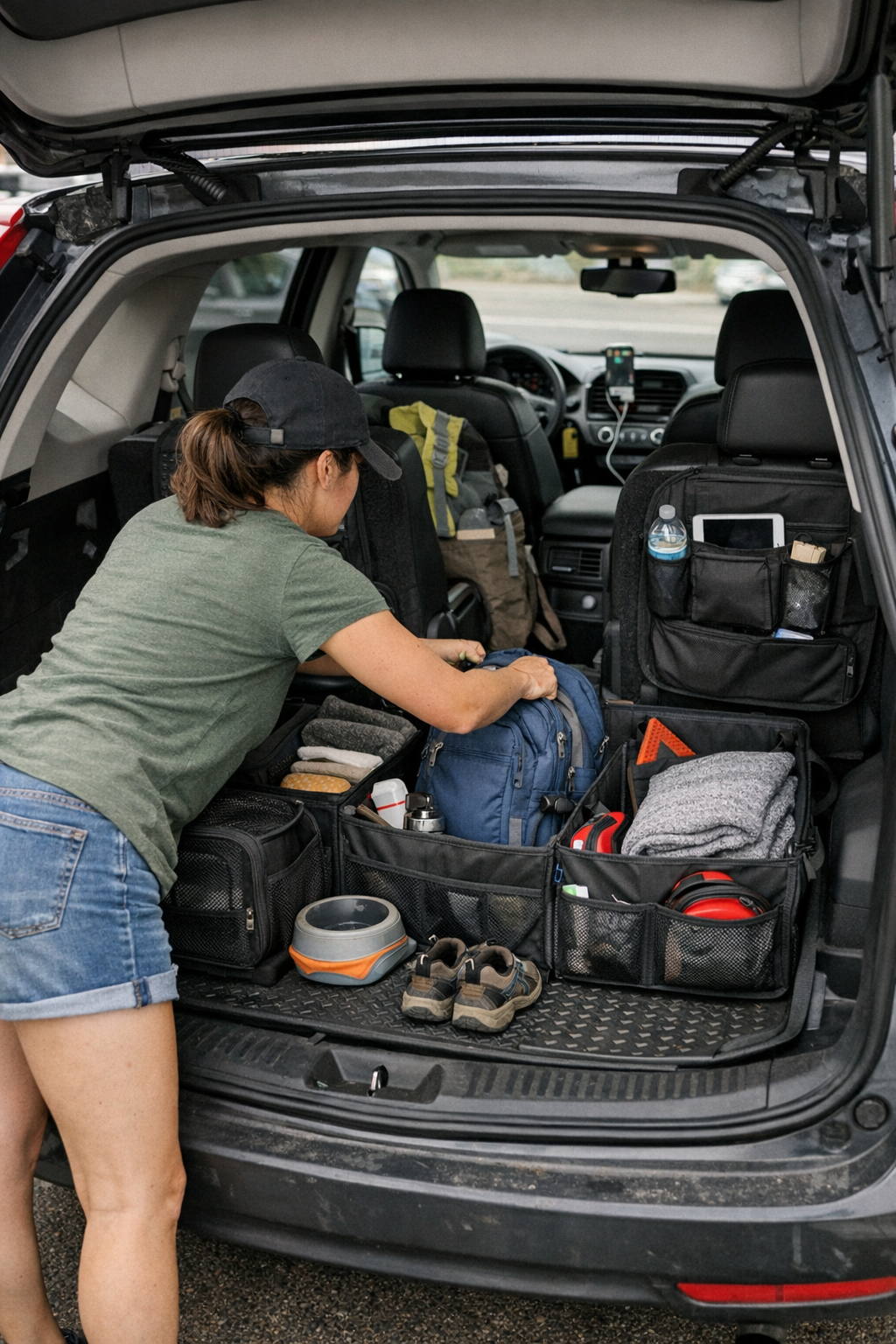
A car can look perfectly organized and still fight you at every turn. That reality sets in when you’re juggling groceries and your charging cable blocks the footwell yet again, or the “neat” center console hides what you need now behind random clutter. You clean up on Sunday, but by Wednesday, wrappers slip under seats, cords drift, and simple errands become exercises in digging, shifting, and rerouting around your own system.
Why “Organized” Isn’t Always Functional in Real Car Use
A freshly arranged car always promises hope: chargers tucked away, a spotless pocket, every item seemingly in its place. But actual routines pry open every weak spot. The clutter doesn’t announce itself with a mess; instead, it creeps in as you reach for a charger that’s snaked into the wrong spot, or when a loose water bottle rolls beneath your brake pedal during a sharp stop. It’s the wrappers you thought were corralled under the passenger seat, or that “one quick fix” pocket becoming a catchall you dread opening. Looks fade fast when the structure underneath doesn’t match how you actually move through your week.
Monday’s tidy start dissolves under real-life compression: a rushed school run forces a sandwich into the wrong pocket, afternoon errands pile new odds and ends into every empty space, and by midweek, nobody—including you—remembers where the “right” spot was. Surface neatness becomes slow access, friction, negotiation, and repeated cleanup that steals time you never budgeted for.
Clutter Returns Fast When Car Zones Are Vague
The true cost is felt in those repetitive strain points: scrambling to grab a charger wedged behind the seat before your phone dies in traffic, or having to apologize as someone trips on a cable sprawled across an exit path. Suddenly, the shared pocket has everything except what you reach for at a red light. Without clear assignment, every “organized” area just becomes another hiding place for today’s drift—gum here, receipts there, nothing where you need it mid-errand. The giveaway is that nobody else in the car ever puts things back where you expect—because it’s not obvious to them, either.
High-stress, high-traffic routines, like morning load-outs or after-school pickups, make every loose end visible. One child guesses and shoves a lunchbox with their sibling’s toy; the adult grabs the wrong charger. The line collapses, not with a single mess, but with a string of small disruptions that snowball into slow exits, backseat debates, and the silent calculation of whether it’s even worth straightening it all again.
Scene from the Middle of the Week
Picture Wednesday afternoon: two kids, one seat-back organizer, and the intention of shared order. Three days in, snack wrappers have slipped off armrests to the floor, a charging cable has migrated into the footwell, and every stop sparks a low-burn hunt for headphones or water bottles. Organization erodes where it’s most fragile—shared zones and unassigned corners—forcing even the organized driver into on-the-fly improvisation that slows every re-entry and exit.
How Unclear Zones Disrupt Everyday Routines
An apparently “clean” system crumbles when pushed by real schedules. The school loop brings backpacks, lunchboxes, and permission slips all at once. The shared pocket—empty on Monday—is overflowing by Thursday, half-used tissues wedged between lost earbuds and crushed granola bags. Every stop demands time to shake out a cord or dig for that stray homework sheet. The problem isn’t open mess, but slow, invisible drag—reaching for what should be there and finding only more misfiled stuff.
Real car frustration isn’t about mess—it’s about fighting for access, even after you’ve cleaned up. If a setup doesn’t spell out where things go, items migrate, cables cross paths, and repeated use takes more effort than the drive itself. “Clean” becomes temporary until a structure stops the migration.
Making Car Organization Work Under Real, Repeated Use
What actually holds up to dozens of drive cycles and quick returns? Not perfection, but clear, separated, and visible storage zones. Every person, purpose, or item group needs an unmistakable spot—easy to find and return to, without a second thought. When the lines are obvious, items don’t travel as much, nobody’s guessing, and those “missing” essentials end up where you expect, ready for the next round.
Redesigning Zones for Everyday Flow
Start by ending the shared chaos: assign each kid their own seat-back pouch; stop pretending one organizer fits all. Keep only true shared items in middle pockets, and re-route charging cords so they don’t cut across feet or seat entry. Stash cleaning wipes in a designated side cubby rather than letting them drift between cupholders. Even minor changes—like splitting seat pockets or giving the dog’s leash its own floor bin—mean less shuffling, less stepping on items, less last-minute searching every time the car stops.
As soon as you quit using floor corners or seat edges as “temporary” drop zones, you notice cleanup gets simpler and faster. Wrappers gather in one spot, cords stay clear of shoes, and there’s no need for a trunk excavation to find a forgotten bag midweek. The fix isn’t more containers—the fix is knowing exactly what belongs in each space at a glance.
What Changes When You Have Clear, Assigned Car Zones?
The first signal: people start putting things back where they go, with zero discussion. Instead of reminders and arguments over chargers or cups, the assignment is obvious. Over a few weeks, the game of “where did it go?” nearly disappears, and cleanup becomes quick, almost automatic. You reclaim minutes at every stop, and the drained feeling of dealing with drift vanishes because the system guides behavior, not just appearance.
Predictable Zones Support Real Family Use
This structure means family chaos doesn’t win by Friday. Each child knows their pocket, parents aren’t stuck untangling everyone’s gear, and the Monday morning reset turns into a two-minute sweep, not a half-hour rescue operation. No more mystery items jumbled with essentials. Stops become less tense, reloading runs faster, and even dog travel meets fewer interruptions because each leash or bowl has a set return.
The Difference Between Looking Organized and Feeling Under Control
One big bin or an open-console “dump zone” looks deceptively neat after a fast tidy-up. But that order drains away—predictably—when you’re forced to pause and sort everything every trip. The real value isn’t prettiness, it’s the obvious pathways that limit how far things can stray. Saving energy comes from not having to think, prompt, or recover from your own system’s blind spots.
Shift a cord away from the entry edge, claim a door pocket for one set of wipes, split a bin by person instead of by “category”—these are small, high-leverage changes that make fast unloading, quick re-entry, and daily maintenance realistic. Over weeks, the car feels less like a moving storage closet and more like a space ready for actual life.
Aim for Structure That Lasts Beyond the Cleanup
Chasing perfect car order is a losing battle. What works is a system tuned for your actual loops—drop-offs, errands, loaded cargo, pet rides—and tough enough to survive anyone climbing in or out, every day. When each storage area is purpose-built and clearly assigned, clutter slows down, lost-time drops, and everyone—from driver to kids to occasional passengers—can keep things working with minimal effort.
For practical tools to help you build better storage zones, visit DriveWellSupply.